EasyManua.ls Logo

Shop fox W1878 - User Manual

Shop fox W1878
60 pages
Print Icon
To Next Page IconTo Next Page
Loading...
OWNER'S MANUAL
(FOR MODELS MANUFACTURED SINCE 4/21)
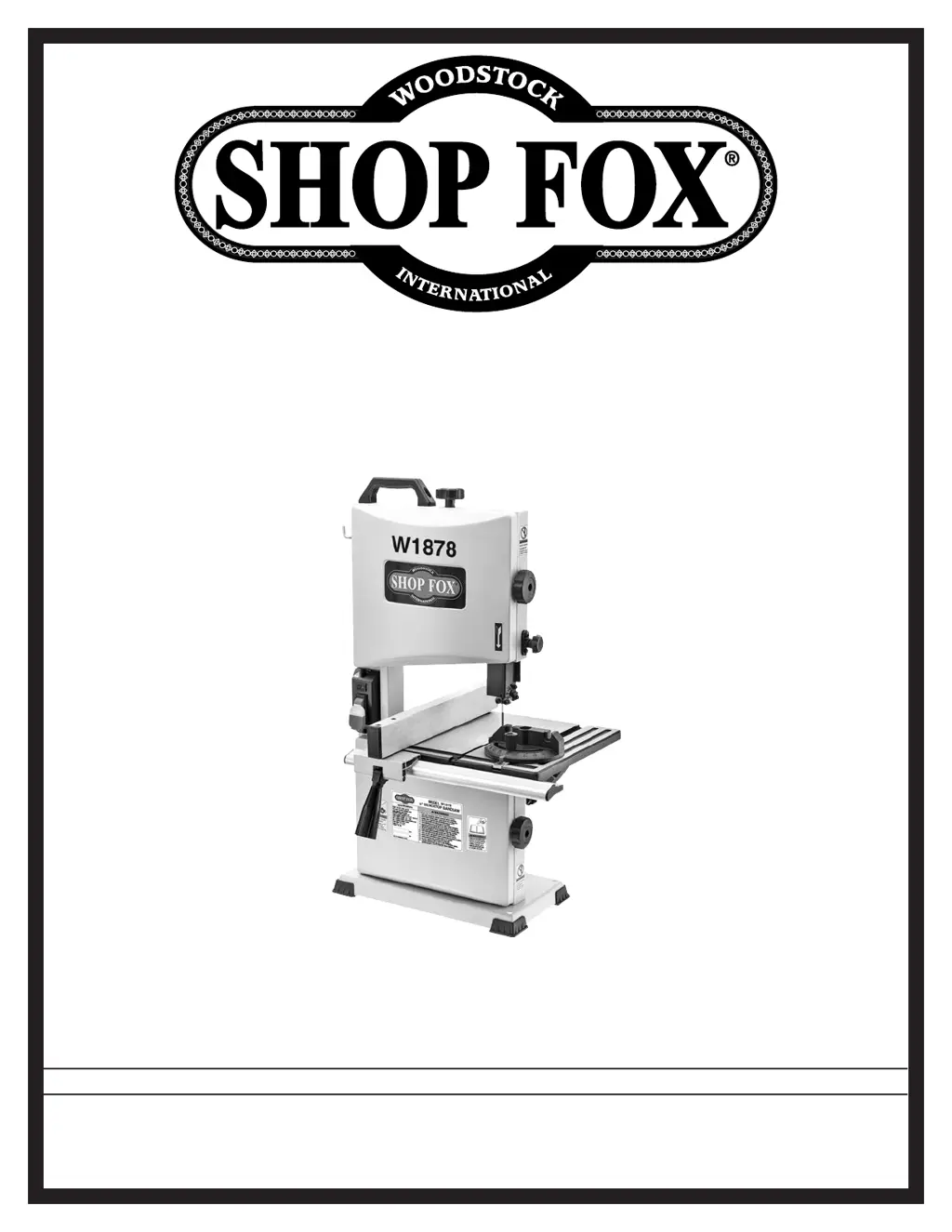
MODEL W1878
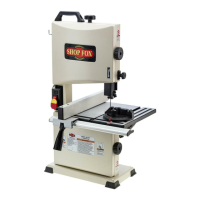
9" BENCHTOP BANDSAW
Phone: (360) 734-3482 • Online Technical Support: techsupport@woodstockint.com
COPYRIGHT © MAY, 2021 BY WOODSTOCK INTERNATIONAL, INC.
WARNING: NO PORTION OF THIS MANUAL MAY BE REPRODUCED IN ANY SHAPE OR FORM WITHOUT
THE WRITTEN APPROVAL OF WOODSTOCK INTERNATIONAL, INC.
#21815MN  Printed in China

Questions and Answers

  • S
    Steven CooleyAug 18, 2025
    What to do if my Shop fox W1878 doesn't start?
    • C
      colleentapiaAug 18, 2025
      If your Shop fox Saw doesn't start, it could be due to several reasons. First, make sure the switch disabling key is installed. Check the power supply voltage and circuit size. Also, see if the circuit breaker tripped or a fuse is blown and reset it or replace the fuse. Inspect the motor wires and correct them if they are connected incorrectly. Adjust the centrifugal switch or clean contact points, and replace if necessary. Fix any broken, disconnected, or corroded wires. Replace the ON/OFF switch if it’s faulty, or replace the motor if it is at fault.
  • S
    Samantha HerreraAug 23, 2025
    How to prevent blade from breaking on Shop fox W1878 Saw?
    • N
      Nicole HardingAug 23, 2025
      To prevent the blade from breaking or cracking on your Shop fox Saw, ensure the blade tension is correct. Use the correct blade for your specific application. Reduce the feed rate and pressure. When cutting corners, use a wider arc or relief cuts for tight inside cuts. Check if the blade is dull and replace it if needed. Adjust the blade tracking and ensure the blade guides are correctly adjusted for proper blade support. Position the upper blade guide as close to the workpiece as possible. Also, check for a faulty blade weld and replace the blade if necessary. Replace or reinstall worn or incorrectly installed wheel tires. Make sure the fence or miter slot is aligned with the blade. Lastly, replace any bad bearings on the wheels or guide bearings.
  • E
    Evan StevensAug 28, 2025
    What causes the blade to come off the wheels on my Shop fox W1878?
    • M
      Maureen ScottAug 28, 2025
      If the blade on your Shop fox Saw is tracking incorrectly or coming off the wheels, the tracking might not be adjusted properly, so adjust the tracking. Ensure the wheels are coplanar by adjusting their coplanarity. Increase the blade tension if it's too loose. Adjust the blade guides if they are too tight against the blade. Avoid feeding the workpiece too fast and install the correct blade for your bandsaw. Replace the blade if it is bell-mouthed, worn, or dull, and remove tension from the blade when not in use. Finally, redress or replace wheel tires if they are damaged or worn.
  • I
    icollinsSep 3, 2025
    Why are workpieces rough after cutting with my Shop fox Saw?
    • A
      aaroncookSep 3, 2025
      If your finished workpieces are rough or show scoring after cutting with your Shop fox Saw, it may be because the blade is overloaded and twists while cutting; decrease the feed rate. The blade TPI might be too coarse, so use the correct blade for the material and type of cut. If the blade is loose and fluttering, increase the blade tension as required. Adjust the blade tracking if it's incorrect. Replace the blade if it has missing or bent teeth or a faulty weld.
  • J
    Jonathan HernandezSep 6, 2025
    Why does the blade on my Shop fox W1878 Saw dull so fast?
    • M
      Maria BoltonSep 6, 2025
      If the blade on your Shop fox Saw dulls prematurely, use a blade with the correct TPI. Ensure you are using the correct feed pressure. Replace the blade if it is twisted. If the blade is slipping on the wheel, increase blade tension and clean the wheel tire. Adjust the blade guide bearings and support bearing if the guides are hitting the teeth.
  • S
    Scott NelsonSep 8, 2025
    What causes cracking on the blade of my Shop fox W1878 Saw?
    • B
      Barbara CarterSep 8, 2025
      Deformation or cracking on the backside of your Shop fox Saw's blade can occur if the feed pressure is too high, so reduce the feed pressure. Adjust the blade tension if it is too high. Correct the blade guide alignment. Replace the guides if they are worn. Adjust the tracking if the blade is tracking too far back and hitting the lip of the wheels.
  • D
    Donna Phillips DDSSep 12, 2025
    How to fix a hard to tilt table on Shop fox Saw?
    • M
      Mercedes ZavalaSep 12, 2025
      If the table on your Shop fox Saw is hard to tilt, loosen the table tilt lock lever. Remove any sawdust or pitch trapped between the trunnion and base. Remove any metal burrs on the trunnion.
  • S
    Steve SextonSep 13, 2025
    What causes the miter bar to bind in the miter slot of my Shop fox Saw?
    • M
      Monica GuerreroSep 13, 2025
      If the miter bar binds in the miter slot of your Shop fox Saw, carefully clean the miter slot if it's dirty or gummed up. If the miter bar is bent, replace it.
  • S
    Shane JonesSep 15, 2025
    How to stop sawdust buildup in Shop fox W1878 Saw cabinet?
    • T
      Tiffany CollinsSep 15, 2025
      To stop sawdust buildup inside the cabinet of your Shop fox Saw, clean the dust port if it is clogged.
  • J
    Jamie MorrisonNov 19, 2025
    Why does my Shop fox Saw stall?
    • J
      John HillNov 20, 2025
      Your Shop fox Saw might stall or seem underpowered due to several factors. The blade could be dull, so sharpen or replace it. Ensure you are only cutting suitable wood with moisture below 20%. The feed rate or cutting speed might be too fast, so decrease it. Check if the workpiece is crooked or the fence is loose, and straighten the workpiece or adjust the fence. Make sure the machine is appropriately sized for the task, and use the correct blade while reducing the feed rate or depth of cut. Other potential causes include the blade slipping, a slipping belt, an incorrectly wired motor, an overheated motor, a faulty run capacitor, an extension cord that is too long, a faulty centrifugal switch, or a failing motor/motor bearings. Clean the motor, let it cool, and reduce the workload if it's ...

Summary

Introduction to the Bandsaw

Woodstock Technical Support

Provides contact information for technical assistance and troubleshooting.

Machine Specifications Overview

Product Dimensions

Details the physical size and weight of the bandsaw.

Shipping Dimensions

Outlines the dimensions and weight for shipping purposes.

Electrical Specifications

Lists power requirements, cord details, and plug type.

Motor Specifications

Specifies motor horsepower, phase, amps, speed, and type.

Main Bandsaw Specifications

Provides bandsaw size, cutting capacities, and blade speeds.

Blade Information

Details blade length, width range, and guide types.

Table Information

Describes table size, tilt capabilities, and fence features.

Construction Materials

Lists materials used for different parts of the bandsaw.

Other Related Information

Includes wheel diameter, dust port size, and origin.

Key Features Overview

Highlights key user-friendly features of the bandsaw.

Identification of Bandsaw Components

Bandsaw Controls and Features Identification

Illustrates and labels key controls and features of the bandsaw.

Controls & Components Explained

Power, Miter Gauge, and Fence Controls

Explains the ON/OFF switch, worklamp, fence, and miter gauge.

Guide Post Adjustment and Locking

Details the knobs for adjusting and locking the guide post.

Blade Tension and Tracking Adjustment

Describes the knobs for adjusting blade tension and tracking.

Table Tilt Adjustment Mechanism

Explains the mechanism for tilting the saw table.

Comprehensive Safety Guidelines

Safety Symbol Meanings

Explains the meaning of DANGER, WARNING, CAUTION, and NOTICE symbols.

Standard Machinery Safety Instructions

General safety rules for operating machinery safely.

Apparel and Environmental Safety

Advises on appropriate clothing, footwear, and environmental conditions.

Dust, Hearing, and General Safety

Addresses risks from dust and noise, recommending protective gear.

Operational Safety Practices

Emphasizes using the machine as intended and maintaining balance.

Workplace and Guard Safety

Covers safety for onlookers and the importance of guards.

Machine Operation and Stability Safety

Stresses machine stability and warns against forcing or standing on it.

Maintenance and Cord Safety

Advises on inspecting for damage and proper cord handling.

Additional Bandsaw Safety

Specific safety precautions for bandsaw operation.

Blade Handling and Workpiece Safety

Guides on safe hand positioning and feeding small workpieces.

Blade Speed, Feed Rate, and Condition

Explains safe blade speed and consistent feed rate practices.

Blade Control and Jam Clearing

Covers safe blade handling and the safe clearing of debris.

Blade Guards and Replacement Safety

Instructions for blade replacement and guide height.

Cutting Techniques and Workpiece Support

Tips for safe cutting and proper workpiece support.

Material Safety for Cutting

Specifies suitable and unsuitable materials for cutting.

Electrical System Requirements

Circuit Requirements for Safe Operation

Details the necessary power supply circuit for safe operation.

Full-Load Current Rating Details

Specifies the amperage the machine draws during operation.

Grounding Requirements for Safety

Explains the importance and method of grounding the machine.

Extension Cord Usage Guidelines

Provides guidelines for using extension cords safely and effectively.

Setup and Assembly Procedures

Unpacking and Damage Check

Instructions for safely unpacking the machine and checking for damage.

Required Setup Tools and Materials

Lists tools and materials required but not included for setup.

Inventory of Included Parts

Lists all parts included with the machine for inventory check.

Hardware Identification for Assembly

Illustrates and identifies various hardware components for assembly.

Machine Placement and Mounting

Workbench Load Capacity

Advises on the workbench's capacity to support the machine's weight.

Optimal Placement Location Selection

Guides on selecting an appropriate location for the bandsaw.

Bench Mounting Methods

Details methods for securely mounting the bandsaw to a workbench.

Assembly Instructions

Table and Trunnion Assembly Steps

Step-by-step instructions for mounting the table and trunnion assembly.

Aligning Table Perpendicularity

Guides on aligning the table perpendicular to the blade.

Fence Rail Installation Guide

Instructions for installing the fence rail onto the table.

Fence Assembly and Securing Mechanism

Details attaching the fence to the rail and securing it.

Storage Hook and Rubber Feet Installation

Instructions for installing the storage hook and rubber feet.

Adjustment Procedures Overview

Understanding Blade Tracking

Explains the concept of blade tracking and its importance.

Wheel Alignment Principles

Illustrates proper wheel alignment (parallel and coplanar).

Blade Tracking Adjustment Procedure

Step-by-step guide to adjust the bandsaw blade tracking.

Dust Collection System Setup

Recommended CFM and Hose Connection

Specifies required CFM and how to connect a dust collection hose.

Test Run Procedure

Performing Machine Test Run

Outlines the procedure for testing machine functionality after assembly.

Blade Tensioning Methods

Flutter Method for Blade Tensioning

Describes a method for tensioning the bandsaw blade using flutter.

Deflection Method for Blade Tensioning

Details an alternative method for tensioning the blade based on deflection.

Blade Bearing Adjustments

Blade Support Bearing Adjustment Guide

Explains how to adjust support bearings for proper blade contact.

Blade Guide Bearing Alignment Procedure

Details the process for adjusting blade guide bearings.

Table and Fence Calibration

Aligning Miter Slot with Blade

Guides on aligning the miter slot parallel to the blade for accurate cuts.

Aligning Fence with Miter Slot

Explains how to align the fence parallel to the miter slot.

Bandsaw Operations Guide

General Operation Overview

Provides a basic understanding of how to use the machine for typical operations.

Types of Cuts and Basic Tips

Lists cut types and offers fundamental advice for safe operation.

Workpiece Inspection for Safety

Details what to inspect on workpieces before cutting.

Switch Disabling for Safety

Instructions on how to disable the switch for safety when unattended.

Setting Upper Blade Guide Height

Explains how to adjust the upper blade guide to the correct height.

Table and Blade Selection

Tilting Table Mechanism

Describes how to tilt the table for angled or beveled cuts.

Choosing the Right Bandsaw Blade

Guides on choosing blades based on length, width, and cutting type.

Blade Characteristics and Care

Main Blade Tooth Styles Explained

Illustrates and describes Raker, Skip, and Hook tooth styles.

Tooth Pitch, Blade Care, and Breakage

Explains tooth pitch (TPI), blade care, and common breakage causes.

Blade Changing Procedure

Blade Replacement Steps

Step-by-step guide for safely changing the bandsaw blade.

Bandsaw Operation: Ripping

Making a Rip Cut Safely

Instructions for performing rip cuts on the bandsaw.

Bandsaw Operations: Crosscutting and Resawing

Performing Crosscuts

Details the procedure for making crosscuts using the miter gauge.

Resawing Techniques and Blade Choice

Explains resawing and considerations for blade selection.

Advanced Cutting Techniques

Cutting Curves Safely

Provides tips for cutting curves, including relief cuts.

Performing Stacked Cuts

Guides on cutting multiple workpieces stacked together.

Accessories and Replacement Parts

Available Bandsaw Accessories

Lists available accessories for the bandsaw.

62-Inch Replacement Blade Guide

Lists available replacement blade models with specifications.

Maintenance Schedule

Ongoing and Monthly Maintenance Checks

Lists regular checks for loose parts, blade, wires, and other conditions.

Cleaning and Lubricating the Bandsaw

Instructions for cleaning the machine and lubricating relevant parts.

Redressing Rubber Tires for Performance

Explains how to redress worn rubber tires for better performance.

Service and Adjustments

General Service Contact Information

Contact information for additional service needs.

Checking and Adjusting Belt Tension

How to check and adjust the drive belt tension.

Drive Belt Tensioning Procedure

Step-by-step procedure to properly tension the drive belt.

Drive Belt Replacement Procedure

Instructions for safely replacing the drive belt.

Wheel Alignment and Adjustments

Checking Bandsaw Wheel Alignment

Guides on how to check if the bandsaw wheels are aligned.

Shimming Bandsaw Wheels for Alignment

Details the process of shimming a wheel to achieve coplanarity.

Lateral Wheel Alignment Adjustment Steps

Explains how to adjust the lower wheel shaft for lateral alignment.

Blade Lead Correction

Procedures to Correct Blade Lead

Procedures to correct blade wandering off the cut line.

Troubleshooting Common Problems

Motor and Electrical Troubleshooting

Lists common motor and electrical issues and their solutions.

Operations Troubleshooting: Blade Issues

Addresses issues like blade breakage, dulling, and cracking.

Operations Troubleshooting: Workpiece & Table

Covers problems with workpiece finish and table tilt.

Operations Troubleshooting: Miter Slot & Tracking

Troubleshoots miter slot binding and incorrect blade tracking.

Operations Troubleshooting: Cut & Dulling Issues

Solutions for crooked cuts, blade lead, and premature dulling.

Operations Troubleshooting: Blade Deformation & Sawdust

Addresses blade deformation/cracking and sawdust buildup.

Electrical Safety Instructions

General Electrical Safety Precautions

Outlines essential safety measures when working with electrical systems.

Wiring Diagram and Components

Presents the wiring diagram and location of electrical components.

Electrical Component Location Overview

Shows the physical location of electrical components for reference.

Parts Identification

Main Bandsaw Parts Diagram

An exploded view diagram of the bandsaw with numbered parts.

Main Parts List for Bandsaw

A detailed list of all parts with their corresponding numbers and descriptions.

Main Parts List Continuation

Continues the detailed list of parts and their references.

Labels and Cosmetics

Label Identification and Placement Guide

Shows locations of various labels and their meanings.

Warranty Information

Shop Fox Bandsaw Warranty Terms

Details the warranty terms, duration, and registration process.

Shop fox W1878 Specifications

General IconGeneral
BrandShop fox
ModelW1878
CategorySaw
LanguageEnglish

Related product manuals