UMMPS-1 Installation and Maintenance
January 2003 1
Introduction
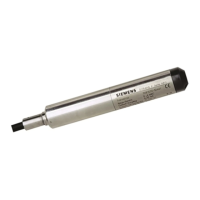
The Siemens Model 7MF1570 pressure transmitter is used for hydrostatic liquid level measurement. Typical
applications include wastewater treatment and water supply, and many other applications in a variety of industries.
The transmitter measures hydrostatic pressure using the formula:
p = ρ* g * h
with:
ρ - density of the liquid
g - acceleration due to gravity
h - height of the liquid column
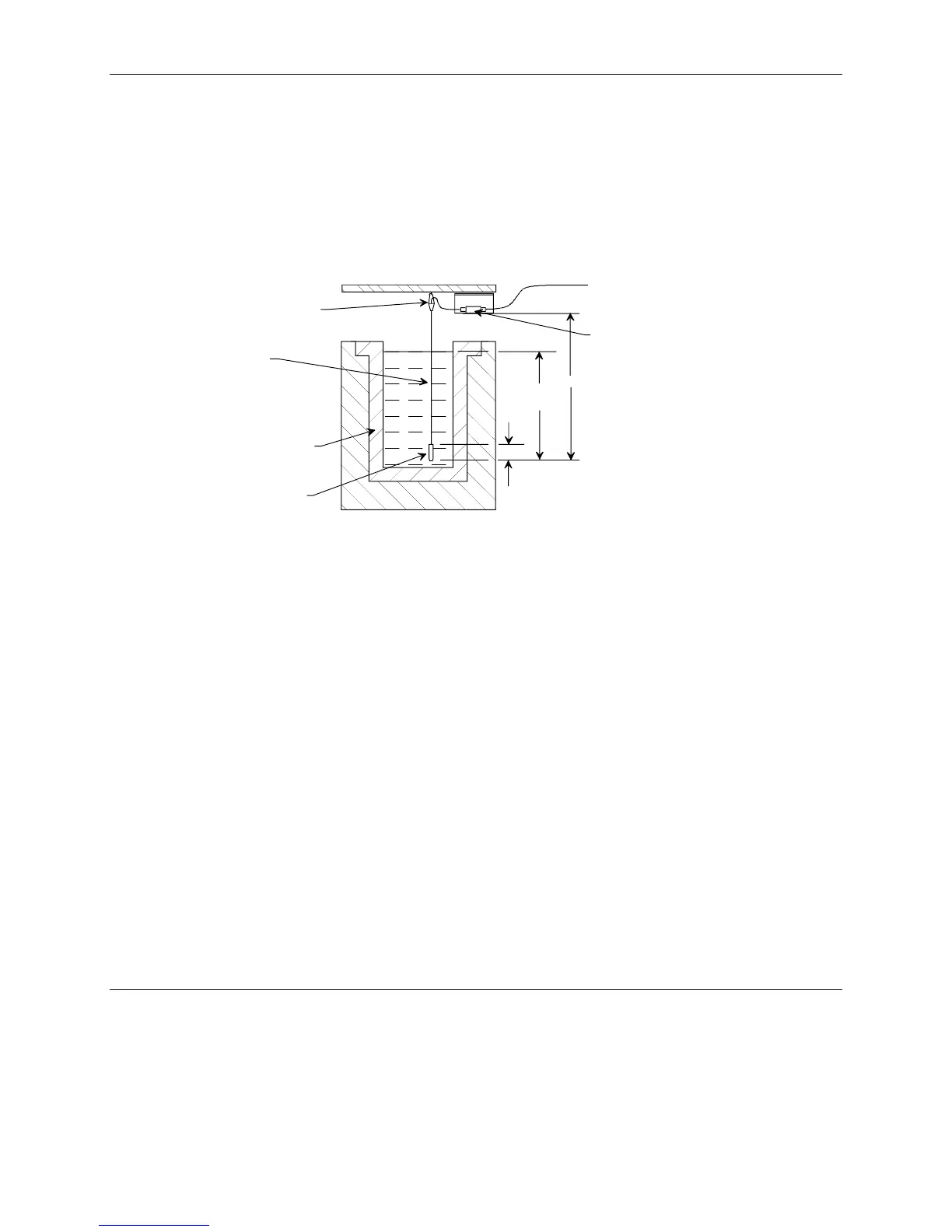
H
max
H
min
L
MG00414a
Transmitter
Junction Box
(Cable Connections)
Cable
(4-20 mA,
Vent Pipe, &
Support)
Open Vessel
Cable to Process
Instruments
Cable Hanger
FIGURE 1 Typical Application
The transmitter and cable are a single assembly. Transmitter range and cable length are determined by the model
ordered. Range and other transmitter information are printed on the sensor housing.
The transmitter has a sealed stainless steel housing that includes all pressure-to-current circuitry and is suitable for
use in corrosive liquids. Pressure is sensed by a flush-mounted stainless steel diaphragm connected to a bridge-
configured piezo-resistive sensor. The diaphragm is protected by a cap with perforations that allow the process
liquid to act on the diaphragm. Temperature compensation allows the transmitter to provide an accurate
measurement over a wide range of process temperatures.
The cable contains two wires to carry the 4-20 mA signal, a cable sheath ground wire, a cord to support the sensor,
and a vent pipe to supply atmospheric pressure to the sensor.
Note the following points when selecting an application and when using the device:
• Do not exceed the maximum permissible pressure p
max
of the transmitter. See the Specifications section.
• The transmitter can be damaged if the process medium in contact with the transmitter exceeds 80°C (176°F).
• The transmitter can be damaged if ice forms on the diaphragm.
• Measuring accuracy will be affected by clogging of the perforations in the protective cap.
• Measuring accuracy will be affected if the vent pipe is obstructed.



 To Next Page