EasyManua.ls Logo

Siemens OP921 - User Manual

Siemens OP921
4 pages
Print Icon
To Next Page IconTo Next Page
Loading...
A6V10323928_c_en_--
SIEMENS Industry, Inc.
2020-07-14
Smart Infrastructure
Installation Instructions
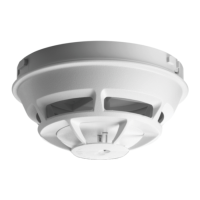
Model OP921
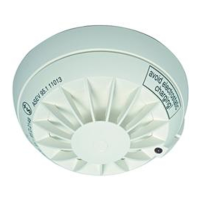
Photoelectric Detector
UL268 7th edition listed
Scan for electronic version
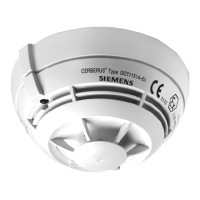
Figure 1
These instructions are written in accordance with the
installation guidelines of NFPA 72,
National Fire Alarm
Code, and CAN/ULC-
S524, The Installation of Fire Alarm
Systems.
Do not locate the detectors next to an oil burner, or
garage where exhaust fumes can trigger an alarm. Other
causes of false alarms are dust accumulation, heavy
concentrations of steam, heavy pipe or cigar smoke, and
certain aerosol sprays.
CAUTION
DO NOT install this detection device until all construction
is completed.
DO NOT store this detection device where it can be
contaminated by dirt, dust, or humidity.
AIR
CURRENTS
Before a detector can sense a fire, the products of
combustion or smoke must travel from the fire to the
detector. This travel is especially influenced by air
currents; therefore, consider air movement when
designing the system. Whi
le combustion products tend
to rise, drafts from hallways, air diffusers, fans, etc., may
help or hinder the travel of combustion products to the
detector. When positioning a detector at a particular
location, give consideration to windows and doors, both
open and closed, to ventilating systems, both in and out
of operation, and to other factors influencing air
movement. Do not install a detector in the air stream of
a room air supply diffuser. It is better to position a
detector closer to an air return.
Th
e distance that products of combustion or smoke
travel from a fire to the detector is not usually the shortest
linear route. Combustion products or smoke usually rise
to the ceiling, then spread out. Average ceiling heights of
8 to 10 feet do not abnormall
y affect detector response.
High ceilings, located in churches, warehouses,
auditoriums, etc., do affect detector response and should
be considered.
SPECIAL CEILING CONSTRUCTION FACTORS
Ceiling obstructions change the natural movement of air
and
smoke travel, joists and beams can slow the movement
of heated air and smoke, while pockets between them
can contain a reduced level of smoke. Take obstructions
created by girders, joists, beams, air condi
tioning ducts,
or architectural design into consideration when
determining area protection. Refer to the Initiating
Devices chapter of NFPA Standard 72 for Location and
Spacing requirements for specific types of construction;
e.g. beam, suspended, level, s
loped and peaked
ceilings. The detector is also compatible with the
following mechanical protection guard model: STI-
9604
(see www.STI-USA.com for details).
DETECTOR PLACEMENT
Although no specific spacings are set for the detectors
used for a clean air application, use 30-foot
center
spacing (900 sq ft) from NFPA Standard 72 initiating
devices chapter and CAN/ULC-
S524, if practical, as a
guide or starting point for a detector installation layout.
This spacing, however, is based on ideal conditions
smooth ceiling, no air movement, and no physical
obstructions. In some applications, therefore,
considerably less area is protected adequately by each
smoke detector. This is why it is mandatory to closely
follow the installation drawings. In all installat
ions place
the detector on the ceiling, a minimum of 6 inches from
a side wall, or on a wall, 12 inches from the ceiling.
For an ideal, smooth ceiling condition, place the
detectors at a maximum center spacing of 50 feet (2500
square feet). Drawings provided or approved by
Siemens Industry, Inc., or by its authorized distributors
are extremely important. The detector placements
shown on these drawings were chosen after a careful
evaluation of the area that is protected. Such factors as
air currents, temperature, humidity, pressure, and the
nature of the fire load were carefully considered.
Especially noted were the room or area configuration
and the type of ceiling (sloped or flat, smooth or
beamed). Siemens Industry, Inc.’s extensive experience
in the design of the system assures the best detector
placement by following these drawings. Sound
engineering judgment by qualified personnel must be
followed.
TO AVOID NUISANCE ALARMS
Do not locate the detectors where excessive smoke
concentrations exist under norma
l conditions, or in areas
of prolonged high relative humidity where condensation
occurs.
Question and Answer IconNeed help?

Do you have a question about the Siemens OP921 and is the answer not in the manual?

Summary

Detector Placement and Installation

Detector Placement Guidelines

Provides guidance on placing smoke detectors for optimal coverage, considering ceiling conditions and obstructions.

Avoiding Nuisance Alarms

Instructions on preventing false alarms by avoiding locations with excessive smoke or high humidity.

Air Currents and Detector Response

Explains how air currents affect smoke detection and placement considerations.

Special Ceiling Construction Factors

Discusses how ceiling features like beams affect smoke movement and detector placement.

Detector Operation and Configuration

Environmental Specifications

Details the operational temperature, humidity, and air velocity ranges for the detector.

LED Indicator Operation

Explains the meaning of different LED colors and flash intervals for detector status.

Detector Programming

Describes how to program detector addresses and select parameter sets.

Detector Mounting and Removal

Provides instructions for installing and removing the detector head from its base.

Wiring, Testing, and Maintenance

Wiring Configurations

Illustrates polarity insensitive and isolator mode wiring diagrams for the detector.

Functional Testing Procedures

Outlines how to perform functional tests using approved smoke test gases.

Detector Maintenance and Precautions

Covers maintenance, disassembly warnings, and the prohibition of painting the detector.

Summary

Detector Placement and Installation

Detector Placement Guidelines

Provides guidance on placing smoke detectors for optimal coverage, considering ceiling conditions and obstructions.

Avoiding Nuisance Alarms

Instructions on preventing false alarms by avoiding locations with excessive smoke or high humidity.

Air Currents and Detector Response

Explains how air currents affect smoke detection and placement considerations.

Special Ceiling Construction Factors

Discusses how ceiling features like beams affect smoke movement and detector placement.

Detector Operation and Configuration

Environmental Specifications

Details the operational temperature, humidity, and air velocity ranges for the detector.

LED Indicator Operation

Explains the meaning of different LED colors and flash intervals for detector status.

Detector Programming

Describes how to program detector addresses and select parameter sets.

Detector Mounting and Removal

Provides instructions for installing and removing the detector head from its base.

Wiring, Testing, and Maintenance

Wiring Configurations

Illustrates polarity insensitive and isolator mode wiring diagrams for the detector.

Functional Testing Procedures

Outlines how to perform functional tests using approved smoke test gases.

Detector Maintenance and Precautions

Covers maintenance, disassembly warnings, and the prohibition of painting the detector.

Overview

The Siemens Model OP921 is a photoelectric detector designed for fire alarm systems, compliant with NFPA 72 and CAN/ULC-S524 standards. It is UL268 7th edition listed, indicating its suitability for reducing nuisance alarms, particularly those caused by cooking.

Function Description

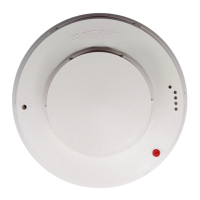
The OP921 detector operates by sensing smoke in its sensing chamber. It continuously monitors smoke sensitivity to ensure it remains within rated limits and also checks its internal sensors and electronics. This microprocessor-based detector provides visual feedback through an LED indicator that can flash in three distinct colors: green, yellow, or red, each signifying a different operational status.

  • Green Flash: Indicates normal supervisory operation and that smoke sensitivity is within rated limits. This LED can be turned off if desired, following the panel's instructions.
  • Yellow Flash: Signals that the detector is in trouble and requires replacement.
  • Red Flash: Indicates an alarm condition.
  • No Flashes: Means the detector is not powered, or replacement is needed.

The detector supports two operational modes: polarity insensitive mode and isolator mode. In isolator mode, built-in dual isolators work on both sides of the detector to isolate line shorts in front of or behind the device. This feature enhances system reliability by preventing a single fault from affecting the entire loop.

Usage Features

Placement and Installation:

Proper placement is crucial for optimal performance. While no specific spacings are set for clean air applications, NFPA 72 and CAN/ULC-S524 suggest a 30-foot center spacing (900 sq ft) as a guide. However, actual protected area can be significantly less depending on environmental factors. Detectors should always be placed on the ceiling, a minimum of 6 inches from a side wall, or on a wall, 12 inches from the ceiling. For ideal smooth ceiling conditions, detectors can be placed at a maximum center spacing of 50 feet (2500 square feet).

The installation process requires careful consideration of factors such as air currents, temperature, humidity, pressure, fire load, room configuration, and ceiling type (sloped, flat, smooth, or beamed). Siemens Industry, Inc. emphasizes adherence to installation drawings, which are developed based on extensive experience to ensure optimal detector placement. Sound engineering judgment by qualified personnel is essential.

Avoiding Nuisance Alarms:

To prevent false alarms, the detector should not be located in areas with excessive smoke concentrations under normal conditions, prolonged high relative humidity causing condensation, near oil burners, or in garages where exhaust fumes could trigger an alarm. Other common causes of false alarms include dust accumulation, heavy steam concentrations, and certain aerosol sprays.

Air Current Considerations:

Air currents significantly influence how combustion products or smoke travel to the detector. When designing the system, it's important to consider air movement from windows, doors (both open and closed), and ventilating systems. Detectors should not be installed in the air stream of a room air supply diffuser; positioning them closer to an air return is preferable. While combustion products tend to rise, drafts can either aid or hinder their travel. Average ceiling heights (8 to 10 feet) typically do not affect detector response, but high ceilings in large spaces like churches or warehouses require special consideration.

Special Ceiling Construction Factors:

Ceiling obstructions such as girders, joists, beams, and air conditioning ducts can alter air and smoke movement. These elements can slow heated air and smoke movement or create pockets with reduced smoke levels. Architectural design must be factored into area protection. Refer to NFPA Standard 72 for specific location and spacing requirements for various construction types (e.g., beam, suspended, level, sloped, and peaked ceilings). The detector is also compatible with the STI-9604 mechanical protection guard.

Wiring:

For polarity insensitive mode, Line -6 and -5 can be either line of the loop. In isolator mode, the positive line must connect to 1b and the negative line to 6. The next device in the loop should connect to 1b and 5. The line isolator is situated between connector 6 and 5. It is crucial to ensure the control panel supports isolator mode for the specific product version of the OP921 (version 17 or higher). Isolator mode should not be used with OP921 product versions below 17. Wire size should be a maximum of 14 AWG and a minimum of 18 AWG; wires larger than 14 AWG can damage the connector.

Detector Mounting:

To ensure proper installation, wires should be dressed flat against the base, slack taken up in the outlet box, and wires routed away from connector terminals. To install the detector head, rotate it counterclockwise while gently pressing until it seats fully into the base, then rotate clockwise until it stops and locks. An optional locking screw (Model LK-11) can be inserted. To remove, loosen the locking screw (if installed), rotate counterclockwise until it stops, and pull it out of the base.

Programming:

Each detector must be programmed with an address between 001 and 252 using the Model DPU Device Programming Unit. The loop and device number (system address) should be recorded on the detector label and base to prevent incorrect installation. The optional DPU label printer can assist with this. Detectors offer pre-programmed parameter sets selectable by the panel, including "Standard" and "Duct." For direct in-air duct applications, the detector must be set to the "Duct" parameter.

Functional Test:

A functional (Go, No-Go) test should be performed using approved test gases such as Smoke Sabre, Smoke Centurion, Solo A5 Smoke Detector Tester Gas, Solo A10, Testifire 1001/2001, HSI PurCheck, or HSI SmokeCheck™. This test verifies that smoke can enter the sensing chamber and trigger an alarm at the programmed obscuration level. The OP921 detectors can also be individually tested using the DPU.

Maintenance Features

The control unit automatically signals a trouble message if the OP921 detector's smoke chamber changes to a level where the set sensitivity cannot be maintained. In such cases, the detector may require replacement.

Important Cautions:

  • The detector head should never be disassembled, and no repairs should be attempted.
  • The detector is marked "DO NOT PAINT" to prevent painting during routine maintenance, as paint can affect its proper operation.

Sensitivity Measurement:

The sensitivity of OP921 detectors can be individually tested using the DPU. The sensitivity can also be measured by the control panel, following its specific instructions.

Testing Schedule:

Only qualified service personnel should perform testing. Both sensitivity and functional tests must be conducted to ensure proper operation. The minimum test schedule can be found in the current edition of NFPA 72.

Siemens OP921 Specifications

General IconGeneral
ModelOP921
ManufacturerSiemens
Protection ClassIP40
TypeOptical
Relative Humidity≤ 95 % rel. humidity

Related product manuals