Page 3:X
SIGMA TANDEM SYSTEM OWNER’S MANUAL
11301 - 00.00.0000 Section 2: Equipment • Chapter 4 - Packing & Closing the Main
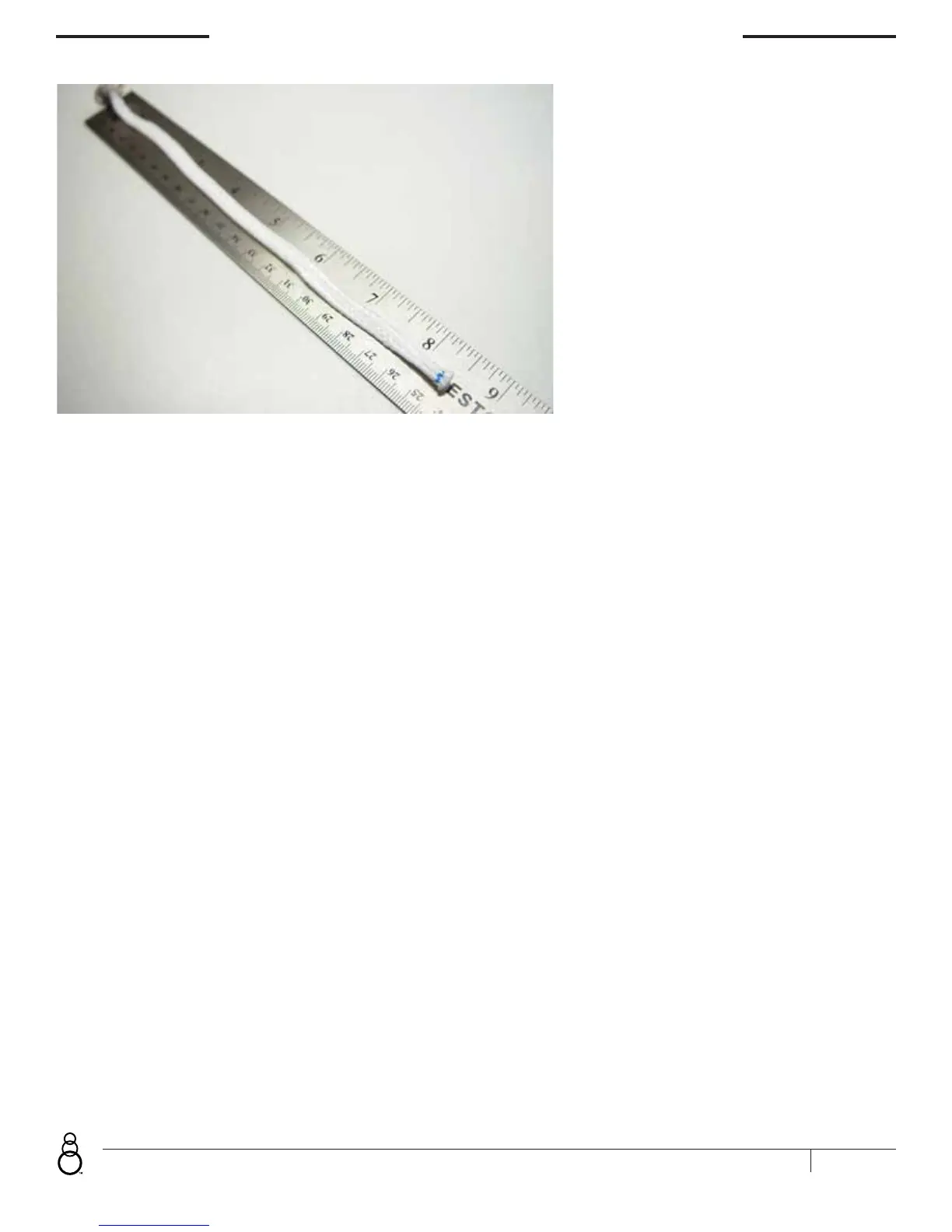
INSPECT MAIN CLOSING LOOP
The main container-closing loop is also
constructed of 1,000 lb. Spectra line, and
finished to a set length. Spectra is used
because of its low surface friction. Any other
line (other than Teflon, which is too weak)
would cause a hard or impossible pull in this
application.
The “sewn to button” construction technique
is used because knots in Spectra slip, and
there is only one correct length (8½ ”) for the
closing loop anyway. However, Spectra has a
low melting temperature, so the pull-up cord
used to close this rig must also be Spectra.
Friction caused by the use of Nylon or Dacron
pull-up cords, even when extreme care is taken, will very quickly damage the container closing loop. Replace any loop,
which is badly worn. It is not necessary to replace a loop that is just slightly fuzzy. With proper care a loop can last 100
jumps or more. If you insist on using nylon pull up cords, your closing loop must be replaced every few jumps. This can
get expensive. Spare loops and pull-up cords are stored in the main top flap pouches.
WARNING:
Do not fabricate your own closing loops.
Do not use anything but Spectra as a pull-up cord.
INSPECT THE DROGUE RELEASE RECOIL RIPCORD SYSTEM
Make sure the eyeleted stainless steel pin is straight and free of burrs. Pull all slack Spectra ripcord up out of the
housings, remove any twists, and check for wear. Each ripcord is independent of the other; over 1,000 lbs. strong, and
only sees 10 lbs. in use. So a small amount of wear is nothing to be concerned about. Pull each ripcord handle to check
the recoil function, and examine the loop-to-loop connection at each handle for wear. Make sure the ripcord housings
are secure.
INSPECT THE CANOPY
1) bridle attachment point on top and inside of canopy
The bridle attachment point at the top of the canopy is a very high wear point and should be checked for any signs of
damage occurring to the stitching both on top and inside of the canopy.
2) canopy cells, panels and seams
As you flake the canopy, take a good look at each panel for any tears, burns or broken stitches. After every 25 jumps
inspect the canopy more closely to include looking inside the cells as well as inspecting all of the reinforcing tapes
through-out the canopy.
3) line condition and attachment points
During the flaking of the canopy, take a look down the length of the lines watching for any damage or deformities.
Every so often walk down the length of the lines inspecting all cascade points and looking for any burns or broken
stitching.


 To Next Page