22"
"
07. Hair Growth Cycles
Hair growth cycles play a major role in your hair removal treatment regimen. Excessive hair
growth can be caused by a variety of factors including heredity, stress, medication, and
hormonal changes. For women, puberty, pregnancy and menopause play important rolls in
determining hair growth. Researchers estimate there can be up to 2500 hair follicles per square
inch but less than 100 hairs will actually be visible at any given time. For these reasons, it is
extremely difficult during treatment to predict the exact length of time required before there is no
further growth in the treatment area.
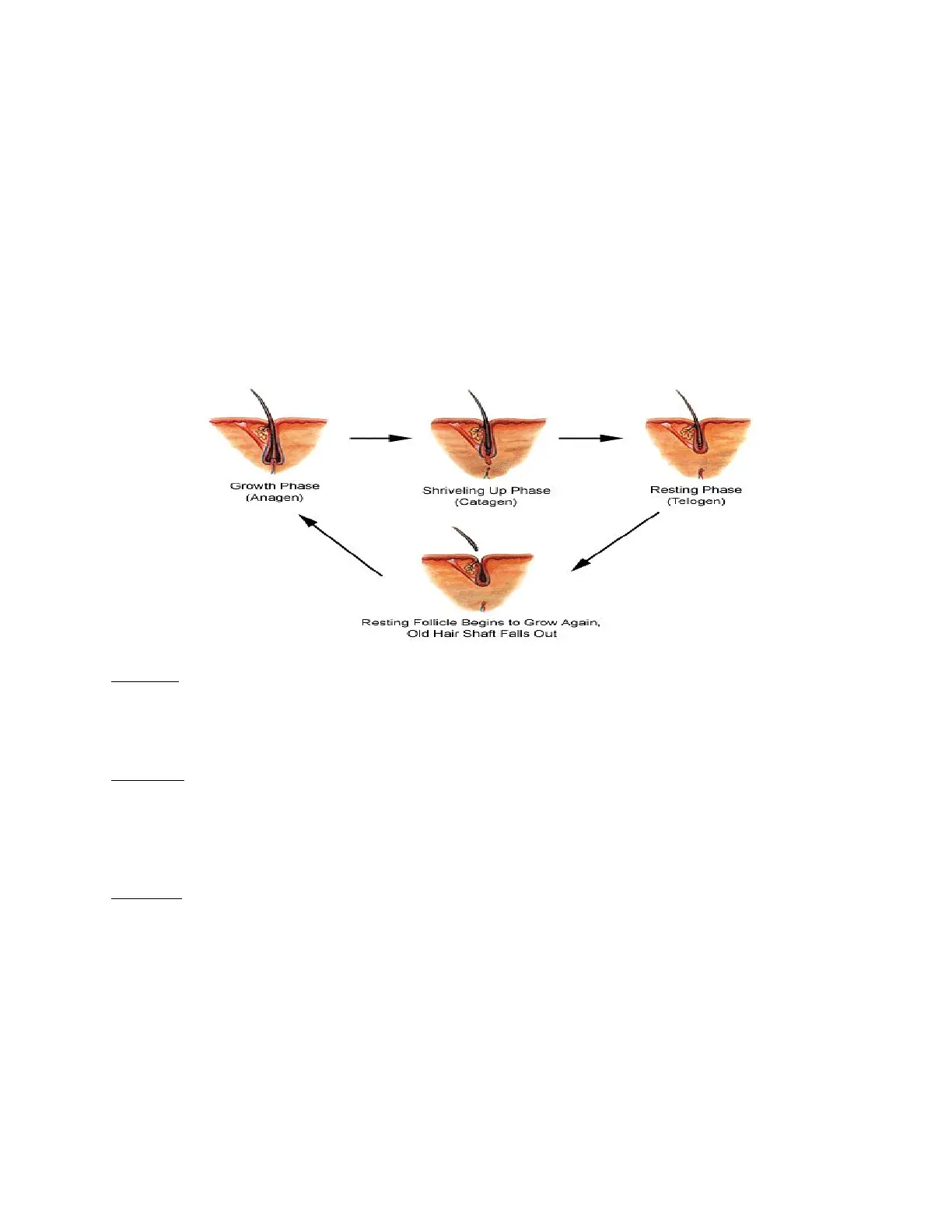
Anagen: This is the "optimum" stage for treatment. The hair is visible above the skin and can be
treated. There is plenty of water and salt available in the root area for either Thermolysis or
Blend. The hair shaft is attached to the papilla making it easy to access and destroy hair growing
cells. This anagen period for facial and body hair can last up to three weeks.
Catagen: The "optimum" stage for treatment has passed. The growth process has reversed
itself and the hair is preparing to shed .The moisture, water and salt content is diminishing.
Follicle destruction is almost impossible (hairs can be destroyed in early catagen if the needle is
inserted into the follicle to the depth of the root). A follicle treated in the Catagen stage will still
produce another hair. The Catagen stage can last as little as two days.
Telogen: This is the final stage, the "resting" stage. The hair is neither developing nor growing.
It cannot be treated during this stage, as it usually is not visible above the skin. The hair shaft is
fully detached from the papilla, therefore not allowing destruction of the papilla. This Telogen
phase can be a few days or as long as a few years.
The "perfect" time for hair to be permanently destroyed is when it is in the Anagen or
growing stage.
It can take 6 to 12 weeks for a hair to grow from the matrix or papilla, to the surface of the skin.
Therefore, if you tweeze a hair today, it is generally impossible for you to see the exact same
hair in a week. These cycles can vary from individual to individual, and produce patterns that are
vastly different.



 To Next Page