56
The engine starting procedure is as fol-
lows:
Open and inspect the engine compart-
ment. Use your sense of smell to detect
the presence of fuel fumes.
Turn battery switch ON.
Operate the bilge blower motors for at
least fi ve (5) minutes. Check for air fl ow-
ing out of the bilge exhaust vent (See
photograph on Page 22, which illustrates
the location of the bilge exhaust vent).
If you feel air fl owing from the exhaust
vent, the bilge blower motor is operating
properly.
Check the bilge water level. If it appears
above normal, turn ON the bilge pump(s)
and remove the water. Determine the
source of the excess water and repair, if
necessary, before starting the engines.
Check the bilge for the presence of any
oil. Determine the source of the oil and
repair, if necessary, before starting the
engines.
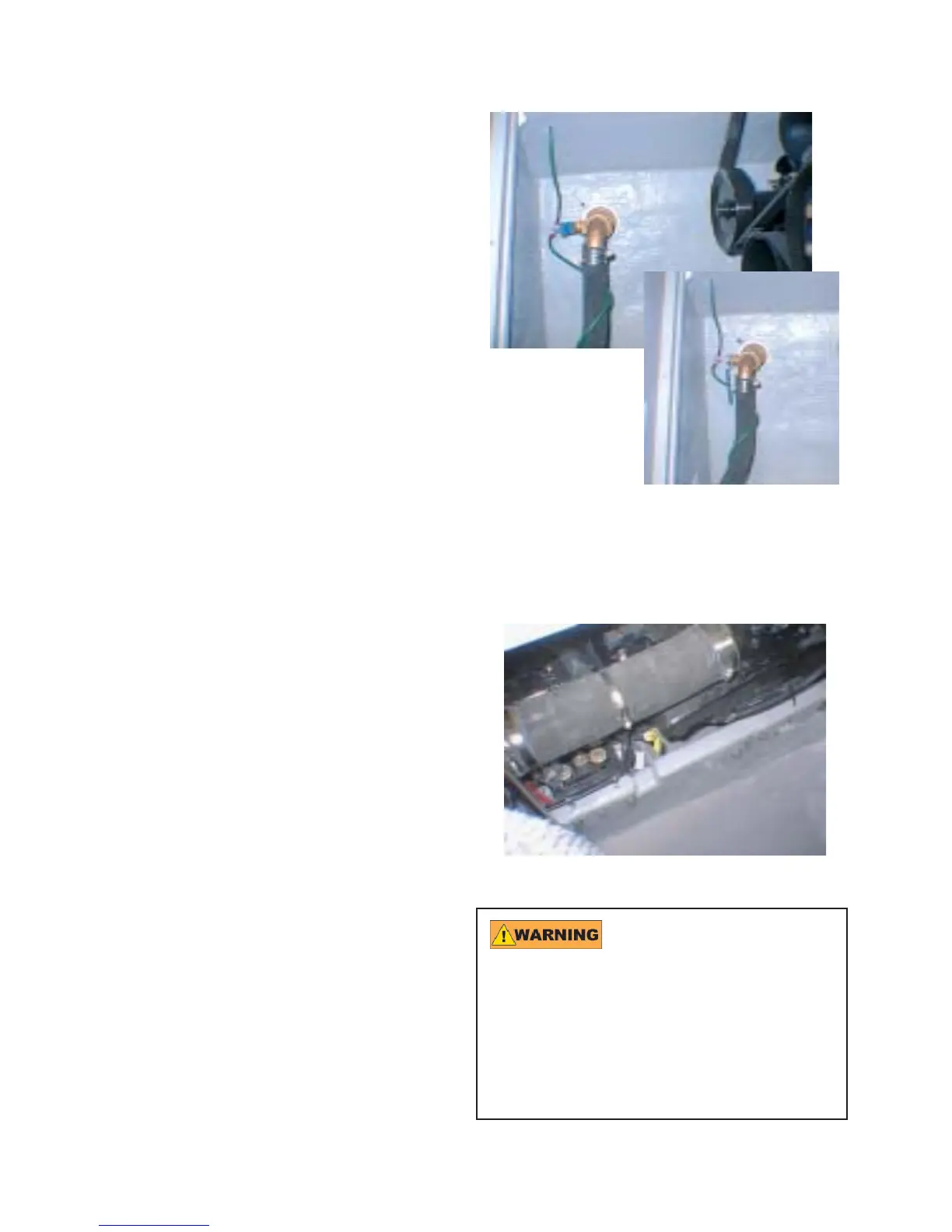
Open both engine seawater intake
valves (See Mechanical Layout on
Page 151 and 152, which illustrates the
location of the engine seawater intake
valves). The valves are open when the
handles are parallel to the valve body
(See photograph above, which illus-
trates the open and closed positions of
the engine seawater intake valves).
Visually examine both seawater strain-
ers to ensure they are free of debris.
Clean if debris is noted.
•
•
•
•
•
•
1.
Check all cooling and lubricating fl uids
(See photograph below, which illustrates
the location of the engine oil “dipstick”).
Add engine oil or transmission oil, if
needed, but DO NOT overfi ll.
DO NOT remove the cool-
ing system fi ller cap when the engine is
hot. Allow the engine to cool and then
remove the pressure cap slowly, allow-
ing the pressure to vent. Hot coolant,
under pressure, may discharge violently
and result in serious personal injury and
burns.
•



 To Next Page