
 Need help?
Do you have a question about the Simplicity 2400 Series and is the answer not in the manual?
Safe operation practices for riding mowers, covering general usage rules.
Guidelines for safe operation on slopes to prevent tip-overs and loss of control.
Precautions regarding children's safety during operation and proximity to the unit.
Safety precautions related to handling fuel, performing maintenance, and using equipment.
Instructions for charging, testing, and installing the tractor battery correctly.
Guide to functional tests and safety interlock system checks for safe operation.
Adjusting the brake arm and brake spring for proper stopping performance.
This document provides comprehensive setup and adjustment instructions for Coronet, 2400, and RE 200 Series Tractors and Mowers. It is designed for dealer personnel to ensure proper assembly, testing, and preparation of units for customer delivery. The manual emphasizes safety throughout, with dedicated sections on safety rules and checks.
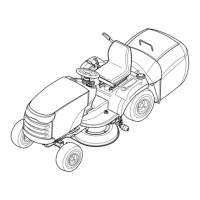
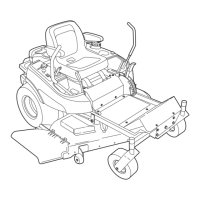
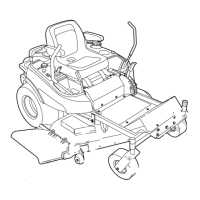
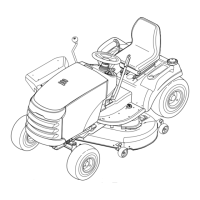
The Coronet, 2400, and RE 200 Series Tractors are riding mowers designed for lawn maintenance. They feature a robust engine, a transmission system, and a mower deck for cutting grass. The tractors are equipped with various controls for operation, including a ground speed control lever, clutch/brake pedal, parking brake, throttle and choke cables, electric PTO clutch, headlight switch, and steering. The mower decks, available in 30-inch and 34-inch sizes, are designed for efficient grass cutting and can be adjusted for height.
The setup process begins with uncrating the unit, which involves removing the crate, cutting banding, and rolling the tractor off the skid. Battery activation and installation are crucial steps, requiring careful handling of battery acid and proper connection of cables to avoid short circuits. For CE (Export) models, the seat and steering wheel assembly are detailed, ensuring correct orientation and secure fastening.
Fluid levels, including engine oil and transmission oil, must be checked and filled to specified levels to ensure optimal performance and longevity. Tire pressures are also adjusted for proper traction, cut quality, and extended tire life.
Mower assembly involves installing the deflector and torquing the mower blades to prevent serious injury from improper handling. The blades must be installed with tabs pointing up toward the deck and secured with capscrews, spring washers, and spline/hex washers. Mower installation and removal procedures are outlined, emphasizing proper positioning of the mower hitch, lift cable, and belt tensioning.
Mower deck leveling is a critical adjustment for achieving an even cut. This involves checking side-to-side and front-to-back levelness, with detailed instructions on how to adjust eccentric nuts and leveling rods.
Safety checks are paramount before operating the unit. These include verifying the proper function of all controls, checking for fluid leaks, and performing a mower blade stopping check to ensure the blades stop within five seconds of disengaging the electric PTO clutch. The safety interlock system is thoroughly tested, covering scenarios where the engine should or should not crank, and when it should shut off, to prevent accidents.
The burnishing of the electric PTO clutch is a recommended procedure to ensure proper engagement and disengagement of the mower blades. This involves engaging and disengaging the PTO switch multiple times to condition the clutch.
Adjustment procedures cover various aspects of the tractor's operation. Seat adjustment allows the operator to position the seat for optimal comfort. Steering gear adjustment addresses excessive slack in the steering system, ensuring precise control. Neutral adjustment is performed if the rider creeps forward or backward when the ground speed control lever is in the neutral gate, requiring precise manipulation of the shift rod. Brake and brake spring adjustment ensures proper braking performance and parking brake function. Ground speed lever resistance adjustment allows the operator to customize the feel of the ground speed lever. The Reverse Mow Option (RMO) switch adjustment ensures the engine shuts off if reverse travel is attempted with the PTO on and RMO not activated, and that the RMO light illuminates when activated.
The manual provides detailed lubrication instructions, identifying various grease and oil points on the steering linkage, foot pedal, mower linkage, transmission idler assembly pivot, rear axle shafts, control linkage, seat adjustment assembly, brake linkage, mower deck height adjustment linkage, and manual lift lever. Automotive lithium grease is recommended for grease fittings, and moving metal parts should be oiled where contact is made with other parts.
Service procedures include transmission maintenance, which details the process of checking and changing the transaxle oil. This involves removing the transaxle, cleaning the expansion tank and oil fill port, draining the oil, and refilling it to the correct level. Transmission drive belt replacement and mower belt replacement procedures are also outlined, providing step-by-step instructions for removing old belts and installing new ones, with an emphasis on avoiding damage to pulleys. The document stresses the importance of regular checks for loose hardware and proper operation of all safety devices.
 General
| Engine | Briggs & Stratton |
|---|---|
| Transmission | Hydrostatic |
| Fuel Capacity | 1.5 gallons |
| Cutting Height | 1.5 - 4.5 inches |
| Deck Material | Steel |








 To Next Page
