Sewing – 21
English
Sewing – 21
English
Zigzag Stitching
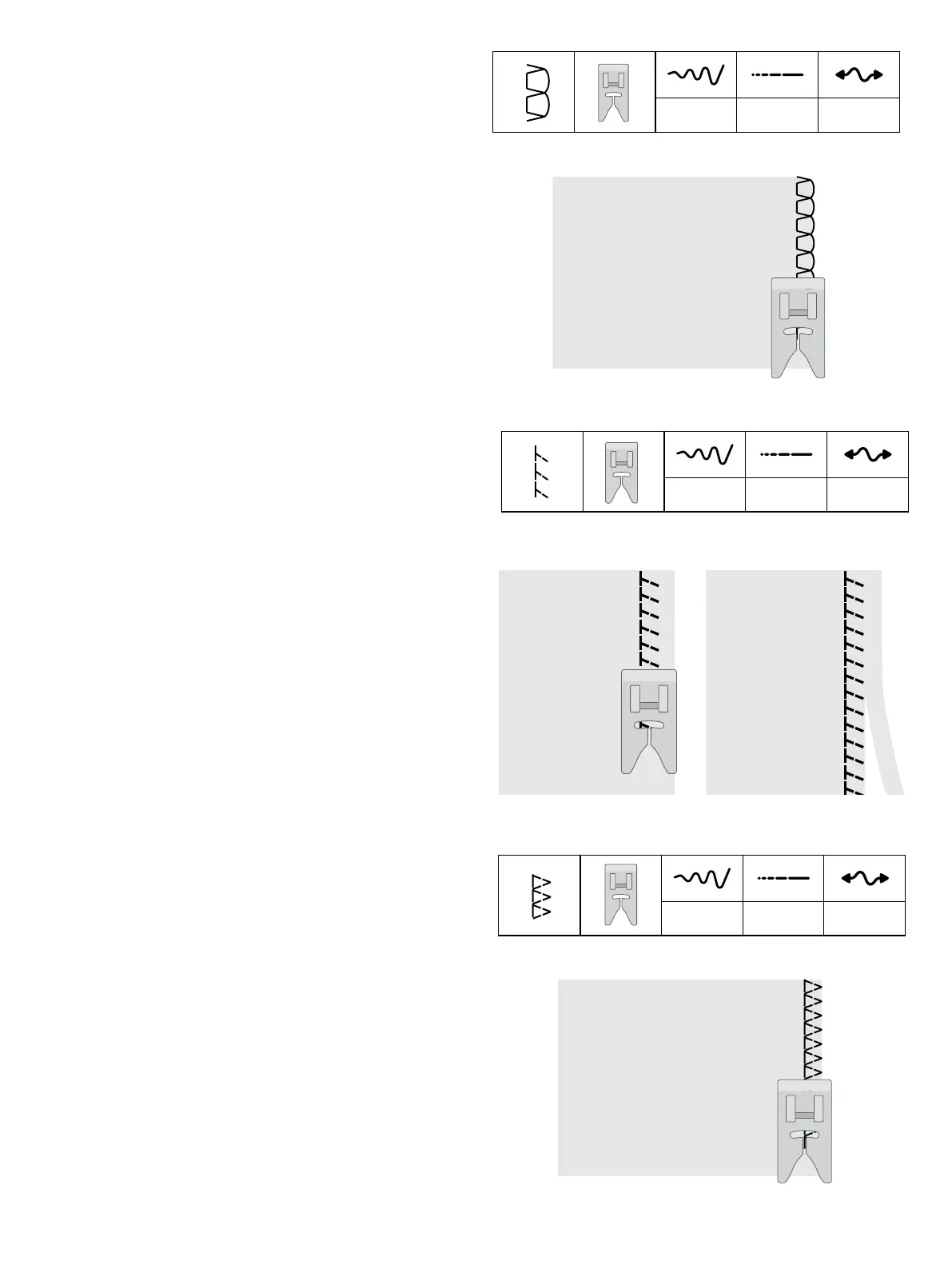
Multi-Step Zigzag Stitch
Slant Overedge Stitch
Overedge Stitch
The top thread may appear on the bottom depending on the
thread, fabric, type of stitch and sewing speed, but the bobbin
thread should not appear on the top of the fabric. If bobbin
thread is pulling to the top or you are experiencing puckering,
slightly reduce the tension with the Thread Tension Control.
Multi-step zigzag stitch is used to overcast raw edges. Make
sure the needle pierces the fabric on the left side and overcasts
the edge on the right side.
The stitch can also be used as an elastic stitch to allow seams
to stretch when sewing knit fabrics.
The slant overedge stitch sews the seam and overcasts the edge
all at one time, perfect for stretch fabrics. This stitch is more
elastic than normal seams, very durable and quickly sewn.
Place the fabric under the presser foot aligning the edge of
the presser foot with the edge of the fabric. Once the seam is
nished, trim excess fabric outside the seam.
Tip: You can also use the Blind Hem Foot to sew at the very
edge of the fabric. Adjust the extension on the foot, and let
it guide along the fabric edge. Always test sew on a piece of
scrap fabric rst, the result might vary due to the fabric weight
and quality.
This is the same type stitch used by the garment industry in
making sportswear - it forms and nishes the seam in one oper-
ation. It’s very eective for use in repairing raw or worn seams
of garments.
Set up for multi-step zigzag stitch
Set up for slant overedge stitch
Set up for overedge stitch
5.0 2.5 3–5
5.0 2.5 3–5
5.0 2.5 3–5


 To Next Page