EasyManua.ls Logo

Smeg SCV115A - User Manual

Smeg SCV115A
16 pages
Print Icon
To Next Page IconTo Next Page
Loading...
Table of Contents
1. THE ENVIRONMENT - DISPOSAL INSTRUCTIONS ........................................................... 20
2. PRECAUTIONS FOR USE .................................................................................................... 21
3. SAFETY PRECAUTIONS ...................................................................................................... 22
4. INSTALLATION AND CONNECTION ................................................................................... 23
4.1 Positioning and levelling the appliance ......................................................................................................... 24
4.2 Electrical connection ..................................................................................................................................... 24
4.3 Overall dimensions ........................................................................................................................................ 24
5. GETTING TO KNOW YOUR APPLIANCE ............................................................................ 25
6. BEFORE INSTALLATION ..................................................................................................... 25
7. OPERATION .......................................................................................................................... 26
7.1 Electronic controls ......................................................................................................................................... 26
7.2 Temperature display ..................................................................................................................................... 26
7.3 Temperature setting ...................................................................................................................................... 26
7.4 Low-temperature alarm ................................................................................................................................. 27
7.5 Storage Temperatures .................................................................................................................................. 27
7.6 Filling the cellar with bottles .......................................................................................................................... 29
7.7 Practical hints for storing and enjoying wines ............................................................................................... 29
8. ACCESSORIES ..................................................................................................................... 30
9. CLEANING AND MAINTENANCE ......................................................................................... 30
9.1 Defrosting the wine cellar .............................................................................................................................. 30
9.2 Cleaning the wine cellar ................................................................................................................................ 30
9.3 Switching off the wine cellar .......................................................................................................................... 30
9.4 Operating noises ........................................................................................................................................... 31
9.5 Identifying and Dealing with Malfunctions. .................................................................................................... 32
10. SOME HINTS FOR SAVING MONEY ................................................................................. 34
INSTRUCTIONS FOR THE INSTALLER: these are intended for the qualified engineer who is to install,
commission and test the appliance
INSTRUCTIONS FOR THE USER: these provide recommendations for use, a description of the controls
and the correct procedures for cleaning and maintaining the appliance
19

Question and Answer IconNeed help?

Do you have a question about the Smeg SCV115A and is the answer not in the manual?

Overview

This document describes a wine cellar appliance, providing instructions for installation, operation, and maintenance.

Function Description

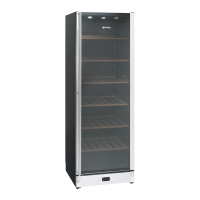
The primary function of this appliance is the cooling and storage of drinks, specifically wine, at specific temperatures to preserve their flavor and bouquet. It is designed for household use and complies with EEC directives. The wine cellar features an advanced electronic control system that maintains set temperatures at both the top and bottom of the appliance, utilizing a refrigeration system, a heating element, and a fan. It also includes an activated carbon filter to ensure optimal storage conditions.

Important Technical Specifications

The appliance is packaged using non-pollutant, environment-friendly, recyclable materials. The refrigerant used in the appliance's circuit is R134a, which is harmful to the eyes, necessitating caution in case of leaks. The nameplate, located in the bottom left-hand corner of the wine cellar's interior, provides technical data, serial number, and marking. It specifies the rated voltage and frequency, and the appliance is designed to withstand brief voltage fluctuations of not more than 15% below or 10% above the rated value. The appliance is tagged under European Directive 2002/96/EC on Waste Electrical and Electronic Equipment (WEEE), indicating regulations for collection and recycling.

The wine cellar's climate class (SN, N, ST, T) determines the suitable ambient temperature range for its operation:

  • SN (Subnormal): from +10°C to +32°C
  • N (Normal): from +16°C to +32°C
  • ST (Subtropical): from +18°C to +38°C
  • T (Tropical): from +18°C to +43°C

The maximum overall dimensions with the door open are 600mm width and 1075mm depth. The cellar's shelves can accommodate up to 198 Bordeaux bottles of 750 ml, depending on the storage method. For example, arrangement A allows for 115 bottles, while arrangement B allows for 198 bottles.

Usage Features

  • Installation: The appliance should be placed in a dry, well-ventilated area, away from direct sunlight or heat sources. A gap of at least 5 cm is required between the back of the appliance and the wall for proper condenser cooling, and an opening of at least 200 cm² behind the wine cellar is necessary. If installed under a wall cupboard, a minimum distance of 5 cm between the two is required. The appliance has two adjustable feet for leveling. Before first use, it should stand upright for about two hours before connecting to a mains socket with earth contact.
  • Electronic Controls: The control panel includes an on/off switch, a light switch (which can be set to constant on or only when the door is open), temperature setting buttons, and a temperature display. The display shows the actual temperatures at the top and bottom of the appliance, filtered to simulate bottle temperatures.
  • Temperature Setting: Temperatures can be set for the top (8-22°C) and bottom (5-22°C) compartments using SET1 and SET2 buttons, respectively. A child lock device can be activated by simultaneously pushing the "up" and "down" buttons.
  • Door Alarm: An alarm activates if the door remains open for more than 2 minutes.
  • Alarm Devices: The appliance features sub-alarms for low temperature ("LtA") and excess high temperature ("HtA"), accompanied by a beeper and a warning on the display. These alarms depend on the set points. The beep can be cancelled by pressing any thermostat button, and the displayed alarm can be cleared by pressing the on/off button, which also restarts the compressor.
  • Wine Storage: The manual provides a detailed table of recommended storage and serving temperatures for various wine types, including young whites, mature whites, rosés, reds (young, light, mature, full-bodied, cask-aged), sparkling wines (sweet, aromatic, Charmat method, traditional method), dessert wines, and fortified/liqueur wines.
  • Bottle Placement: Bottles should be placed to avoid touching the rear wall, ensuring proper air circulation. Hot bottles should be cooled to room temperature before being placed inside.
  • Practical Hints: Wines should always be stored out of their original packaging. Opened bottles should be placed so the wine covers the cork. Wine should be brought slowly to its ideal serving temperature before serving (e.g., rosé 2-3 hours, red 3-4 hours, white and sparkling wines served chilled from the refrigerator).

Maintenance Features

  • Cleaning: Before cleaning, disconnect the appliance from the electricity supply. The exterior should be cleaned with water and a gentle liquid detergent or window-cleaning product, avoiding abrasives, acids, or chemical solvents. The interior should not be cleaned with steam; use recommended procedures and products. Removable wooden parts should not be washed in a dishwasher; use warm water and washing-up liquid or water and vinegar. Electrical lighting components should not get wet. Seals should be cleaned with warm water and dried. The defrosting water drainage hole must be kept clear and cleaned periodically with a toothpick. The rear of the appliance should also be cleaned periodically to prevent dust accumulation, which can interfere with operation.
  • Defrosting: The wine cellar features automatic defrosting. Frost forms on the rear wall when the compressor is active and melts when it is not, with water draining into a tray on the compressor to evaporate. Condensation on internal surfaces during normal use is normal and not a malfunction.
  • Switching Off: If the wine cellar will be out of use for an extended period (more than 3-4 days), it's best to switch it off, empty it, disconnect from the mains, dry any residual moisture, and leave the door ajar to prevent unpleasant smells.
  • Operating Noises: Normal operating noises include a humming sound from the compressor (which should drop in volume after a few minutes) and gurgling/rustling sounds from the refrigerant. If noises are excessively loud, check that the appliance is properly leveled, shelves are securely fitted, bottles are stable and not touching, and no other appliances are touching the wine cellar.
  • Troubleshooting: The manual provides a troubleshooting guide for common malfunctions such as noisy operation, compressor not starting, insufficient cooling, excessive condensation, water in the bottom, and a hard-to-open door, along with possible causes and solutions.
  • After-Sales Service: In case of malfunctions not covered in the manual or for more information, contact an authorized after-sales service, providing the product model and serial number from the nameplate.

Smeg SCV115A Specifications

General IconGeneral
BrandSmeg
ModelSCV115A
CategoryKitchen Appliances
LanguageEnglish

Related product manuals