EasyManua.ls Logo

Snapper MR216015B - User Manual

Snapper MR216015B
28 pages
Print Icon
To Next Page IconTo Next Page
Loading...
Safety Instructions & Operator's Manual for
21" STEEL DECK
WALK MOWERS
"M" MODEL
SERIES 15
MODELS
PUSH PROPELLED
MODEL MODEL
MR216015T MRP216015B
MR216015B MRP216015BV
MR216015BV
MODEL NUMBER EXPLANATION
MODEL DESIGNATION
SELF-PROPELLED
CUTTING WIDTH
IMI
1
RIP
1
I
ENGINE TYPE
SERIES DESIGNATION
ENGINE HORSE POWER
M - Middle Market P - Self Propelled Model
R- Recyclin_l Model
21 - 21" Cuttin_l Width
60 - 6.0 HP (Engine Horse Power)
15 - Series Desi_lnation
B - BridalS Engine
T - Tecumseh En_line
V - Overhead Valve Engine
Thank you for buying a SNAPPER Product! Before operating your Walk Behind. read this manual carefully and pay
particular attention to the "IMPORTANT SAFETY INSTRUCTIONS" on Pages 2 & 3. Remember that all power
equipment can be dangerous if used improperly. Also keep in mind that SAFETY requires careful use in accordance
with the operating instructions and common sense.
COPYRIGHT © 2000
SNAPPERINC.
ALL RIGHTS RESERVED
Ih,GA:, 30253 U.S.A.
MANUAL No. 7-4115 (I.R. 10/11/00)
Question and Answer IconNeed help?

Do you have a question about the Snapper MR216015B and is the answer not in the manual?

Summary

Important Safety Instructions

Protection for Children

Safety guidelines for keeping children away from the mower and preventing them from operating it.

Slope Operation

Precautions and techniques for safely operating the mower on slopes to prevent accidents.

Preparation

Steps and considerations before operating the mower, including reading the manual and understanding controls.

Important Safety Instructions (Continued)

Operation

Key operational safety rules for using the mower, avoiding hazards and ensuring proper use.

Maintenance and Storage

Guidelines for safe storage, maintenance practices, and preventing fire hazards.

Section 1 - Familiarization

1.1 Introduction

Manual's purpose, emphasizing safety and proper operating practices for walk-behind mowers.

1.2 Nomenclature

Identification of essential parts and controls of the Snapper walk-behind mower.

Section 2 - Operating Instructions

2.1 Pre-Start Check List

Essential checks and services to perform before each start-up for safe and proper mower operation.

2.2 Starting & Operation

Procedures for starting the engine and blade, including priming and warm-up.

Section 2 - Operating Instructions (Continued)

2.2.2 Propelling Mower

Instructions for engaging and controlling the self-propelled feature of the mower.

2.3 Stopping

Proper procedures for stopping the mower's engine and blade safely.

2.4 Handle Height Adjustment

How to adjust the mower's handle height for comfortable and safe operation.

Section 2 - Operating Instructions (Continued)

2.5 Cutting Height Adjustment

Steps to adjust the cutting height of the mower for different grass conditions.

2.6 Recycling Operation

Guidelines for optimal recycling of grass clippings while mowing.

Section 3 - Maintenance

3.1 Introduction

Importance of using genuine Snapper parts and contacting dealers for service and parts.

3.2 Service - After First 5 Hours

Initial maintenance tasks required after the first 5 hours of mower operation.

3.2.1 Change Engine Oil

Detailed steps for changing the engine oil, including safety precautions.

3.2.2 Check Grease Level in Transmission

Procedure to check and maintain the grease level in the mower's transmission.

Section 3 - Maintenance (Continued)

3.2.3 Check Mower Blade

How to inspect the mower blade for wear, damage, and proper torque.

3.2.4 Check Engine Drive Belt

Inspection of the engine drive belt for signs of wear or damage.

3.2.5 Check Transmission Poly-V Belt

Inspection of the transmission Poly-V belt for wear or damage.

3.3 Service - Annually

Annual maintenance tasks, referencing engine manual and service schedule.

3.4 Storage Procedure

Steps for preparing the mower for end-of-season storage, including fuel and folding handles.

Section 4 - Adjustments & Repair

4.1 Mower Blade Replacement

Procedures for replacing the mower blade, including wear limits.

4.1.1 Standard Blade Wear Limit

Identifying the wear limit for standard mower blades.

4.1.2 Ninja Blade Wear Limit

Identifying the wear limit for Ninja blades.

4.1.3 Blade Sharpening

Instructions on how to sharpen the mower blade correctly.

Section 4 - Adjustments & Repair (Continued)

4.2 Wheel Drive Control Adjustment

How to adjust the wheel drive control for proper engagement and disengagement.

Section 4 - Adjustments & Repair (Continued)

4.3 Driven Disc Service

Troubleshooting and service for the driven disc if the mower does not propel properly.

4.3.1 Cleaning Drive Disc & Driven Disc

Steps to clean the drive and driven discs to prevent slippage.

4.3.2 Drive Spring Repair;Replacement

How to repair or replace the drive spring for the transmission.

4.3.3 Driven Disc Adjustment

Adjusting the driven disc for correct contact with the drive disc.

Section 4 - Adjustments & Repair (Continued)

4.3.4 Replacing Rubber Driven Disc Ring

Procedure for replacing the rubber ring on the driven disc.

Section 4 - Adjustments & Repair (Continued)

4.3.5 Replacing Bearing In Driven Disc Assembly

How to replace the bearing in the driven disc assembly.

Section 4 - Adjustments & Repair (Continued)

4.3.6 Replacement Of Bearing On Pulley End Of Hex Shaft

Steps to replace the bearing on the pulley end of the hex shaft.

4.4 Belt Service

Information on servicing the engine drive belt and transmission Poly-V belt.

4.4.1 Engine Drive Belt Replacement

Procedure for replacing the engine drive belt on self-propelled mowers.

Section 4 - Adjustments & Repair (Continued)

4.4.2 Transmission Poly-V Belt Replacement

Procedure for replacing the transmission Poly-V belt.

Troubleshooting

Engine Will Not Start Using Recoil Starter

Common causes and corrective actions for an engine that won't start with the recoil starter.

Engine Stalls or Stops After Running

Causes and solutions for the engine stalling or stopping during operation.

Engine Loses Power

Reasons for engine power loss and how to address them.

Excessive Vibration

Identifying causes of excessive vibration and how to fix them.

Mower Will Not Move; Loss Of Traction (Self-Propelled Models)

Troubleshooting why a self-propelled mower won't move or has lost traction.

Cutting Grass Improperly

Causes and solutions for the mower cutting grass improperly.

Poor Grass Discharge

Issues related to poor grass discharge and how to correct them.

Oil Leaking

Identifying and fixing sources of oil leaks from the mower.

Service Schedule

Engine Oil

Schedule for checking and changing engine oil based on usage hours.

Air Pre-Cleaner

Service intervals for cleaning the air pre-cleaner element.

Air Cleaner

Service intervals for cleaning or replacing the air cleaner.

Spark Plug

Recommended replacement interval for the spark plug.

Engine Cooling System

Maintenance schedule for cleaning engine cooling fins and shroud.

Drive Belts

Schedule for checking drive belts for wear and tension.

Mower Blade

Schedule for checking mower blade for wear, damage, and replacement.

Mower Deck

Schedule for cleaning debris accumulation from the mower deck.

Transmission Grease

Schedule for checking and periodically greasing the transmission.

Drive Disc

Schedule for checking the drive disc for wear and damage.

4.5 Maintenance;Replacement Parts

Maintenance Parts

List of common maintenance parts for the mower.

3 Year Limited Warranty

Disclaimer of Warranty

Details on warranty disclaimers, implied warranties, and limitations of liability.

Primary Maintenance

Snapper vs. Dirt!

An illustration and explanation of how dirt damages engines and the importance of maintenance.

Primary Maintenance (Continued)

Air Cleaner Importance

Explains the engine's need for air and the consequences of a poorly serviced air cleaner.

Adverse Effects of Clogged Air Cleaner

Lists the negative effects on the engine from an improperly serviced or dirty air cleaner.

Primary Maintenance (Continued)

Air Intake and Cooling System Maintenance

Importance of cleaning air intake screens, fins, and cooling systems for engine longevity.

Fuel Contamination and Storage

Warnings about fuel contamination, storage, and breakdown, and proper fuel handling.

Engine Lubrication and Oil Level Check

Essential steps for checking engine oil level and proper lubrication.

Primary Maintenance (Continued)

4-Cycle Engine Oil Level

Specific instructions for checking the oil level in 4-cycle engines.

2-Cycle Engine Fuel Mixing

Requirements for mixing fuel and oil for 2-cycle engines.

Starting Check List

A checklist of items to verify before starting the mower engine.

Overview

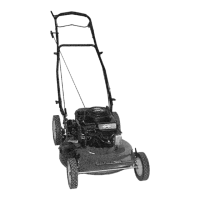
This document is an Operator's Manual and Safety Instructions for SNAPPER 21" Steel Deck Walk Mowers, "M" Model Series 15.

Function Description

The SNAPPER 21" Steel Deck Walk Mowers are designed for residential, non-commercial use, primarily for cutting grass. These are walk-behind mowers, with both push and self-propelled models available. The self-propelled models feature a wheel drive system to assist in forward motion. The mowers are equipped with a cutting blade for grass cutting and a recycling deck cover for mulching operations.

Important Technical Specifications

The manual details specific model numbers and their configurations:

  • Model Series: "M" Model Series 15
  • Deck Material: 21" Steel Deck
  • Cutting Width: 21 inches
  • Engine Horse Power: 6.0 HP (indicated by "60" in model numbers)
  • Engine Types:
    • B: Briggs Engine (e.g., MR216015B, MRP216015B)
    • T: Tecumseh Engine (e.g., MR216015T)
    • V: Overhead Valve Engine (e.g., MRP216015BV)
  • Model Designation:
    • M: Middle Market
    • R: Recycling Model
    • P: Self Propelled Model
  • Blade Retaining Cap Screw Torque: 30 to 40 ft. lbs.
  • Wheel Drive Control Clearance: 1/16" to 1/8" between spring hook and clutch cable eye (for self-propelled models).
  • Blade Sharpening Angle: 22 to 28 degrees.
  • Transmission Grease: Snapper "00" Grease (Part No. 2-9443).
  • Engine Drive Belt (Stretch Type): Part No. 4-6784 (for models without idler pulleys).
  • Wheel Drive Pulley to Transmission Pulley Belt: Part No. 1-2354.
  • Rubber Drive Tire: Part No. 4-1855.
  • Cutter Blade (Mulching): Part No. 4-1939.
  • Cutter Blade (Ninja - Quad Edge): Part No. 2-6407.
  • Blade Control Cables:
    • MRP216515BV: Part No. 7-2933
    • MR216015T: Part No. 4-1971
  • Clutch Pull Cable (Propelled Models): Part No. 7-2932.

Usage Features

  • Starting:
    • For cold engines, push the primer bulb three times.
    • Pull the blade control against the handle.
    • Pull the rope start handle to crank the engine.
    • Allow a brief warm-up after starting.
  • Stopping: Release the blade control to stop the engine and blade. Release the wheel drive control to stop forward motion (self-propelled models).
  • Self-Propelled Operation (P models):
    • Adjust ground speed by moving the ground speed control to the desired position (after stopping the engine and blade).
    • Move the wheel drive control against the handle to engage the wheel drive and propel the mower forward.
  • Handle Height Adjustment: Loosen lower nuts on each lower handle, adjust the upper handle to the desired height, and then tighten the nuts.
  • Cutting Height Adjustment: Pull the height adjusting latch outward and move it to the desired cutting height. The highest cutting position is Notch 6, and the lowest is Notch 1. For optimal deck level, the rear height adjustment latch should correspond with the front wheel adjustments.
  • Recycling Operation:
    • For best results, cut a maximum of 1/3 of grass blade length.
    • Recycle only when grass is dry.
    • Set all wheels to the highest cutting position (Notch 6).
    • Move engine speed control to "FAST" (Rabbit) position.
    • Move ground speed control to the slowest setting.
    • Mow slowly. If grass is dense, lower each rear wheel latch one notch lower than the front wheel latches to improve recycling performance.
  • Safety: The manual emphasizes "IMPORTANT SAFETY INSTRUCTIONS" on pages 2 & 3, covering protection for children, slope operation, preparation, and general operation. It warns against operating the mower under the influence of alcohol or drugs, mowing on wet grass, or leaving the machine unattended with the engine running.

Maintenance Features

  • Pre-Start Checklist: Before each start-up, check guards, deflectors, grass bag, adapter, and covers for secure tightening. Ensure blade and wheel drive controls work freely. Check cutting height and adjust as needed. Check engine oil and add if necessary. Add fuel outdoors with the engine stopped and cool. Clean exterior surfaces of the cutting deck and engine.
  • After First 5 Hours:
    • Change Engine Oil: Refer to the Engine Manual for specifications. For easiest change, tilt the mower up on its lower handle and drain oil through the dipstick tube.
    • Check Transmission Grease: Remove the transmission fill plug. If liquid grease is not visible on the input gear, add Snapper "00" grease until the gear is covered.
  • Every 25 Hours:
    • Check engine oil (if operating under heavy load or high temperatures).
    • Check transmission grease.
    • Check engine drive belt and poly-v belt for wear and tension.
    • Check drive disc for wear and damage.
  • Annually:
    • Service the engine, air filter, and engine oil according to the engine owner's manual.
    • Replace the spark plug.
    • Clean the engine shroud and fins.
  • Mower Blade:
    • Inspection: Frequently inspect the blade for excessive wear, damage, chips, bends, cracks, or notches. Replace if worn beyond limits (e.g., notch starts, cracks on tip).
    • Sharpening: Disconnect the spark plug wire. Tilt the mower on its rear wheels. Remove the blade. Sharpen the blade on a grinding wheel at a 22 to 28-degree angle, but do not sharpen beyond the original cutting edge. Check blade balance and grind the heavy end if necessary. Reinstall the blade, ensuring the blade hub is seated between flanges, and tighten the cap screw to 30-40 ft. lbs.
  • Transmission Service (Self-Propelled Models):
    • Driven Disc Service: If the mower does not propel properly, check for grease on the drive disc, broken drive spring, driven disc adjustment, worn driven disc rubber ring, or worn poly-v/engine drive belts.
    • Cleaning Drive Disc & Driven Disc: Wipe away oil/grease with a clean cloth, use solvent or soapy water, rinse, and dry.
    • Drive Spring Repair/Replacement: Reconnect loose springs or replace broken ones.
    • Driven Disc Adjustment: Place ground speed control in the number six speed position. Remove the driven disc spring and loosen the connector hex nut. Slide the driven disc assembly to 1/8" from the outside edge of the drive disc, maintaining this measurement and removing linkage looseness. Retighten the hex nut. Recheck the 1/8" measurement. Reinstall the spring.
    • Replacing Rubber Driven Disc Ring: Remove the clip from the transfer rod, then remove the transfer rod and speed control rod. Unhook the drive spring and slide the driven disc assembly off the hex shaft. Remove retaining rings and the old rubber ring. Install a new rubber ring with retaining rings. Reassemble.
    • Replacing Bearing in Driven Disc Assembly: Remove the driven disc assembly. Remove snap rings and slide the rubber driven disc hub out of the bearing. Drive out the existing bearing. Install a new bearing and secure it with four retaining screws. Reassemble.
  • Belt Service (Self-Propelled Models):
    • Engine Drive Belt Replacement (Stretch Type Belts): Empty the fuel tank. Note the belt routing (no idler pulley). Remove the driven disc, blade, and blade hub. Remove the belt cover. Lift the drive disc and remove the old belt. Loop the new belt over the engine pulley and through the deck slot, then around the pulley on the bottom of the drive disc. Reinstall hardware, ensuring the square shoulder of the drive disc bolt fits into the bushing's square hole and the bushing's square end fits into the bracket slot. Reinstall the belt cover, blade hub, and cutter blade.
    • Transmission Poly-V Belt Replacement: Remove the driven disc. Note the routing of the old belt. Place the new belt over the hex shaft and onto the driven pulley. Work the belt onto the idler pulley. Twist the belt sideways and pull it upward between the differential bracket and drive pulley, then down into the pulley groove, ensuring it's above the belt guide.
  • Storage Procedure: Refer to the Engine Owner's Manual for engine storage. Drain the fuel tank and run the engine until all fuel is out of the carburetor. Disconnect and remove the spark plug wire. Tape all openings. Clean the underside of the deck. Lubricate exposed metal. Loosen wing nuts on the ground speed control rod (self-propelled models) and handle knobs to fold handles. Store in a dry, protected area.
  • General Maintenance: Keep the mower and engine free of grass, leaves, or excess grease. Keep all bolts, nuts, and screws tight. Provide adequate ventilation when running the engine. Check the grass bag assembly frequently for wear. Use heavy leather gloves when handling blades. Have the machine serviced annually by an authorized SNAPPER dealer. Use only genuine SNAPPER replacement parts.

The manual also includes a Troubleshooting section to address common problems like engine not starting, engine stalling, loss of power, excessive vibration, mower not moving, improper grass cutting, poor grass discharge, and oil leaks, along with probable causes and corrective actions.

Snapper MR216015B Specifications

General IconGeneral
BrandSnapper
ModelMR216015B
CategoryLawn Mower
LanguageEnglish

Related product manuals