This document is an operator's manual for the Snapper NXT lawn mower, models 7800752 and 7800782 (NXT22875EE and NXT22875EEFC). It provides comprehensive information on the device's function, technical specifications, usage, and maintenance.
Function Description:
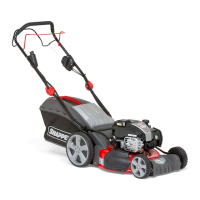
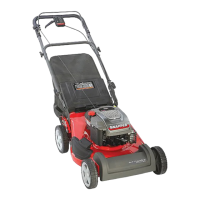
The Snapper NXT is a quality-built lawn mower designed for finish cutting of established lawns. It is equipped with a ReadyStart® system, featuring a temperature-controlled automatic choke, eliminating the need for a manual choke or primer. The mower is propelled by a drive control system, allowing for variable ground speeds. It can be operated in mulching mode, discharge mode (with an optional deflector), or bagging mode (with an optional grass bag). The mower includes safety interlock systems to prevent unauthorized starting and ensure the blade stops within 3 seconds of releasing the blade control.
Important Technical Specifications:
- Deck Size: 22 inches
- Height of Cut: 1.25 - 4 inches (adjustable)
- Transmission Type: Variable Speed/Gear
- Ground Speed: 0 - 4.2 mph
- Blade Torque: 40 ft-lbs
- Engine Power: 8.75 ft-lbs
- Engine Displacement: 190 cc
- Fuel Tank Capacity: 1.2 quarts
- Oil Capacity: 18 - 20 ounces
- Spark Plug Gap: 0.020 inches
- Spark Plug Torque: 180 in-lbs
- Battery: Sealed and maintenance-free, requiring charging.
Common Service Parts:
- Mower Blade: 7103288YP
- Drive Belt: 7103664YP
- Air Filter: 795066, 5419
- Air Filter Pre-Cleaner: 796254
- Resistor Spark Plug: 692051
- Fuel Filter: 298090, 5018
- Fuel Additive: 5041, 5058
Power Rating:
The gross power rating for individual gas engine models is labeled in accordance with SAE code J1940 (Small Engine Power & Torque Rating Procedure), and rating performance is obtained and corrected in accordance with SAE J1995 (Revision 2002-05). Torque values are derived at 3060 RPM, and horsepower values are derived at 3600 RPM. Net power values are taken with the exhaust and air cleaner installed, whereas gross power values are collected without these attachments. Actual gross engine power will be higher than net engine power and is affected by ambient operating conditions and engine-to-engine variability. Briggs & Stratton may substitute an engine of higher rated power for this Series engine due to manufacturing and capacity limitations.
Usage Features:
- Starting the Mower: Insert the starter insert, squeeze the blade control against the drive control, pull the drive control back to neutral, and push the start button.
- Propelling the Mower: Push the drive control forward and inward to increase ground speed.
- Handle Height Adjustment: The mower handle height can be adjusted to three different positions for operator comfort by removing and re-securing knobs, washers, and bolts.
- Cutting Height Adjustment: A switch allows raising or lowering the cutting height, indicated by a movable marker tab. This can be adjusted without the mower running.
- Mulching Operation: For best results, cut up to 1/3 of grass length when dry. Ensure the discharge deflector and grass bag are removed, and the mulching plug is installed.
- Discharge Deflector Installation: Raise the mulching cover, install the deflector to the deck, ensuring locking tabs engage, and lower the mulching cover.
- Grass Bag Installation: Remove the mulching plug, raise the rear discharge door, and hook the grass bag onto the rear door pivot rod.
- Battery Charging: Plug the supplied charger into the battery charge port and a wall outlet for 12-24 hours. Only use the supplied charger.
- Operator Safety: Emphasizes keeping children and pets out of the mowing area, wearing safety glasses and appropriate footwear, avoiding mowing on steep slopes or wet grass, and being aware of foreign objects and hazards. It also provides guidelines for safe handling of gasoline.
Maintenance Features:
- Maintenance Reminder: An on-board system (A, Figure 12) provides timely reminders for important maintenance items, including:
- Total Hours: Displays total operating hours.
- Trip Hours: Displays hours for a specific trip.
- Clock: Displays current time.
- Change Oil: Icon (D) appears after the first 5 hours, then every 25 hours.
- Spark Plug: Icon (E) appears every 50 hours.
- Air Filter: Icon (F) appears every 50 hours.
- Maintenance Chart: Provides a schedule for daily, every 8 hours, every 25 hours, every 50 hours, and annual checks/services for both the mower and engine.
- Engine Oil Change: Drain the fuel tank, remove the dipstick, tilt the mower to drain oil, then refill with Briggs & Stratton warranty-certified SAE30 lawnmower oil to the 'full' mark.
- Air Filter Service: Remove the fastener and air filter cover, then remove the pre-cleaner and filter. Tap the filter to loosen debris or replace if excessively dirty. Wash and air-dry the pre-cleaner. Reassemble securely.
- Safety Interlock System Check: Ensure the engine stops within 3 seconds of releasing the blade control.
- Clean Debris Off Mower: Regularly clean dirt and debris from the mower deck and around the engine.
- Washout Port: Allows hands-free cleaning of the underside of the mower deck by connecting a garden hose.
- Drive Control Adjustment: Adjust the drive cable tension if the transmission does not engage or disengage properly.
- Storage Procedure: Disconnect the spark plug wire, drain the fuel tank (or use a fuel stabilizer), clean the mower, lubricate exposed metal, fold handles, and store in a dry, weather-protected area.
- Fuel System Maintenance: Recommends using Briggs & Stratton FRESH START® fuel stabilizer to prevent fuel from becoming stale. If no stabilizer is used, drain the fuel tank and run the engine until it stops.
Emissions Control:
The engine is certified to operate on gasoline, and its emissions control system is EM (Engine Modifications). Maintenance, replacement, or repair of emissions control devices can be performed by any repair establishment, but "no charge" service requires a factory-authorized dealer. The manual includes a detailed Emissions Control Warranty Statement for California and U.S. EPA regulations, outlining warranted parts, coverage length, and owner responsibilities. It also provides information on Emissions Durability Period and Air Index.

 Need help?
 General



 To Next Page