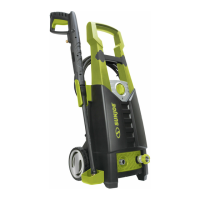
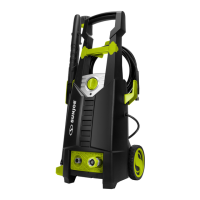
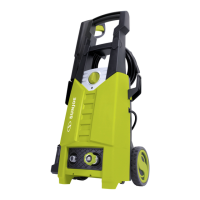
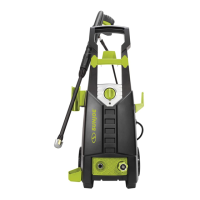
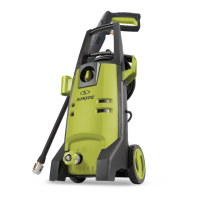
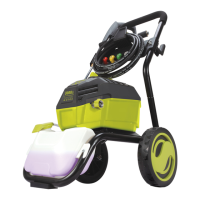
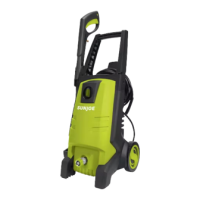
This document describes the Sun Joe SPX2500-RM Electric Pressure Washer, a refurbished product designed for residential use. It is intended for medium-to-heavy duty cleaning tasks on various surfaces and items such as boats, motorcycles, RVs, ATVs, trailers, decks, barbecues, siding, and patio furniture.
Function Description
The pressure washer operates by generating a high-pressure water jet to effectively remove dirt and grime. It features a pump encased in a shock-absorbing housing, and a spray wand with a non-slip handle grip for optimal working position. The unit is equipped with a micro-switch sensitive to water flow, which is part of the Total Stop System (TSS). This system senses water flow in the pump, and when the trigger is released, water stops flowing, automatically turning the motor off. This protects the pump from overheating, conserves energy, and prolongs the pump's life.
The pressure washer is designed to be used with cold or lukewarm water, with an intake water temperature not exceeding 104°F (40°C). Using hot water will significantly reduce the life of the pump. It is crucial to use only clean water, as unfiltered water containing corrosive chemicals or impurities like dirt and grit can damage the washer and impair its operation.
For enhanced cleaning, the pressure washer supports the use of detergents. It is important to use detergents specifically designed for pressure washers and to avoid household detergents, acids, alkaline solutions, bleaches, solvents, flammable materials, or industrial-grade solutions, as these can harm the unit and the cleaning surface. Detergents are applied using a low-pressure, fan-spray setting, which is equivalent to a low-set garden hose pressure. High-pressure settings are reserved for rinsing.
Safety features include an unloader valve that reduces pressure if it exceeds preset values, and a locking device on the spray gun to prevent unintentional operation. A thermal sensor protects the motor from overloading, allowing the machine to restart after a few minutes once it has cooled. The appliance is double-insulated, providing two systems of insulation instead of grounding, and is marked with the "Double Insulation" words or the square-within-a-square symbol. Ground Fault Circuit Interrupter (GFCI) protection is provided on the power cord and should be present on the circuits or outlets used for the pressure washer.
Usage Features
To operate the pressure washer, first ensure all assembly steps are complete and the unit is not connected to the power supply. Connect the high-pressure hose to both the trigger gun and the water outlet on the washer, securing the connections by twisting the nuts. Attach a garden hose (with an internal diameter of at least 13 mm or 1/2 inch and reinforced) to the water inlet of the pressure washer using the garden hose adapter, and then connect the garden hose to a water supply. The water supply must be at least equal to the washer's delivery capacity and should not exceed 0.7 MPa.
Before plugging in the unit, ensure the motor switch is in the OFF (0) position. Once plugged into a power outlet, check that the electrical supply voltage and frequency match the pressure washer's rating plate. The GFCI on the power cord may need to be reset by pressing its "Reset" button until the power light indicator illuminates.
Position the washer as close as possible to the water supply, on a secure and stable surface in an upright position. Turn the water supply tap on completely. Release the safety lock on the trigger gun and press the trigger for a few seconds until the water flow is steady. This purges air and residual pressure from the hose. With the trigger pressed, turn the switch to the ON (I) position to start the pressure washer. The motor will only run when the trigger is operated and will shut off when released.
The spray wand features an adjustable nozzle, allowing users to control water pressure from low (-) to high (+) by turning the pressure adjustment knob. The nozzle tip can also be adjusted from a pencil spray (wide open tip) to a fan spray (narrow tip) by turning the nozzle tip adjustment knob. It is important not to adjust the nozzle while the trigger is squeezed to prevent damage.
For detergent application, set the adjustable nozzle to the low-pressure, fan-spray setting. Remove the detergent tank cap with the suction tube and gently pull the onboard detergent tank from its storage position. Fill the tank with appropriate pressure washer detergent. Insert the suction tube back into the tank, cap it, and push the tank back into its storage position. Turn on the pressure washer and pull the trigger; the liquid detergent will automatically mix with water and discharge through the nozzle. Apply detergent from the bottom to the top of the dry surface. Avoid wetting the surface beforehand, as this dilutes the detergent. Allow the detergent to remain on the surface for a short time before rinsing, but do not let it dry. Rinse with clean water under high pressure, working from the bottom up on vertical surfaces to avoid streaking. Hold the nozzle 6-8 inches away at a 45° angle. After using detergent, remove the suction tube from the detergent tank and insert it into fresh water to siphon for one minute at low pressure, flushing all detergent from the system. Then, remove and thoroughly clean the detergent tank.
When taking a break of five minutes or more, engage the gun safety lock, turn the switch to the OFF (0) position, and unplug the power cord. To shut down the unit completely, turn the switch to OFF, unplug the power cord, turn off the water source, hold the trigger to release water pressure, disconnect the garden hose from the water inlet, and disconnect the high-pressure hose from the trigger gun handle. Finally, release the trigger and engage the gun safety lock.
Maintenance Features
Before performing any maintenance, always disconnect the pressure washer from the power supply socket.
Regular maintenance includes checking and cleaning the water inlet filter to ensure good performance. Remove the filter and rinse it with warm water to prevent foreign matter from clogging the pump.
The nozzle should be cleaned using the provided needle clean-out tool. Remove the spray wand from the gun, then remove any dirt from the nozzle hole and rinse it thoroughly.
For storage, it is crucial to keep the pressure washer in a location where the temperature will not fall below 32°F (0°C), as the pump is susceptible to permanent damage from freezing, which is not covered by the warranty. Store the unit indoors in a dry, covered area, away from adverse weather conditions and frost. Before storing, empty all water from hoses, the pump, and the detergent bottle (if used).
For winterizing or long-term storage in locations where temperatures may fall below freezing, disconnect all water connections. Turn on the machine for a few seconds to expel any remaining water from the pump, then turn it off immediately. Do not kink the high-pressure hose. Store the machine and accessories in a room that does not reach freezing temperatures and avoid storing near furnaces or other heat sources that could dry out the pump seals. It is recommended to operate the pressure washer with a non-corrosive/non-toxic anti-freeze, a pump saver, or a pump protector before winter storage. Before reusing the unit, completely flush it with clear water to ensure no anti-freeze remains in the system, as anti-freeze products can damage paintwork.
Regularly inspect electrical cables for damage or signs of wear. If the power cord is damaged, do not use the pressure washer and contact customer service. Keep the power cord away from heat, oil, and sharp edges. Also, regularly examine hoses for damage; if a hose is damaged, replace it and do not attempt to mend it.


 To Next Page
 General