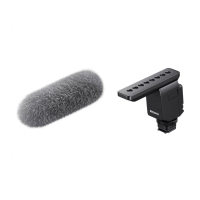
Need help?
Do you have a question about the Sony ECM-939LT and is the answer not in the manual?
Details on microphone type, battery, dimensions, weight, and finish.
Covers directivity, frequency response, output level, and impedance.
Includes noise levels, max SPL, dynamic range, and operating temperatures.
Step-by-step guide for taking apart the microphone case.
Instructions for removing and disassembling the PCB unit.
Visual representation of component placement on the conductor side.
Detailed circuit schematic showing component interconnections and values.
Visual guides for the pin configurations of semiconductor components.
Illustrated breakdown of the microphone assembly for identification.
List of general mechanical and structural components.
Catalog of electronic components and their part numbers.
Inventory of accessories and packaging components.
Important notes regarding capacitors, resistors, and coils.
The Sony ECM-939LT is an electret condenser microphone designed for a variety of audio recording applications. Its primary function is to convert sound waves into electrical signals, offering high-fidelity audio capture. The microphone utilizes a back-electret condenser design, which provides a stable and reliable performance without requiring external phantom power, as it is powered by an internal mercury battery.
At its core, the ECM-939LT operates as a uni-directional microphone, meaning it is most sensitive to sounds coming from a single direction, typically the front. This characteristic is particularly useful for focusing on a specific sound source while minimizing background noise, making it suitable for interviews, vocal recordings, or capturing instruments in a live setting. The microphone incorporates two Junction FETs (Field-Effect Transistors) which act as impedance converters. These FETs are crucial for matching the high impedance of the electret capsule to the lower impedance required by most audio recording equipment, ensuring efficient signal transfer and minimizing signal loss.
The microphone's internal circuitry includes two output transformers (T1 and T2), which further process the audio signal before it exits the microphone. These transformers help to provide a balanced output, which is less susceptible to electromagnetic interference, and can also contribute to the microphone's overall sonic character. The device is powered by a single EVEREADY No. EPX675 mercury battery, which provides a nominal operating voltage of 1.35 V DC. A battery check function is integrated, utilizing DI IS1555 and D2 SR-605C diodes, allowing users to monitor the battery's status and ensure consistent performance.
The ECM-939LT features a two-way plug for output, offering compatibility with standard audio input jacks. The microphone's frequency response is designed to capture a wide range of sounds, from the lower end of the human voice and instruments to higher frequencies, ensuring a natural and detailed reproduction of the audio source. The recommended load impedance for the microphone is specified to be more than 3 kΩ, which is a common requirement for many audio interfaces and mixers.
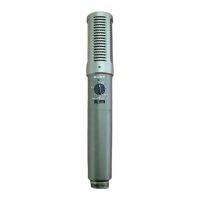
The ECM-939LT is designed for ease of use and portability. Its compact and lightweight silver alumite casing, measuring 16 x 121 mm and weighing 120 g (including the battery), makes it convenient for handheld use or mounting on a stand. The uni-directional polar pattern is a key usage feature, allowing users to precisely target their audio source. This is particularly beneficial in environments where isolating the desired sound from ambient noise is important, such as recording a speaker in a noisy room or capturing a specific instrument in an ensemble.
The microphone includes a knob and switch mechanism, which likely controls various operational modes or features, though the specific functions (e.g., on/off, sensitivity settings, or filter activation) are not detailed in the provided schematic. The presence of "REMOTE," "STEREO," and "OFF" labels on the schematic suggests that the microphone might offer different operational modes, potentially including a stereo recording option if used in conjunction with another microphone or if the microphone itself has multiple capsules, and a remote control capability. The "OFF" setting is standard for power conservation.
The internal battery power source offers significant flexibility, as it eliminates the need for external phantom power, making the microphone suitable for use with a wider range of recording devices, including portable recorders and cameras that may not supply phantom power. The long battery life, approximately 180 hours with an EVEREADY No. EPX675 battery, ensures extended recording sessions without frequent battery changes, enhancing its utility for field recording or prolonged events.
The microphone's robust construction, with a silver alumite finish, provides durability and a professional aesthetic. The inclusion of accessories such as a carrying case, stand adapters (SAD-34 and SAD-35), and a microphone stand assembly (A-4581-025-A) further enhances its versatility and readiness for various recording scenarios. These accessories allow for flexible mounting options and secure transportation, making the ECM-939LT a practical tool for both amateur and professional users.
The Sony ECM-939LT is designed with maintainability in mind, as evidenced by the detailed disassembly and parts list provided in the service manual. The disassembly procedure outlines a clear, numerical order for taking apart the microphone, starting with the microphone case assembly and progressing to the printed circuit board and microphone unit. This structured approach simplifies troubleshooting and component replacement.
Key maintenance aspects include battery replacement, which is straightforward given the accessible battery lid. The use of a standard mercury battery (EVEREADY No. EPX675) ensures easy availability for replacement. The service manual explicitly lists all electrical and general parts, including the FETs, diodes, transformers, resistors, capacitors, and mechanical components like the knob, slider, and various bushings. This comprehensive list, along with part numbers, is invaluable for ordering specific replacement parts if needed.
The schematic diagram provides a detailed view of the internal circuitry, including voltage readings at various points (e.g., 0.96V at the FETs, 1.35V for the battery). These voltage references are critical for diagnosing electrical issues, allowing technicians to pinpoint faulty components by comparing measured voltages against the specified values. The battery check circuit, incorporating D1 IS1555 and D2 SR-605C, is a built-in diagnostic feature that helps users quickly assess the battery's health, preventing recording interruptions due to power loss.
The mechanical design, with screws (e.g., +P 2X3, PRECISION +K 2X4) holding various components together, facilitates easy access for inspection, cleaning, or repair. The exploded view diagram further aids in understanding the physical arrangement of parts, making reassembly more accurate. The microphone's construction allows for the replacement of individual components, such as the microphone capsules (MIC1 and MIC2), transformers, and the printed circuit board, rather than requiring a full unit replacement for minor failures. This modularity extends the lifespan of the device and reduces maintenance costs.
The environmental temperature specifications (-20°C to +60°C for storage and 0°C to +60°C for operation) indicate the microphone's robust design for use in a range of conditions, minimizing the likelihood of temperature-related failures. However, adherence to these limits is a maintenance consideration to ensure longevity. Overall, the ECM-939LT is engineered to be a serviceable device, providing the necessary documentation and design elements to support its long-term use through effective maintenance and repair.
 General
| Sensitivity | -33dB ±3dB (0dB=1V/Pa at 1kHz) |
|---|---|
| Connector | XLR |
| Polar Pattern | Cardioid |
| Maximum SPL | 130 dB |
| Type | Electret Condenser |
| Frequency Response | 20 Hz - 20 kHz |
| Power Supply | Battery or Phantom Power |
| Power Requirements | 1.5V DC |
| Output Impedance | 200Ω ±30% at 1kHz |

 To Next Page