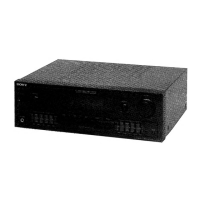
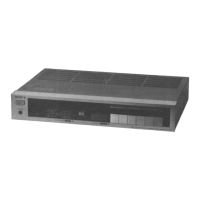
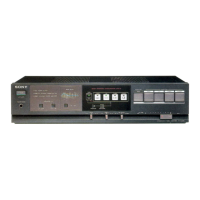
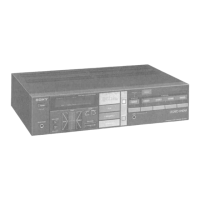
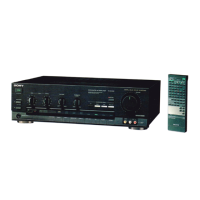
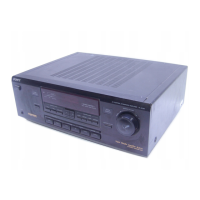
The Sony Integrated Stereo Amplifier TA-AX390/TA-AX391 is a central component for an audio system, designed to amplify sound from various sources and deliver it to speakers or headphones. It features a range of controls for sound adjustment and input selection, making it suitable for a comprehensive home audio setup.
Function Description
The primary function of this amplifier is to take audio signals from different sources—such as a turntable, CD player, tuner, tape deck, or VCR—and amplify them to drive speakers or headphones. It acts as the hub for your audio components, allowing you to select which source you want to listen to and control the overall volume and sound characteristics.
Key features include:
- System Power Switch: Controls the main power to the amplifier.
- Function Selectors: Allow you to choose the audio source you wish to listen to (e.g., VIDEO, TAPE, CD, TUNER, PHONO).
- Volume Control: Adjusts the overall loudness of the audio output.
- Speakers Selector: Enables you to choose which set of speakers (A, B, A+B) to use, or to turn them off for headphone listening.
- Headphones Jack: A stereo phone jack for private listening with headphones.
- 5-Band Graphic Equalizer Controls: Provides detailed control over specific frequency ranges (100 Hz, 330 Hz, 1 kHz, 3.3 kHz, 10 kHz), allowing you to customize the sound quality to your preference, room acoustics, or program material.
- DBFB (Dynamic Bass Feedback) Switch and Indicator: This feature enhances bass frequencies, especially at lower volume levels, to provide a richer sound experience.
- Balance Control: Adjusts the relative strength of the right and left speaker outputs, useful for correcting imbalances in sound stage.
- Spectrum Analyzer Display: A visual representation of the audio frequencies being played, offering a dynamic display of the sound.
- Remote Control Sensor: Allows the amplifier to receive commands from a compatible remote commander, offering convenient operation from a distance.
The amplifier supports recording from any program source to a connected tape deck. It's important to note that when recording, the BALANCE, VOLUME, GRAPHIC EQUALIZER controls, and the DBFB switch do not affect the recorded sound, ensuring a pure signal capture.
Usage Features
Operating the TA-AX390/TA-AX391 is straightforward, designed for ease of use within a home audio system.
Initial Setup:
- Placement: The unit should be placed on a level surface, away from heat sources, direct sunlight, excessive dust, mechanical vibration, or shock. Good ventilation is crucial to prevent internal heat buildup; avoid placing it on a soft surface that could block vents.
- Connections: All audio components (turntable, CD player, tuner, tape decks, VCR) connect to their respective input jacks (PHONO IN, CD IN, TUNER IN, VIDEO AUDIO IN, TAPE IN). Speaker cords connect to the speaker terminals, ensuring correct polarity (red for right, white for left). The AC power cord should be connected last, after all other connections are secure and the unit is off. The cable connectors should be fully inserted to prevent hum and noise.
- System Control: The amplifier includes CONTROL S and SYSTEM CONTROL connectors, allowing for integrated remote control functionality with other compatible Sony audio components, such as a tape deck or tuner. This enables a unified control experience for the entire audio system.
- AC Outlets: The unit provides switched AC outlets for powering other audio components with power consumption less than the indicated wattage. These outlets are controlled by the amplifier's POWER switch. Caution is advised against connecting high-wattage home appliances to these outlets.
Listening to a Program Source:
- Power On: Turn on the SYSTEM POWER switch.
- Speaker Selection: Use the SPEAKERS selector to choose your desired speaker system (A, B, A+B) or "OFF" for headphone listening. If "A+B" is selected, two pairs of speakers must be connected for sound to be heard.
- Source Selection: Press the appropriate function selector (e.g., PHONO, TUNER, CD, TAPE, VIDEO) to choose your audio source.
- Play Program: Start playback on your selected audio component.
- Volume Adjustment: Adjust the VOLUME control to your desired listening level.
- Sound Customization: Use the GRAPHIC EQUALIZER controls to fine-tune the sound. Boost or cut frequencies to enhance bass (100 Hz), adjust spaciousness (330 Hz), add presence to vocals (1 kHz), brighten sound (3.3 kHz), or highlight instrumental quality (10 kHz).
- Bass Enhancement: Engage the DBFB switch to reinforce bass, particularly effective at lower volumes.
- Balance Adjustment: If needed, adjust the BALANCE control to equalize the sound output between the left and right channels.
- Headphone Listening: For private listening, connect headphones to the HEADPHONES jack and set the SPEAKERS selector to "OFF."
Tape Recording:
- Power On: Turn on the SYSTEM POWER.
- Source Selection: Select the program source you wish to record (other than TAPE).
- Play Program: Start playback on the source component.
- Tape Deck Setup: Set your connected tape deck to the recording mode.
Remote Commander (TA-AX390):
The supplied remote commander provides wireless control over various amplifier functions, including power, function selection, volume, and DBFB. It also offers control over other compatible Sony components like CD players and tape decks. The remote requires two AA (R6) batteries.
Maintenance Features
Maintaining the TA-AX390/TA-AX391 is simple and focuses on ensuring longevity and optimal performance.
Cleaning:
- The cabinet should be cleaned periodically with a soft, dry cloth.
- For stubborn stains, a cloth moistened with a mild detergent solution can be used.
- Crucially, avoid using solvents such as alcohol, benzine, or thinner, as these can damage the finish.
Battery Maintenance (Remote Commander):
- Batteries typically last about half a year with normal use.
- When batteries are exhausted, the remote commander will cease to function, requiring replacement of both batteries.
- To prevent damage from battery leakage and corrosion, remove the batteries from the remote commander if it will not be used for an extended period.
General Precautions:
- Electrical Safety: Operate the unit only on 120 V AC, 60 Hz. If any solid object or liquid falls into the cabinet, immediately unplug the unit and have it checked by qualified personnel before further operation to prevent electric shock or fire hazards. Unplug the unit from the wall outlet if it is not to be used for an extended period, always pulling the plug itself, not the cord.
- Ventilation: Ensure adequate air circulation around the unit to prevent internal heat buildup.
- Repacking: Retain the original carton and packing materials, as they are ideal for safely transporting the unit if needed.
By following these guidelines, users can ensure the safe and effective operation of their Sony Integrated Stereo Amplifier TA-AX390/TA-AX391 for many years. For any issues not covered in the manual, consulting a Sony dealer is recommended.

 Need help?
 Power
Power Audio
Audio Physical Characteristics

 To Next Page