O
p
e
r
a
t
i
o
n
B
e
f
o
r
e
W
a
s
h
i
n
g
P
r
e
p
a
r
e
W
a
s
h
L
o
a
d
E
m
p
t
y
P
o
c
k
e
t
s
a
n
d
C
u
f
f
s
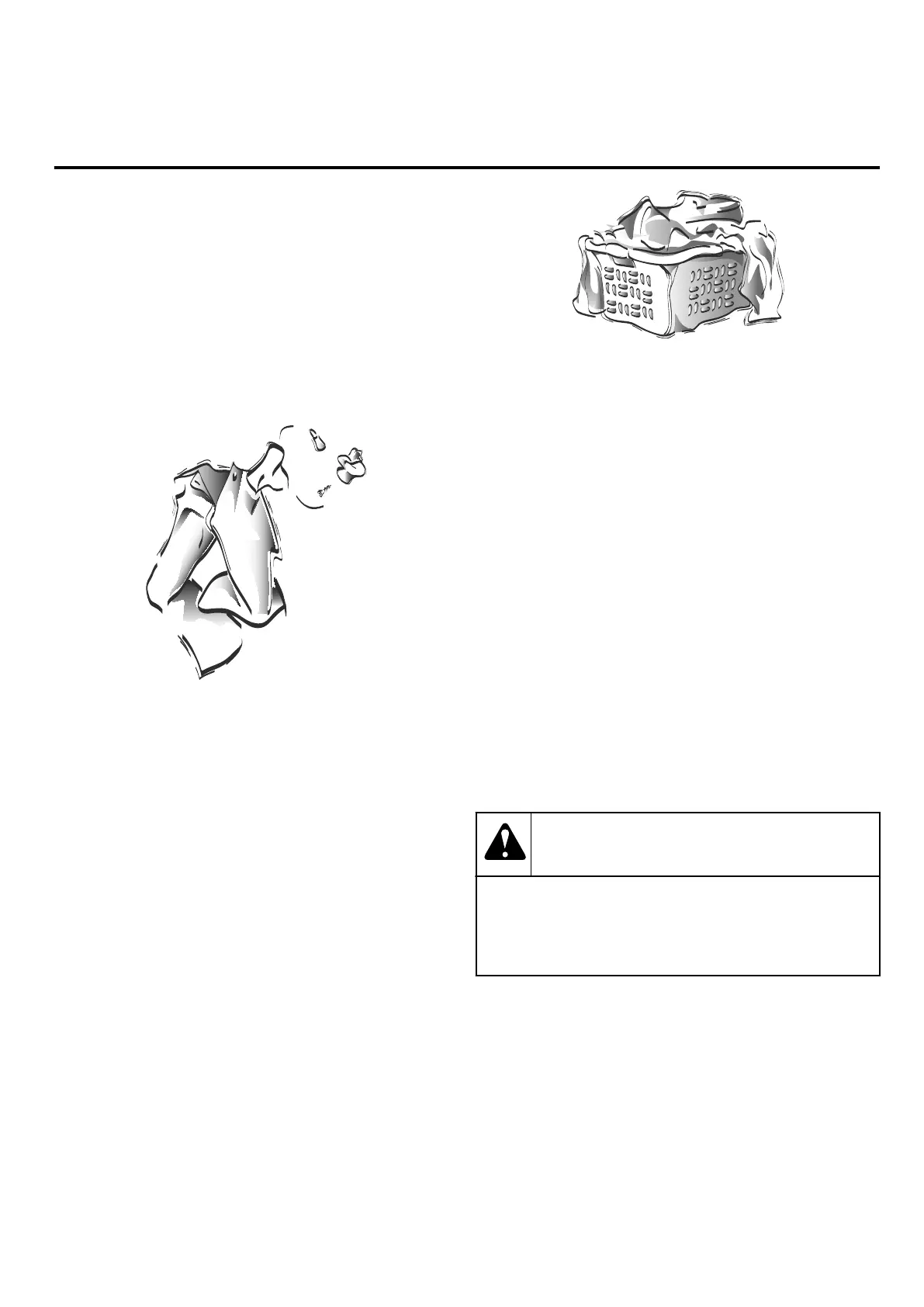
Make sure all pockets are empty and turn them inside out. One bob-
by pin, metal or plastic toy, nail or sharp object in a load can catch
laundry, cause tears and plug the pump. Facial tissue left in a pock-
et will produce extreme “lint”. A crayon or lipstick in a wash load
may cause stains that cannot be removed. Roll down cuffs and
shake out grass, sand and gravel.
M
e
n
d
R
i
p
s
a
n
d
T
e
a
r
s
Little holes can become bigger in the washer. Mend holes and tears
before placing garments in the washer.
C
l
o
s
e
Z
i
p
p
e
r
a
n
d
F
a
s
t
e
n
H
o
o
k
s
These can catch on garments in a wash load and tear them. Tie
belts and sashes so they won’t wind around clothes.
P
u
t
S
m
a
l
l
I
t
e
m
s
i
n
B
a
g
Small items such as baby socks may get stuck around the door.
Put them inside a mesh garment bag.
C
h
e
c
k
F
o
r
C
o
l
o
r
f
a
s
t
n
e
s
s
Squeeze a portion of garment in warm or hot sudsy water. If the
color bleeds or runs, wash the item separately in cold water.
S
o
r
t
I
t
e
m
s
Different items use different wash cycles and temperatures. Al-
ways follow the manufacturer’s care label.
Proper sorting is easy if you follow a few guidelines:
1
.
Sort by Color: Separate items into loads of whites, darks, lights
and non-colorfast.
2
.
Sort by Fabric and Construction: Separate items into loads of
cottons/linens, permanent press, synthetics/blends/poly knits,
and delicates.
3
.
Sort by Temperature: Separate items into loads that can be
washed in cold, warm or hot water.
4
.
Sort by Type and Amount of Soil: Heavily soiled clothes will need
extra treatment. Lightly soiled clothes can become dingy if
washed with heavily soiled items.
5
.
Sort Lint “Shedders” From Lint “Receivers”: Some fabrics at-
tract lint and should not be washed with lint-shedding loads.
Lint shedders are cottons, terry towels, chenille bedspreads,
rugs and clothes that have been heavily bleached. Lint receivers
are synthetics, permanent or durable press, knits (including
socks), corduroy, and other smooth fabrics.
P
r
e
t
r
e
a
t
Pretreat shirt collars and cuffs with a pretreat product or liquid
detergent when placing them in the washer. Before washing, treat
special stains individually.
W
A
R
N
I
N
G
D
o
n
o
t
w
a
s
h
o
r
d
r
y
i
t
e
m
s
s
o
i
l
e
d
w
i
t
h
v
e
g
e
t
a
b
l
e
o
r
c
o
o
k
i
n
g
o
i
l
s
.
S
o
m
e
o
i
l
s
m
a
y
r
e
m
a
i
n
a
f
t
e
r
w
a
s
h
i
n
g
a
n
d
m
a
y
c
a
u
s
e
t
h
e
f
a
b
r
i
c
t
o
c
a
t
c
h
o
n
f
i
r
e
b
y
i
t
s
e
l
f
.
W
5
2
7
L
o
a
d
i
n
g
t
h
e
W
a
s
h
e
r
L
o
a
d
A
r
t
i
c
l
e
s
• Load items by the amount of space they take up, not by their
weight. Mix large and small items in a load to get the best
washing results.
• Load items loosely into the wash drum. The bulk of the clothes
rather than the weight will determine load size.
Operation
Part No. 805004R3
©
Copyright, Alliance Laundry Systems LLC - DO NOT COPY or TRANSMIT 7



 To Next Page