EasyManua.ls Logo

Stanley BR87 - User Manual

Stanley BR87
28 pages
Print Icon
To Next Page IconTo Next Page
Loading...
© 2014 STANLEY Black & Decker, Inc.
New Britain, CT 06053
U.S.A.
65778 9/2018 Ver. 26
USER MANUAL
Safety, Operation and Maintenance
BR87
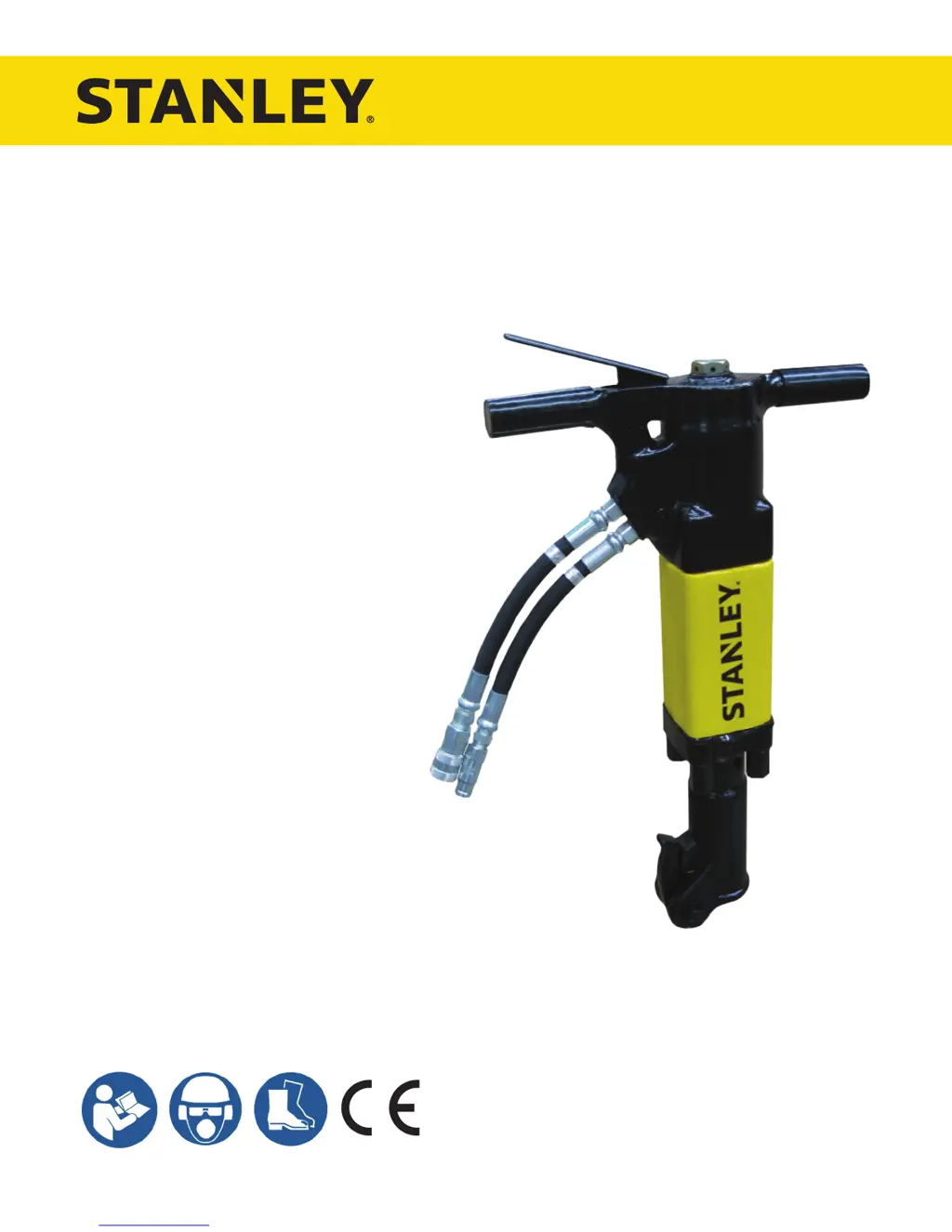
HYDRAULIC BREAKER

Other manuals for Stanley BR87

Questions and Answers

  • A
    Alexandra TaylorSep 12, 2025
    What to do if my Stanley Power Tool does not hit effectively?
    • M
      Megan LesterSep 12, 2025
      If your Stanley Power Tool isn't hitting effectively, start by checking the power unit for proper flow and pressure (7–9 gpm/26–34 lpm, 1500–2000 psi/105–140 bar). Also, inspect the couplers and hoses for any blockages. Low accumulator charge can also cause this issue; recharge the accumulator and replace the diaphragm if the charge loss continues. If the fluid is too hot (above 140 °F/60 °C), use a cooler to maintain the proper fluid temperature (130 °F/55 °C). Lastly, ensure the collar support slides freely in the foot bore and that the hex bushing is correctly placed.
  • B
    Brian LeeAug 23, 2025
    What to do if Stanley BR87 Power Tool couplers or hoses are blocked?
    • E
      Emily RobertsAug 23, 2025
      If your Stanley Power Tool isn't running or is running improperly, start by turning it off and disconnecting it from the hydraulic power source. Then, check the couplers and hoses to make sure they aren't blocked. If there is a blockage, remove it.
  • W
    william54Aug 25, 2025
    What to do if there is fluid leakage around the Stanley BR87 Power Tool trigger?
    • D
      davidriceAug 25, 2025
      If you notice fluid leakage around the trigger of your Stanley Power Tool, it's likely due to valve spool failure. In this case, you should contact your STANLEY dealer for service.
  • K
    Kathy SimonAug 26, 2025
    What to do if there is fluid leakage on the Stanley BR87 Power Tool bit?
    • M
      Monica JohnsonAug 27, 2025
      If you see fluid leaking on the tool bit of your Stanley Power Tool, it is probably caused by a lower piston seal failure. Contact your STANLEY dealer for service.
  • J
    Jennifer WareAug 27, 2025
    What to do if my Stanley Tools tool does not run?
    • I
      istokesAug 27, 2025
      If your Stanley Tools tool isn't running, there are several potential causes: * The power unit may not be functioning correctly. Check the power unit to ensure it provides the correct flow and pressure (7–9 GPM/26–34 LPM, 1500-2000 psi/105–140 bar). * Couplers or hoses might be blocked. If so, remove any restrictions. * The pressure and return line hoses could be reversed at the ports. Ensure that the hoses are connected to their appropriate ports. * There may be a mechanical failure of the piston or automatic valve. Disassemble the breaker and inspect for damaged parts.
  • C
    courtney00Aug 31, 2025
    What to do if my Stanley Tools tool does not hit effectively?
    • L
      Laura WhiteAug 31, 2025
      If your Stanley Tools tool isn't hitting effectively, consider these potential causes: * The power unit may not be functioning correctly. Check the power unit for proper flow and pressure (7–9 GPM/26–34 LPM, 1500–2000 psi/105–140 bar). * Couplers or hoses might be blocked. Remove any restrictions. * There could be a low accumulator charge (indicated by a pressure hose pulsing more than normal). Recharge the accumulator and replace the diaphragm if charge loss continues. * The fluid might be too hot (above 140 °F/60 °C). Use a cooler to maintain the proper fluid temperature (130 °F/55 °C). * The collar support might not be sliding freely in the foot bore. Remove, clean, and replace it as needed. Ensure the hex bushing is in the proper location.
  • L
    Lisa CruzDec 1, 2025
    Why is my Stanley Tools tool operating slowly?
    • M
      Maria OsbornDec 1, 2025
      If your Stanley Tools tool is operating slower than usual, the following could be the reasons: * The power unit may be providing a low GPM supply. Check the power unit for proper flow (7–9 GPM/ 26–34 LPM). Proper flow and pressure are essential for maintaining the correct tool speed. * There might be high back pressure in the hydraulic system. Check for excessive back pressure (over 250 psi/17 bar). * Couplers or hoses could be blocked. Remove any obstructions. * The orifice plug might be blocked. Remove any restriction. * The fluid temperature could be too hot (above 140 °F/60 °C) or too cold (below 60 °F/16 °C). Check the power unit for proper fluid temperature. Bypass the cooler to warm the fluid, or use a cooler to maintain the correct temperature. * The collar support may...
  • T
    Tiffany JohnsonSep 13, 2025
    How to troubleshoot a Stanley Power Tool that does not run?
    • G
      Gregg Brown Jr.Sep 13, 2025
      If your Stanley Power Tool does not run, begin by checking the power unit for proper flow and pressure (7–9 gpm/26–34 lpm, 1500-2000 psi/105–140 bar). Ensure that the couplers and hoses are not blocked. Verify that the pressure and return line hoses are correctly connected to their proper ports. If these steps don't resolve the issue, there may be a mechanical failure of the piston or automatic valve, requiring you to disassemble the breaker and inspect for damaged parts.
  • S
    Steven Smith Jr.Sep 10, 2025
    Why is my Stanley Power Tool operating so slow?
    • C
      Chase JamesSep 10, 2025
      If your Stanley Power Tool operates slowly, the issue might stem from a low GPM supply from the power unit. Ensure that the power unit provides the correct flow (7–9 gpm/ 26–34 lpm). High backpressure could also be the cause, so check the hydraulic system for excessive backpressure (over 250 psi/17 bar). Other potential causes include blocked couplers, hoses, or orifice plugs, as well as fluid that is too hot (above 140 °F/60 °C) or too cold (below 60 °F/16 °C). Also, make sure that the collar support is sliding freely in the foot bore, and verify that the relief valve is properly set to 2100–2250 psi/145–155 bar.
  • G
    Gregory YoungSep 7, 2025
    What to do if there is fluid leakage through the charge valve cap of my Stanley Tools tool?
    • D
      Donald JohnsonSep 7, 2025
      If you're experiencing fluid leakage through the charge valve cap of your Stanley Tools tool, it could be due to an upper piston seal failure, accumulator O-ring failure, accumulator charge loss, or failure. Replace the seals, recharge, or replace the accumulator diaphragm to address the issue.

Summary

Declaration of Conformity

Safety Symbols

Safety Precautions

Tool Stickers & Tags

Hose Types

Hose Safety Tags

Safety tags attached to all hose purchased from Stanley. Do not remove.

Hose Recommendations

HTMA; EHTMA Requirements

Operation

Pre-Operation Procedures

Procedures to follow before operating the hydraulic breaker.

Install Tool Bit

Instructions for installing or removing the tool bit.

Connect Hoses

Guidelines for connecting hydraulic hoses to the tool.

Operation Procedures

Step-by-step guide for using the hydraulic breaker.

Cold Weather Operation

Specific instructions for operating the tool in cold temperatures.

Underwater Model Preventative Maintenance

Maintenance procedures for the tool when used underwater.

Tool Protection & Care

Troubleshooting

Charging the Accumulator

Accumulator Testing Procedure

Steps to check and test the accumulator.

Accumulator Charging

Process for charging the accumulator with nitrogen.

General Service Notes

Additional notes for servicing the tool after repair.

Specifications

BR87 Sound and Vibration Declaration

Declaration of measured sound and vibration emission values.

Accessories

Test Equipment

Equipment used for testing hydraulic systems and accumulators.

Service Tools

Tools recommended for maintenance and repair of the tool.

Kits

Available kits for specific tool components or functions.

BR87 Parts Illustration

BR87 Parts List

Seal Kit Part Number 05485

List of parts included in the seal kit.

Breaker Foot Assembly 05466

Breaker Foot Assembly 05467

Breaker Foot Assembly 07486

Breaker Foot Assembly 07523

Breaker Foot Assembly 08855

Breaker Foot Assembly 11638

Underwater Tools Depth Guideline

Operation Overview

Overview of operation for percussive and rotational tools underwater.

Recommended Hose Diameters

Recommended hose sizes for different depths and flow rates.

Stanley BR87 Specifications

General IconGeneral
TypeCordless Drill
Battery Voltage18V
Battery TypeLithium-Ion
Chuck Size13mm
No Load Speed0-1500 RPM

Related product manuals