EasyManua.ls Logo

Stanley BR67 - User Manual

Stanley BR67
32 pages
Print Icon
To Next Page IconTo Next Page
Loading...
© 2014 STANLEY Black & Decker, Inc.
New Britain, CT 06053
U.S.A.
09278 11/2017 Ver. 27
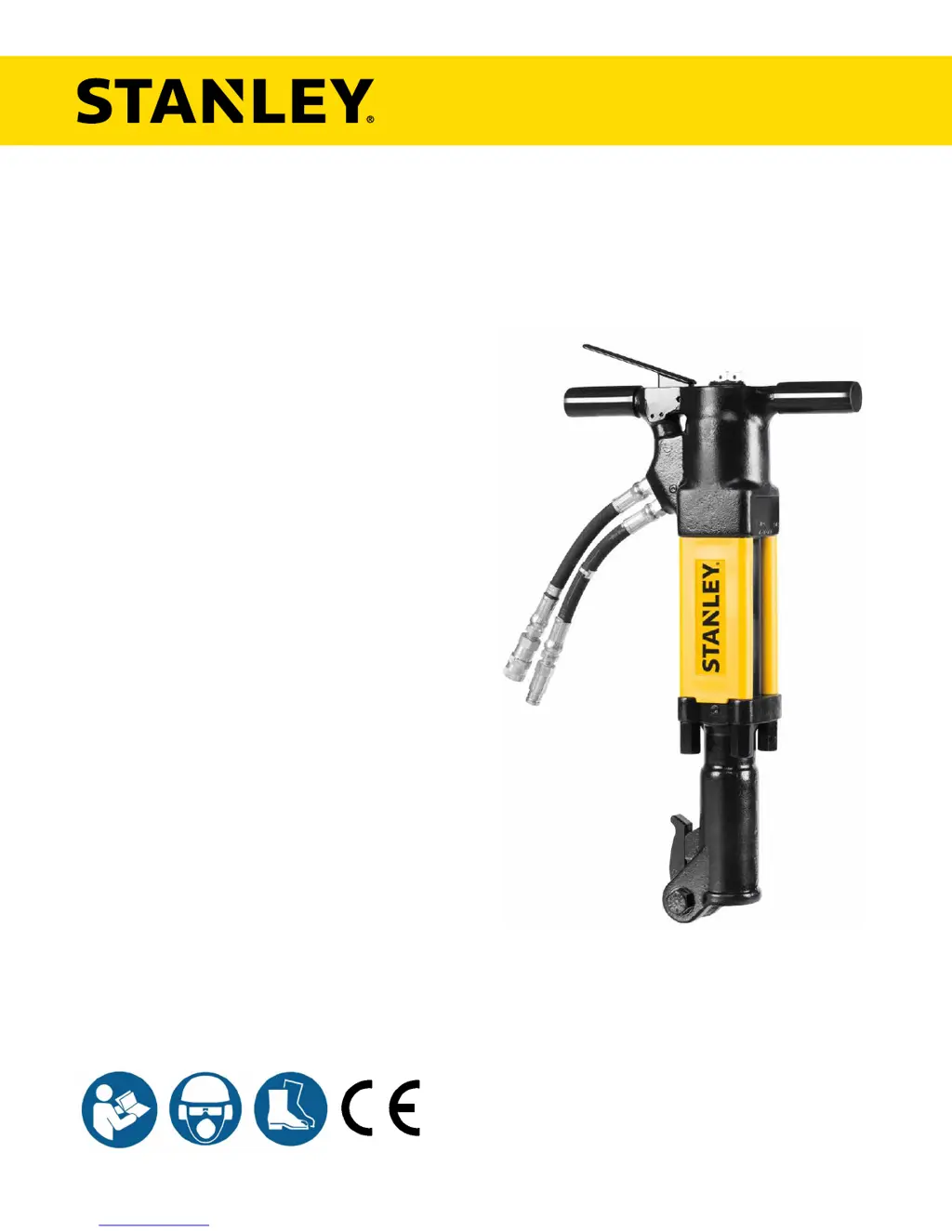
USER MANUAL
Safety, Operation and Maintenance
BR67
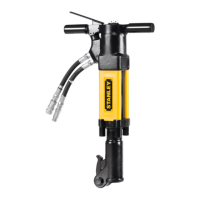
HYDRAULIC BREAKER

Other manuals for Stanley BR67

Questions and Answers

  • K
    kayla63Aug 2, 2025
    Why Stanley Power Tool operates slow?
    • M
      marykrauseAug 2, 2025
      The Stanley Power Tool might be operating slowly due to several reasons: a low GPM supply from the power unit (check for proper flow of 7–9 GPM/ 26–34 LPM), high back-pressure (check for excessive back pressure over 200 psi/14 bar in the hydraulic system), blocked couplers or hoses (remove any restrictions), a blocked orifice plug (remove any restrictions), fluid that is too hot (above 140 °F/ 60 °C) or too cold (below 60 °F/ 16 °C) (check the power unit for proper fluid temperature, bypass the cooler to warm the fluid, or provide a cooler to maintain proper temperature), or a relief valve set too low (adjust the relief valve to 2100–2250 psi/ 145–155 bar).
  • S
    Stacy HernandezAug 6, 2025
    What to do if Stanley Power Tool does not run?
    • A
      Adam SchmittAug 7, 2025
      If your Stanley Power Tool isn't running, it could be due to a few reasons. First, check the power unit for proper power flow and pressure (7–9 GPM/26–34 LPM, 1500–2000 psi/ 105–140 bar). Also, check for blocked couplers or hoses and remove any restrictions. Ensure the pressure and return line hoses are connected to their proper ports. If none of these steps work, there may be a mechanical failure of the piston or automatic valve, requiring you to disassemble the breaker and inspect for damaged parts.
  • S
    Susan SantiagoAug 11, 2025
    What to do if Stanley BR67 gets hot?
    • J
      John CollinsAug 11, 2025
      If your Stanley Power Tool is getting hot, the issue might be hot fluid running through it. Check the power unit to ensure the flow rate isn't too high, causing fluid to pass through the relief valve. Provide a cooler to keep the fluid temperature at 140 °F/60 °C max. Inspect the relief valve setting and eliminate any flow control devices.
  • B
    Brittney SparksAug 16, 2025
    What to do if Stanley BR67 does not hit effectively?
    • G
      George SextonAug 16, 2025
      If the Stanley Power Tool isn't hitting effectively, there are several potential causes. First, check the power unit for proper power flow and pressure (7–9 GPM/26–34 LPM, 1500–2000 psi/ 105–140 bar). Next, ensure that couplers or hoses are not blocked and remove any restrictions. If the pressure hose pulses more than normal, recharge the accumulator and replace the diaphragm if charge loss continues. Lastly, if the fluid is too hot (above 140 °F/ 60 °C), provide a cooler to maintain a proper fluid temperature of 130 °F/55 °C.
  • R
    Rita MartinAug 21, 2025
    What to do if there is fluid leakage on Stanley BR67 bit?
    • C
      carlhancockAug 21, 2025
      If you notice fluid leaking on the Stanley Power Tool bit, it's likely due to a lower piston seal failure. To resolve this, replace the seal.
  • S
    Susan HernandezAug 27, 2025
    What to do if there is fluid leakage around Stanley BR67 Power Tool trigger?
    • T
      tkingAug 27, 2025
      If you observe fluid leaking around the trigger of your Stanley Power Tool, it's probably due to a valve spool seal failure. Replace the seals to fix this issue.

Summary

BR67 Hydraulic Breaker User Manual

Manual Overview and Identification

Identifies the document as the User Manual for the BR67 Hydraulic Breaker, covering safety, operation, and maintenance.

Safety Symbols Explained

Understanding Hazard Alerts

Defines various safety alert symbols and their meanings for potential personal injury hazards.

Critical Safety Precautions

Operational and Maintenance Safety

Details essential safety rules for operating and maintaining the hydraulic breaker to prevent injury and equipment damage.

Tool Stickers and Warning Tags

Identifying Safety Labels

Illustrates and describes the purpose of various stickers and tags attached to the tool for safety and identification.

Hydraulic Hose Types and Safety

Hose Classification and Use

Defines different types of hydraulic hoses and their safety considerations, especially for use near electrical conductors.

Hydraulic Hose Recommendations

Hose Diameter and Length Guide

Provides a chart for selecting appropriate hydraulic hose diameters based on oil flow rate and length.

HTMA;EHTMA Hydraulic Requirements

System and Tool Specification Data

Details hydraulic system and tool type requirements for flow, pressure, temperature, and fluid characteristics.

BR67 Hydraulic Breaker Operation

Pre-Operation and Usage Procedures

Covers power source checks, tool bit installation, hose connections, and safe operating techniques for the breaker.

Tool Protection and Care

Maintenance and Storage Best Practices

Outlines best practices for protecting the tool, proper storage, and general care to ensure longevity and performance.

Troubleshooting Hydraulic Breaker Issues

Problem Cause and Resolution Guide

Lists common breaker problems, their causes, and recommended solutions for troubleshooting.

Accumulator Testing and Charging

Procedures for Accumulator Maintenance

Provides step-by-step instructions for testing and charging the hydraulic accumulator for proper function.

BR67 Specifications and Declarations

Sound and Vibration Emission Data

Presents measured sound power and vibration emission values according to ISO standards for compliance.

BR67 Accessories and Service Tools

Parts and Kit Listings

Lists available tool accessories, test equipment, service tools, and kits with corresponding part numbers.

BR67 Anti-Vibration Handle Parts Illustration

Exploded View of AV Handle Assembly

Displays an exploded view illustration of the BR67 hydraulic breaker with an Anti-Vibration Handle.

BR67 Anti-Vibration Handle Parts List

Detailed Parts Breakdown for AV Handle

Provides a comprehensive list of parts for the BR67 Anti-Vibration Handle, with and without trigger lock.

BR67 Standard Handle Parts Illustration

Exploded View of Standard Handle Assembly

Shows an exploded view illustration of the BR67 hydraulic breaker with a Standard Handle.

BR67 Standard Handle Parts List

Detailed Parts Breakdown for Standard Handle

Provides a comprehensive list of parts for the BR67 Standard Handle, with and without trigger lock.

Breaker Foot Assembly 05466 Details

Parts for BR67120;120 D;125 Models

Details the components and part numbers for the Breaker Foot Assembly 05466.

Breaker Foot Assembly 05467 Details

Parts for BR67130;13016;135;13516 Models

Details the components and part numbers for the Breaker Foot Assembly 05467.

Breaker Foot Assembly 07524 Details

Parts for BR6713015 E;130 E Models

Details the components and part numbers for the Breaker Foot Assembly 07524.

Breaker Foot Assembly 07525 Details

Parts for BR67120 E Model

Details the components and part numbers for the Breaker Foot Assembly 07525.

Breaker Foot Assembly 08855 Details

Parts for BR67320;67120 U Models

Details the components and part numbers for the Breaker Foot Assembly 08855.

Breaker Foot Assembly 11236 Details

Parts for BR6717801 A;AA;802 AA Models

Details the components and part numbers for the Breaker Foot Assembly 11236.

Underwater Tools Depth Guideline

Operation Overview and Hose Sizing

Provides operational overview for underwater tools and recommended hose diameters for various depths.

Stanley BR67 Specifications

General IconGeneral
BrandStanley
ModelBR67
CategoryPower Tool
LanguageEnglish

Related product manuals