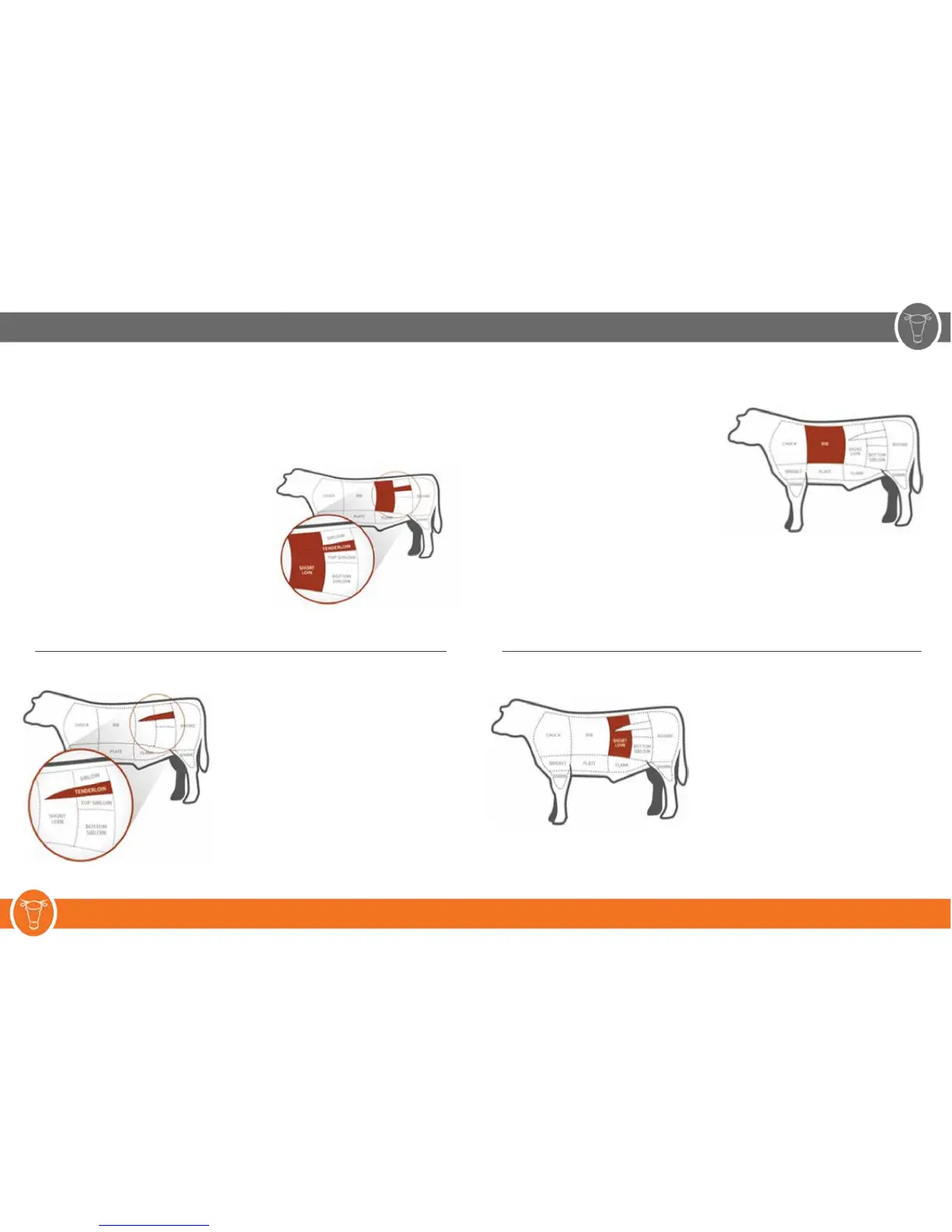
Beef Porterhouse is cut from a primal cut called the short
loin. This primal cut is located just after the rib primal and is one
of the most well known parts of the animal. The porterhouse
steak is from the portion of the short loin that is closest to the
sirloin section. The North American Meat Processors (NAMP)
Meat Buyers Guide denes the porterhouse as having a
tenderloin that measures at least 1.25 inches in width parallel to
the backbone of the steak (the “T” portion of the bone).
The T-bone steak is what the rest of the steaks from the short
loin are called. This name comes from the bone resembling a
capital “T”.
This steak is highly prized in leading steakhouses because
this porterhouse cut is comprised of the largest portions of a
tenderloin and New York steak. There are many dierent stories
of how this beautiful cut came to be named the Porterhouse.
One story is that roadhouses in the early 1800’s would advertise
beef steaks served with a pint of porter. Another is that an
establishment in Manhattan named “Porterhouse” started to
serve large T-bone steaks. As they grew in popularity, the cut
they served picked up the name Porterhouse. Regardless of the
name’s origin, everyone agrees that the porterhouse steak is
one of a kind and great for grilling or broiling.
Flavor & Texture of Dry Aged Beef
Beef Tenderloin - NAMP # 189
Beef Filet, or Tenderloin. This is a muscle in the loin primal and
is in two dierent sub-primals, the short loin and sirloin,
creating its unique oblong shape.
This muscle is not used by the animal much thus resulting in
the tenderloin being the most tender cut in the animal. Flavor
in beef is derived from how much a muscle is used and because
of the lack of use, the tenderloin has a very subtle beef avor.
Because it is such a lean steak, the tenderloin is best cooked
no more than medium-rare. You should use this cut in its
“full” format. It should have a fat layer around most of the loin
lessening toward the tip end of the loin. Do not cut away the
fat as it protects the tenderloin.
This cut does not have a bone attached to it so it will shrink
a little more intensively than a sub primal cut which
contains a bone.
Beef Rib, Oven Prepared Bone In
- NAMP # 107
This cut, Bone-in Ribeye is found in the primal
section known as the rib. The rib primal is located from rib six
through twelve right behind the chuck section. Frenching is a
technique where the butcher trims the meat to expose the rib
bone, showing o its unique cut. This cut is one of the most
well known cuts, primarily from the popularity of the bone-in
rib roast, also known as prime rib. This section of the animal is
known for its marbling, avor and tenderness. This primal
section has an abundance of all three of these characteristics.
The bone-in ribeye steak is also referred to as, Ribeye
steak, Cowboy steak, Spencer steak, Prime Rib steak or
Saratoga Steak. The Cowboy steak is generally used to describe
the Bone-in Rib Steak where the rib bone has been frenched
down to the eye of the steak. At least once in your life you
should have a bone-in rib steak grilled to medium-rare, lightly
seasoned and savor the juicy, melt-in-your mouth, true beef
avor of this gorgeous steak imparts.
Beef Loin, Strip Loin Bone In
- NAMP # 175
We suggest Natural Angus or Prime for this sub primal.
Choice is also a good alternative but slightly less marbled than
Prime. The strip loin comes from the loin primal in the animal.
It is the long narrow piece on a t-bone or porterhouse steak.
This cut has many aliases, New York steak, Kansas City steak,
Boneless Club steak or Ambassador steak to name a few.
This steak generally has a fair amount of marbling (tiny ecks of
fat interlaced in the muscle) which gives the cut a good avor
prole and tenderness.
In the 1800’s the famed Delmonico’s Restaurant in
New York City featured a steak that is thought to be the
precursor to the boneless strip loin steak and it picked up the
name of Delmonico. This cut has also been linked to a boneless
rib-eye steak so it is believed that the original Delmonico was
cut from the portion of the strip loin closest to the rib. Because
the restaurant was located in New York City it is thought that
this is how the cut picked up the name of New York steak.
Beef Porterhouse -
NAMP # 174
10 11 w w w . s t e a k l o c k e r . c o m


 To Next Page
 Loading...