EasyManua.ls Logo

sunjoe SWJ699E - User Manual

sunjoe SWJ699E
17 pages
Print Icon
To Next Page IconTo Next Page
Loading...
© 2020 by Snow Joe
®
, LLC
All rights reserved. Original instructions. SAVE THESE INSTRUCTIONS
A Division of Snow Joe
®
, LLC Model SWJ699E Form No. SJ-SWJ699E-880E-MR2
R
OPERATOR’S MANUAL
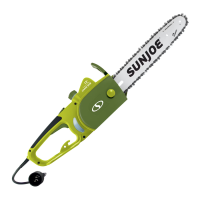
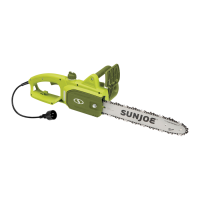
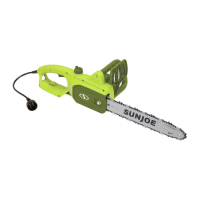
ELECTRIC CHAIN SAW
14-INCH | 9-AMP
A Division of Snow Joe
®
, LLC
R
OPERATOR’S MANUAL
1
IMPORTANT!
Safety Instructions
All Operators Must Read These
Instructions Before Use
Read all the instructions contained in this manual. Keep this
manual in a safe place, so that the information is available at
all times. If you give the equipment to another person, make
sure to provide these operating instructions. Basic safety
precautions should always be followed to reduce the risk of
re, electric shock, and personal injury.
Notice the personal safety alert symbol m used in this
manual to draw your attention to a WARNING given along
with the particular operating instruction. This means that the
operation requires special ATTENTION, CAUTION,
and AWARENESS.
Intended Use
This electric chain saw was designed and manufactured for
trimming and pruning tree limbs and branches and for cutting
smaller logs up to 10 in. (25 cm) thick. All of the wooden
objects intended to be cut with this chain saw should be no
thicker than the guide bar's maximum cutting capabilities.
Improper Use
Any other use diering from the above mentioned applications
poses a serious hazard to the user and may damage both the
tool and your personal property. Examples of improper use
include, but are not limited to:
trimming hedges;
carving;
sectioning pallets, crates, and various packing materials;
sectioning furniture or other materials with nails, screws,
or other metal components;
butchering meat;
using the machine to lift, move, or split objects;
using the machine while fastened to xed supports.
Improper use of the machine will invalidate the warranty,
relieve the manufacturer from all liabilities. The user will
consequently be liable for all and any damage or injury to
himself/herself or others.
General Safety
m
WARNING! When using electric yard tools, basic safety
precautions should always be followed to reduce the risk of
re, electric shock, and personal injury, including the following:
1. Keep guards in place – Protective guards should be
checked periodically to ensure they are properly tted and
in correct working order.
2. Remove adjusting keys and wrenches – Check that
adjusting wrenches are removed from the saw before
turning it on.
3. Keep work area clean and well-lit – Clear work area of
branches and limbs after each cutting session.
Cluttered areas invite accidents.
4. Avoid dangerous conditions – Do not use this machine
in rainy, stormy, damp, or wet locations. Do not operate
the unit in gaseous or explosive atmospheres.
Motors in these units normally spark, and the sparks may
ignite fumes.
5. Do not use the chain saw in the rain.
6. Keep bystanders and children away – All bystanders,
including children and pets, should be kept a safe
distance away from the work area.
7. Do not force the tool – It will do the job eectively and
safely if it is used at the rate for which it was designed.
8. Use the right tool – Do not force the tool or any
attachment on the tool to do a job for which it was not
intended.
9. Wear proper apparel – Do not wear loose articles of
clothing or jewelry since such items may get caught
in moving parts. Wearing heavy-duty rubber gloves,
substantial non-skid footwear, and close-tting clothing is
recommended when working outdoors with power tools.
10. Wear protective hair coverings to contain long hair.
11. Always wear safety glasses and ear defenders to
provide eye and ear protection – Everyday eyeglasses
only have impact resistant lenses and do not provide the
same protection as safety glasses.
12. Wear face or dust masks – If the cutting operation is
dusty, the use of a face or dust mask specially designed
to lter out microscopic particles is recommended.
13. Do not overreach – Keep proper footing and balance
at all times.
14. Maintain tools with care – Keep tools sharp and clean
for the best and safest performance. Follow instructions
for lubricating and changing accessories.
Question and Answer IconNeed help?

Do you have a question about the sunjoe SWJ699E and is the answer not in the manual?

Summary

Important Safety Instructions

Operator Instructions Before Use

All operators must read and understand these instructions before operating the equipment.

Intended Use of Electric Chain Saw

Designed for trimming, pruning tree limbs, branches, and cutting small logs.

Improper Use of Chain Saw

Details uses that are hazardous and may damage the tool or property.

General Safety Precautions

Guard Maintenance

Ensure protective guards are properly fitted and in correct working order.

Remove Adjusting Keys and Wrenches

Check that all adjusting keys and wrenches are removed before starting.

Maintain a Clean and Well-Lit Work Area

Clear the work area of debris after each cutting session.

Avoid Dangerous Conditions

Do not use in rain, stormy, damp, wet, gaseous, or explosive atmospheres.

Do Not Use in Rain

Avoid operating the chain saw during rainy weather.

Keep Bystanders and Children Away

Ensure all bystanders, including children and pets, are kept at a safe distance.

Do Not Force the Tool

Use the tool at the rate for which it was designed for effective and safe operation.

Use the Right Tool

Do not force the tool or attachments to do jobs they were not intended for.

Wear Proper Apparel

Avoid loose clothing and jewelry; wear heavy-duty gloves, non-skid footwear.

Wear Protective Hair Coverings

Wear protective hair coverings to contain long hair.

Wear Eye and Ear Protection

Always wear safety glasses and ear defenders for protection.

Wear Face or Dust Masks

Use a mask for dusty operations to filter microscopic particles.

Do Not Overreach

Maintain proper footing and balance at all times.

Maintain Tools With Care

Keep tools sharp and clean for best performance; follow lubrication instructions.

Chain Saw Use and Care

Disconnect Tool When Not In Use

Disconnect from power supply when not in use, before servicing, or transporting.

Prevent Unintentional Starting

Ensure the switch is in the OFF position before plugging into a power source.

Use Recommended Accessories

Use only recommended accessories to avoid injury.

Check for Damaged Parts

Repair or replace damaged parts before each use; check alignment and binding.

Never Leave Tool Unattended While Running

Turn off the power and wait for the chain to stop before leaving the saw.

Avoid Unintentional Starting

Do not carry the chain saw with your finger on the switch.

Handle Saw Safely When Not In Use

Encasing the cutting bar in its protective sheath when not in use.

Stay Alert and Use Common Sense

Use common sense and do not operate when tired.

Store Idle Tools Indoors

Store in a dry, locked place out of reach of children.

Safety Before Adjustments or Servicing

Turn off power and disconnect before adjusting, servicing, or cleaning.

Use Correct Power Tool for Application

Use the correct power tool for your application for best performance.

Ensure Switch Functionality

Do not use if the switch does not turn the tool on and off; it must be repaired.

Disconnect Power Before Maintenance

Disconnect power before making adjustments, changing accessories, or storing.

Store Idle Tools Safely

Store indoors in a dry, locked place out of children's reach.

Maintain Power Tools With Care

Keep handles dry, clean, and free from oil; check for damage.

Keep Cutting Tools Sharp and Clean

Sharp tools are less likely to jam and are easier to control.

Use Tool and Accessories Correctly

Use in accordance with instructions and consider working conditions.

Be Aware of Moving Parts

Keep body parts away from moving parts; ensure guards are installed.

Electrical Safety Precautions

Use GFCI Protection

GFCI protection should be provided on the circuit(s) or outlet(s).

Verify Mains Voltage

Ensure mains voltage matches the unit's rating label to prevent damage.

Use Outdoor-Rated Extension Cords

Use only extension cords suitable for outdoor use.

Double-Insulated Appliance Information

Double Insulation Safety

This appliance is double-insulated, requiring only identical replacement parts.

Service and Maintenance

Authorized Service Personnel

Service should be performed by a qualified repair person at an authorized dealer.

Chain Saw Specific Safety Warnings

Keep Body Away From Saw Chain

Keep all body parts away from the chain when operating; ensure chain is not contacting anything.

Kickback Prevention

Proper Hand Grip and Body Position

Hold saw with right hand on rear handle, left on front handle.

Wear Safety Glasses and Hearing Protection

Essential for protection against noise and flying debris.

Do Not Operate In Trees

Operating a chain saw in a tree can result in personal injury.

Maintain Proper Footing and Balance

Operate only on fixed, secure, level surfaces; avoid slippery or unstable surfaces.

Caution When Cutting Tensioned Limbs

Be cautious of spring back when tensioned wood fibers release.

Use Caution With Brush and Saplings

Slender material can catch the chain and cause imbalance.

Safe Carrying Procedure

Carry with chain switched off, away from body, with guide bar cover fitted.

Proper Lubrication and Tensioning

Improper tension or lubrication can lead to chain breakage or kickback.

Keep Handles Dry and Clean

Greasy handles are slippery and can cause loss of control.

Cut Wood Only

Do not use the saw for cutting plastic, masonry, or non-wood materials.

Understanding Kickback

Kickback occurs when the guide bar tip touches an object or wood closes in.

Precautions to Avoid Kickback

Maintain firm grip, correct body position, avoid overreaching, use correct parts.

Use Specified Replacement Parts

Incorrect parts can cause chain breakage and/or kickback.

Follow Chain Sharpening and Maintenance

Proper sharpening and maintenance reduce kickback risk.

Observe Safety Regulations and Techniques

Follow safety regulations and correct sawing techniques.

Ensure Safe Transport

Switch off, fit cover, hold by grips, position bar away from body.

Training and Preparation Before First Use

Ensure specific training, read manual, and practice on logs before felling.

Protection From Environmental Influences

Wear Suitable Work Clothes

Wear suitable work clothes and safety goggles.

Protect From Moisture and Rain

Moisture and rain can cause dangerous electrical and motor damage.

Avoid Flammable Vapors and Liquids

Do not use near vapors or flammable liquids.

Use in Dry Conditions and Moderate Temperatures

Use only in dry conditions at ambient temperatures of 50-104°F (10-40°C).

Store in Dry Locations With Moderate Temperatures

Store in dry locations at ambient temperatures of 50-104°F (10-40°C).

Safety Symbols Explained

Read Operators Manual

Read, understand, and follow all instructions before assembly and operation.

Safety Alert Symbol

Indicates a precaution, a warning, or a danger.

Warning: Do Not Expose to Rain or Wet Conditions

Do not expose the unit to rain or wet conditions.

Danger: Rotating Blades

Keep hands and feet away from openings while the saw is running.

Caution: Avoid Guide Bar Tip Contact

Tip contact can cause sudden upward and backward movement of the guide bar.

Switch Off Before Cleaning or Maintenance

Remove plug before cleaning or maintenance checks.

Awareness of Rotating Parts After Shutdown

Rotating parts continue to run for seconds after the machine is turned off.

Keep Bystanders and Children a Safe Distance

Maintain a safe distance for bystanders and children.

Wear Eye and Hearing Protection

For protection against injury, wear ear defenders and safety goggles.

Wear Protective Gloves and Footwear

Wear protective gloves and non-slip footwear when handling the machine.

Correct Direction of Cutting Teeth

Indicates the correct orientation of cutting teeth for operation.

Warning: Always Use Two Hands

Always use two hands when operating the chain saw.

Switch Off Immediately If Cord Is Damaged

Remove plug immediately if the cord is damaged or cut.

Double Insulation Symbol

Indicates the appliance has double insulation and grounding is not required.

Know Your Electric Chain Saw Components

Read Manual and Safety Rules Before Operation

Familiarize yourself with controls and adjustments before operation.

Technical Data Specifications

Motor Specifications

Details the motor's amperage and voltage requirements.

Rated Voltage

Specifies the required voltage for operation.

No Load Speed

Indicates the rotational speed of the motor without load.

Bar and Chain Length

Specifies the length of the guide bar and chain.

Maximum Cutting Thickness

Indicates the maximum thickness of material that can be cut.

Oil Tank Capacity

Specifies the volume of oil the tank can hold.

Chain Speed

Indicates the speed of the saw chain.

Net Weight

Specifies the weight of the chain saw.

Unpacking the Chain Saw

Carton Contents List

Lists all items included in the product packaging.

Check Supplied Items

Carefully remove and check all supplied items against the list.

Inspect for Shipping Damage

Inspect product for breakage or damage; contact customer service if issues are found.

Packaging Safety Warning

Keep packaging material away from children due to suffocation risk.

Assembly Instructions

Wear Gloves When Handling Bar and Chain

Always wear heavy-duty gloves when handling the bar and chain for safety.

Assemble on a Stable Surface

Complete unpacking and assembly on a flat, stable surface with adequate space.

Danger: Install Bar, Chain, and Cover Before Starting

Never start motor before installing guide bar, chain, and cover.

Read and Understand All Safety Instructions

Avoid serious personal injury by reading and understanding all safety instructions.

Unplug Tool Before Maintenance

Ensure the tool is unplugged from the power supply before any maintenance.

Installing the Guide Bar and Chain

Required Tools and Supplies

Lists tools and supplies needed for installation, including hex key and gloves.

Use Identical Replacement Parts

Use only identical replacement parts when replacing the guide bar and chain.

Remove Chain;Sprocket End Cover

Use hex key to unscrew end cover nut and remove the chain/sprocket end cover.

Chain Pre-mounted on Guide Bar

Chain comes pre-mounted on the guide bar for initial installation.

Prepare the New Saw Chain

Lay out the new saw chain in a loop and straighten any kinks.

Installing the Guide Bar and Chain

Mount Chain Drive Links into Bar Groove

Mount chain drive links into bar groove, leaving a loop at the back.

Ensure Correct Chain Direction

Ensure correct chain direction to prevent abnormal vibration and poor cutting.

Position Chain Around Sprocket

Hold chain on bar, place loop around sprocket, and fit bar flush.

Align Adjusting Pin to Tension Hole

Turn tensioning screw counter-clockwise to align adjusting pin with tension hole.

Adjust Chain Tension

Adjust chain tension using the tensioner screw clockwise or counter-clockwise.

Replace Chain;Sprocket End Cover

Insert rear tab into slot, position cover, and tighten end cover nut.

Check Correct Chain Tension

Chain is correctly tensioned when snug, rotatable by hand, with no sag underneath.

Remove Slack and Seat Chain Snugly

Turn tensioner screw clockwise to remove slack and seat chain snugly against bar.

Installing the Guide Bar and Chain

Tighten End Cover Nut

Tighten the end cover nut completely using the hex key wrench.

Adjust If Chain Is Too Tight

Loosen end cover nut slightly and turn tensioner counterclockwise if chain is too tight.

Check New Chain Tension Frequently

New chains stretch; check and adjust tension frequently.

Replacing the Guide Bar and Chain

Disconnect Power Before Replacement

Always disconnect the chain saw from the power supply before replacement.

Remove Chain;Sprocket End

Use hex key wrench to unscrew end cover nut and remove chain/sprocket end.

Remove Cutting Bar and Chain

Remove the cutting bar and chain from the mounting surface.

Remove Old Chain From Bar

Take the old chain off the guide bar.

Install New Saw Chain

Follow steps 2-6 from 'Installing the Guide Bar + Chain' on page 7.

Preparing to Work

Checking the Machine Before Work

Check screws, chain tension, grips, safety button, and cooling vents.

Unplug Machine Before Checks

Ensure the unit is not connected to power before any checks or maintenance.

Pre-Work Machine Checks

Check screws, chain tension, grips, safety button, and cooling vents.

Check Fasteners

Ensure all screws on the machine and guide bar are tightly fastened.

Check Chain Tension and Condition

Verify chain is correctly tensioned, sharpened, and undamaged.

Check Grips and Protection Devices

Ensure grips and protection devices are clean, dry, and securely fastened.

Check Trigger and Safety Button Function

Verify trigger and safety button move freely and return to neutral positions.

Check Safety Lock Functionality

Ensure trigger switch remains locked until safety button is pressed.

Ensure Cooling Air Vents are Clear

Make sure cooling air vents are clear of sawdust or debris.

Check Chain Oil Level

Check oil level and top up if necessary to 1 cm from the filler rim.

Fill Chain Oil Tank Before Use

Must fill the chain oil tank with bar and chain oil before using the saw.

Adjusting the Chain Tension

Unplug Tool Before Adjusting Tension

Ensure tool is unplugged before performing any checks or adjustments.

Caution: Chain Continues to Run

The chain will continue to run for several seconds after the tool is turned off.

Tension the Chain

Loosen end cover nut, turn tensioner screw clockwise to tension chain.

Check Cold Chain Tension

A cold chain is correctly tensioned when snug, rotatable by hand, with no slack.

Verify Chain Tension by Pulling

Tension is correct if drive links do not slip from guide when pulled.

Chain Lubrication

Caution: Lubricate Chain to Prevent Damage

Failure to lubricate will cause damage to the chain and bar.

Normal Oil Seepage

It is normal for oil to seep from the saw when not in use.

Warning: Do Not Use Unauthorized Accessories

Do not use the chain saw with any type of accessory or attachment.

Operating the Chain Saw

Starting the Machine

Instructions for starting the electric chain saw.

Add Bar and Chain Oil

Add bar and chain oil to the oil level window before starting.

Automatic Oil Pump Feature

The saw has an automatic oil pump for bar and chain oiling.

Connect to Power Source

Connect the saw to a 120V outlet using a heavy-duty outdoor extension cord.

Secure Power Cord With Restraint Hook

Loop power cord through handle and around restraint hook.

Ensure Guide Bar is Clear

Make sure the guide bar is not touching the ground or any other object.

Hold Saw Firmly With Both Hands

Hold the chain saw firmly with both hands for control.

Turn Tool ON

Push safety lock button, then squeeze trigger to turn the tool ON.

Turn Tool OFF

Release the trigger switch to turn the tool OFF.

Do Not Press Trigger Until Ready to Cut

Do not press the trigger switch until ready to make a cut.

Operating Tips

Safety and Operator Responsibility

Operator is responsible for accidents; read instructions carefully.

Read Instructions Carefully

Do not use the machine without reading instructions carefully.

Operator Responsibility for Accidents

The operator is responsible for accidents or hazards to others or property.

Wear Suitable Clothing and PPE

Always wear suitable clothing, anti-vibration gloves, and PPE.

Operating Procedures and Precautions

Note on Cumulative Risks

Precautions do not guarantee prevention of risks like Raynaud's or carpal tunnel syndrome.

Work in Daylight or Good Light

Work only in daylight or good artificial light conditions.

Exercise Care Near Metal Fences

Take utmost care when working near metal fences.

Avoid Hitting Foreign Objects

Avoid hitting the bar against foreign objects or flying debris.

Do Not Operate On Ladder or Scaffold

Do not operate the chain saw in a tree, on a ladder, or on a scaffold.

Use Caution With Tensioned Material

Use extreme caution when cutting small brush, saplings, or limbs under tension.

Do Not Cut Vines or Underbrush

Do not cut vines and/or small underbrush.

Ensure Saw Not Contacting Objects Before Starting

Ensure the chain saw is not contacting any object before starting.

Caution: Chain Coasts After Shutoff

The chain coasts after the saw is turned off.

Environmental and Social Responsibility

Use correctly to avoid harming others or impacting the environment.

Comply With Local Disposal Regulations

Comply with local regulations for disposal of waste materials.

Dispose of Oils and Parts Responsibly

Comply with local regulations for disposal of oils and damaged parts.

Use Biodegradable Chain Lubricating Oil

Use biodegradable oils for chain lubrication to protect the environment.

Avoid Fire Risk: Store Properly

Do not leave the machine with a hot engine on leaves or dry grass.

Warning: Vibration Exposure Risks

Prolonged vibration exposure can cause neurovascular disorders.

Checks During Work

Checking Chain Tension

Check chain tension frequently as it stretches during work.

Check New Chain Tension Frequently

Check chain tension more frequently during initial use or after replacement.

Warning: Never Work With Loose Chain

Never work with a loose chain; it is hazardous if it slips.

Adjust Chain Tension Per Instructions

Follow instructions in 'Adjusting the Chain Tension' on page 11.

Checking Oil Delivery

Check oil level and verify oil delivery to the bar and chain.

Important: Never Use Without Lubrication

Never use the machine without proper lubrication.

Warning: Ensure Bar and Chain Are In Place

Ensure the bar and chain are in place when checking oil delivery.

Verify Chain Oil Delivery During Operation

Start motor and check if chain oil is delivered to the bar and chain.

Proper Cutting Stance

Balance Weight on Both Feet

Balance weight with both feet on solid ground.

Basic Cutting Procedures

Lock Arm for Kickback Resistance

Keep left arm and elbow locked in a 'straight arm' position to withstand kickback.

Position Body Left of Chain Line

Ensure your body is always to the left of the chain line during operation.

Cutting Small Trees

Small trees up to 6-7 inches are usually cut in a single cut.

Warning: Actions if Tree Falls Incorrectly

If tree falls wrong or saw gets caught, leave saw and save yourself.

Monitor Tree Direction During Back-Cut

Periodically glance at the tree top during back-cut to ensure desired fall direction.

Practice Cutting Small Logs

Practice cutting small logs to get familiar with saw usage.

Take Proper Stance Before Cutting

Take the proper stance in front of the wood with the saw turned off.

Accelerate Chain Before Cutting

Squeeze trigger and let chain accelerate to full speed before entering cut.

Firm Grip and Body Position for Cutting

Hold saw firmly with both hands, body left of chain line.

Maintain Steady Speed While Cutting

Keep the unit running at a steady speed while cutting.

Let the Chain Do the Work

Let the chain do the work; exert only light downward pressure.

Avoid Pressure at End of Cut

Do not put pressure on the saw at the end of the cut.

Cut With Both Feet on Ground

Always cut with both feet on solid ground to prevent falling.

Do Not Cut Above Chest Height

Avoid cutting above chest height for better control of kickback forces.

Cutting Techniques

Practice Sawing Before Felling;Delimbing

Practice sawing logs on ground or trestles to get familiar with techniques.

Safe Distance During Tree Felling

Keep everyone a safe distance from the cutting area when felling a tree.

Warning: Always Use Two Hands When Sawing

Always hold the machine with both hands when sawing.

Warning: Stop Motor if Chain Stops

Stop motor immediately if chain stops; beware of kickback.

Felling a Tree

Detailed steps and precautions for felling a tree.

Separate Felling and Bucking Operations

Separate felling from bucking operations by at least twice the tree height.

Warning: Check Tree for Dead Branches

Check tree for damaged or dead branches that could fall during felling.

Operator Position on Uphill Side

Operator should stay on the uphill side of the terrain during felling.

Plan and Clear Escape Path

Plan an escape path and clear the area before starting to work.

Cutting Techniques

Consider Tree Lean, Branches, and Wind

Consider tree lean, branches, and wind direction before felling.

Warning: Avoid Felling in High Wind or Rain

Do not fell trees during periods of high wind or heavy precipitation.

Warning: Avoid Cutting Damaged or Extreme Lean Trees

Do not cut trees with extreme lean, rotten limbs, or hollow trunks.

Remove Debris from Tree

Remove dirt, stones, loose bark, nails, staples, and wire from the tree.

Notching Undercut

Procedure for creating the notching undercut on a tree.

Make Notch 1;3 Tree Diameter

Make the notch 1/3 the diameter of the tree, perpendicular to the fall direction.

Make Lower Horizontal Notch First

Make the lower horizontal notching cut first to avoid pinching.

Felling Back Cut

Procedure for making the felling back cut on a tree.

Make Back Cut Higher Than Notch

Make the felling back cut at least 2 inches higher than the horizontal notch.

Monitor Tree Fall During Back Cut

Monitor tree fall as it nears the hinge; use wedges if needed.

Retreat Path After Felling

Remove saw, stop motor, and use planned retreat path when tree falls.

Limbing a Tree

Process and techniques for removing branches from a fallen tree.

Process of Limbing

Limbing is the process of removing branches from a fallen tree.

Leave Larger Lower Limbs for Support

Leave larger lower limbs to support the log off the ground when limbing.

Remove Small Limbs in One Cut

Remove small limbs in one cut.

Cut Tensioned Branches From Bottom Up

Cut tensioned branches from bottom up to avoid binding.

Warning: Risks When Limbs Are On Ground

Pay attention to branch placement and risks: tension, fall direction, instability.

Bucking a Log

Procedure and techniques for cutting a log into lengths.

Process of Bucking

Bucking is cutting a log into lengths.

Ensure Firm Footing and Balanced Weight

Ensure firm footing and evenly distributed weight when bucking.

Cut Log Supported Along Entire Length

When log is fully supported, cut from the top (overbuck).

Cutting Techniques

Cut Log Supported on One End

When log is supported on one end, cut 1/3 from underside (underbuck).

Cut Log Supported on Both Ends

When log is supported on both ends, cut 1/3 from top (overbuck).

Use Spiked Bumper for Sawing Logs

It is easier to saw a log using the spiked bumper.

Use Spiked Bumper as Pivot

Dig the spiked bumper into the log and use it as a pivot for cutting.

Reposition Spiked Bumper As Needed

Repeat using the spiked bumper, changing its position as necessary.

Stand Uphill When Bucking on Slope

When bucking on a slope, always stand on the uphill side of the log.

Maintain Control During Cut Completion

Maintain control by releasing pressure near cut end without relaxing grip.

Do Not Let Chain Contact Ground

Do not let the chain contact the ground during cutting.

Post-Work Procedures

Switch off motor, unplug unit, wait for chain to stop, clean machine.

Switch Off and Unplug Unit

Switch off the motor and unplug the unit from the power source.

Allow Machine to Cool Down

Wait for the chain to stop and allow the machine to cool before storage.

Clean Saw Chain

Remove any traces of sawdust or oil deposits from the chain.

Clean Excessive Dirt or Resin Build-up

Disassemble chain and clean if there is excessive dirt or resin build-up.

Fit Cutting Bar Sheath Before Storing

Fit the cutting bar sheath onto the bar before storing the saw.

Warning: Cool Motor Before Enclosed Storage

Let the motor cool completely before storing the saw in an enclosed space.

Clean Machine Thoroughly to Reduce Fire Hazards

Clean machine thoroughly to remove debris and reduce fire hazards.

Maintenance Procedures

Safety for Maintenance

Correct maintenance is essential for machine efficiency and safety.

Importance of Correct Maintenance

Correct maintenance is essential for original efficiency and safety.

Keep Nuts, Bolts, and Screws Tight

Ensure all nuts, bolts, and screws are tight for safe working condition.

Do Not Use Worn or Damaged Parts

Never use the machine with worn or damaged parts; replace them.

Use Only Original Replacement Parts

Use only original replacement parts; non-original parts can cause damage.

Warning: Unplug Before Maintenance

Always unplug the unit from the power source before any maintenance.

Use Protective Gloves For Bar and Chain

Use protective gloves when handling the bar and chain.

Keep Bar Sheath On Unless Working On Bar;Chain

Keep the bar sheath on unless directly intervening on the bar or chain.

Dispose of Oils and Pollutants Properly

Never dispose of oils or other pollutants in unauthorized places.

Motor Cooling

Measures for keeping the motor cool and preventing overheating.

Keep Cooling Air Vents Clean

Keep cooling air vents clean and free of sawdust/debris to avoid overheating.

Chain Tension Check and Adjustment

Procedures for checking and adjusting chain tension.

Check Chain Tension When Cold

Check chain tension before use when the chain is cold.

Check Tension Frequently During Work

Check tension frequently as the chain stretches during work.

Chain Temperature Increases During Operation

Chain temperature increases during normal saw operation.

Awareness of Warm Chain Tensioning

Be aware that a warm-tensioned chain may be too tight upon cooling.

Check Cold Tension Before Next Use

Check the 'cold tension' before the next use.

Re-tension Chain When Flats Hang Out

Re-tension chain when flats on drive links hang out of bar groove.

Nuts and Screws Check

Regularly check that all nuts, screws, and hand grips are tightened.

Periodically Check Nuts and Screws

Periodically check that nuts, screws, and hand grips are securely tightened.

Chain Sharpening

Procedures and indicators for sharpening the saw chain.

Warning: Sharpening for Safety and Efficiency

Sharpening is essential for safe and efficient operation.

Replace Chain When Dull

Replace the chain when it loses its ability to cut cleanly and safely.

Sharpening the Existing Chain

Sharpening the existing chain is possible if performed carefully.

Professional Sharpening Recommended

Contact an authorized dealer for sharpening for safety purposes.

When Sharpening is Necessary

Indicators that suggest the chain requires sharpening.

Sawdust Looks Like Dust

Sawdust looking like dust indicates sharpening is needed.

Cutting Becomes More Difficult

More difficult cutting indicates sharpening is needed.

Cut is Not Straight

A cut that is not straight indicates sharpening is needed.

Increased Vibrations

Increased vibrations indicate sharpening is needed.

Service Center Chain Sharpening

Service centers use right tools for minimum material removal and even sharpness.

Sharpening Chain Yourself With Files

Use 5/32 inch (4 mm) round files for sharpening; requires skill.

Chain Sharpening Steps

Step-by-step instructions for sharpening the chain.

Secure Bar in Vice for Sharpening

Secure the bar firmly in a vice with the chain mounted for sharpening.

Tighten Chain if Loose

Tighten the chain if it is found to be loose.

File Teeth at Constant Angle

Mount file in guide and insert into tooth at a constant angle.

Sharpen in Forward Motion

Sharpen in a forward motion, repeating on all cutting edges facing the same way.

Maintenance Procedures

Move Chain Forward With Screwdriver

Use a screwdriver to move the chain forward.

Turn Bar Over and Sharpen Other Edges

Turn the bar over and repeat sharpening on all other cutting edges.

Check and File Depth Limiter Tooth

Check depth limiter tooth against inspection tool and file projecting parts.

Clean and Lubricate Chain After Sharpening

Remove filing traces and dust, then lubricate chain in an oil bath.

When to Replace the Chain

Replace chain when cutting edges are 5mm or less, or excessive play exists.

Chain Sprocket Maintenance

Checking and replacing the chain sprocket.

Check and Replace Worn Sprocket

Check sprocket condition; replace when wear exceeds 0.5 mm.

Do Not Mount New Chain With Worn Sprocket

Do not mount a new chain with a worn sprocket, or vice-versa.

Storage Instructions

Proper procedures for storing the chain saw after use.

Clean Machine Before Storage

Clean machine thoroughly, remove debris, and slide bar sheath over bar.

Repair or Replace Faulty Parts

Repair or replace any faulty parts on the unit before storage.

Store in Dry, Locked Place

Store the machine in a dry, locked place out of children's reach.

Support and Service

Information on obtaining support and service for the product.

Contact for Service and Maintenance

Call 1-866-SNOWJOE for service or maintenance assistance.

Model and Serial Numbers

Information on identifying and recording model and serial numbers.

Provide Model and Serial Numbers for Support

Provide model and serial numbers when contacting for parts, service, or company info.

Troubleshooting Guide

Motor Does Not Start

Troubleshooting steps for when the motor does not start.

Check Power Source Connection

Ensure the cord is connected to a power source.

Check Trigger Switch Operation

Check safety lock button is fully depressed prior to engaging trigger.

Check Extension Cord Connection

Check extension cord is fully connected to the tool.

Check for Damaged Cord

Repair or replace the damaged cord.

Check for Worn Motor Brushes

Motor brushes must be replaced.

Bar and Chain Hot and Smoking

Troubleshooting steps for when the bar and chain are hot and smoking.

Check Chain Tension (Too Tight)

Adjust chain tension if it is too tight.

Check Oil Tank Level

Fill tank with chain oil.

Motor Runs, Chain Not Rotating

Troubleshooting steps for when the motor runs but the chain does not.

Check Chain Installation Direction

Reverse chain so that cutters face the right direction.

Check for Damaged Bar or Chain

Replace the chain and bar with identical replacement parts.

Poor Cutting Performance

Troubleshooting steps for poor cutting performance.

Check for Blunt Saw Chain

Sharpen or replace the saw chain.

Check Saw Chain Fitment

Check saw chain orientation.

Chain Jumps Off Guide Bar

Troubleshooting steps for when the chain jumps off the guide bar.

Chain Works With Difficulty

Troubleshooting steps for when the chain works with difficulty.
Summary

Important Safety Instructions

Operator Instructions Before Use

All operators must read and understand these instructions before operating the equipment.

Intended Use of Electric Chain Saw

Designed for trimming, pruning tree limbs, branches, and cutting small logs.

Improper Use of Chain Saw

Details uses that are hazardous and may damage the tool or property.

General Safety Precautions

Guard Maintenance

Ensure protective guards are properly fitted and in correct working order.

Remove Adjusting Keys and Wrenches

Check that all adjusting keys and wrenches are removed before starting.

Maintain a Clean and Well-Lit Work Area

Clear the work area of debris after each cutting session.

Avoid Dangerous Conditions

Do not use in rain, stormy, damp, wet, gaseous, or explosive atmospheres.

Do Not Use in Rain

Avoid operating the chain saw during rainy weather.

Keep Bystanders and Children Away

Ensure all bystanders, including children and pets, are kept at a safe distance.

Do Not Force the Tool

Use the tool at the rate for which it was designed for effective and safe operation.

Use the Right Tool

Do not force the tool or attachments to do jobs they were not intended for.

Wear Proper Apparel

Avoid loose clothing and jewelry; wear heavy-duty gloves, non-skid footwear.

Wear Protective Hair Coverings

Wear protective hair coverings to contain long hair.

Wear Eye and Ear Protection

Always wear safety glasses and ear defenders for protection.

Wear Face or Dust Masks

Use a mask for dusty operations to filter microscopic particles.

Do Not Overreach

Maintain proper footing and balance at all times.

Maintain Tools With Care

Keep tools sharp and clean for best performance; follow lubrication instructions.

Chain Saw Use and Care

Disconnect Tool When Not In Use

Disconnect from power supply when not in use, before servicing, or transporting.

Prevent Unintentional Starting

Ensure the switch is in the OFF position before plugging into a power source.

Use Recommended Accessories

Use only recommended accessories to avoid injury.

Check for Damaged Parts

Repair or replace damaged parts before each use; check alignment and binding.

Never Leave Tool Unattended While Running

Turn off the power and wait for the chain to stop before leaving the saw.

Avoid Unintentional Starting

Do not carry the chain saw with your finger on the switch.

Handle Saw Safely When Not In Use

Encasing the cutting bar in its protective sheath when not in use.

Stay Alert and Use Common Sense

Use common sense and do not operate when tired.

Store Idle Tools Indoors

Store in a dry, locked place out of reach of children.

Safety Before Adjustments or Servicing

Turn off power and disconnect before adjusting, servicing, or cleaning.

Use Correct Power Tool for Application

Use the correct power tool for your application for best performance.

Ensure Switch Functionality

Do not use if the switch does not turn the tool on and off; it must be repaired.

Disconnect Power Before Maintenance

Disconnect power before making adjustments, changing accessories, or storing.

Store Idle Tools Safely

Store indoors in a dry, locked place out of children's reach.

Maintain Power Tools With Care

Keep handles dry, clean, and free from oil; check for damage.

Keep Cutting Tools Sharp and Clean

Sharp tools are less likely to jam and are easier to control.

Use Tool and Accessories Correctly

Use in accordance with instructions and consider working conditions.

Be Aware of Moving Parts

Keep body parts away from moving parts; ensure guards are installed.

Electrical Safety Precautions

Use GFCI Protection

GFCI protection should be provided on the circuit(s) or outlet(s).

Verify Mains Voltage

Ensure mains voltage matches the unit's rating label to prevent damage.

Use Outdoor-Rated Extension Cords

Use only extension cords suitable for outdoor use.

Double-Insulated Appliance Information

Double Insulation Safety

This appliance is double-insulated, requiring only identical replacement parts.

Service and Maintenance

Authorized Service Personnel

Service should be performed by a qualified repair person at an authorized dealer.

Chain Saw Specific Safety Warnings

Keep Body Away From Saw Chain

Keep all body parts away from the chain when operating; ensure chain is not contacting anything.

Kickback Prevention

Proper Hand Grip and Body Position

Hold saw with right hand on rear handle, left on front handle.

Wear Safety Glasses and Hearing Protection

Essential for protection against noise and flying debris.

Do Not Operate In Trees

Operating a chain saw in a tree can result in personal injury.

Maintain Proper Footing and Balance

Operate only on fixed, secure, level surfaces; avoid slippery or unstable surfaces.

Caution When Cutting Tensioned Limbs

Be cautious of spring back when tensioned wood fibers release.

Use Caution With Brush and Saplings

Slender material can catch the chain and cause imbalance.

Safe Carrying Procedure

Carry with chain switched off, away from body, with guide bar cover fitted.

Proper Lubrication and Tensioning

Improper tension or lubrication can lead to chain breakage or kickback.

Keep Handles Dry and Clean

Greasy handles are slippery and can cause loss of control.

Cut Wood Only

Do not use the saw for cutting plastic, masonry, or non-wood materials.

Understanding Kickback

Kickback occurs when the guide bar tip touches an object or wood closes in.

Precautions to Avoid Kickback

Maintain firm grip, correct body position, avoid overreaching, use correct parts.

Use Specified Replacement Parts

Incorrect parts can cause chain breakage and/or kickback.

Follow Chain Sharpening and Maintenance

Proper sharpening and maintenance reduce kickback risk.

Observe Safety Regulations and Techniques

Follow safety regulations and correct sawing techniques.

Ensure Safe Transport

Switch off, fit cover, hold by grips, position bar away from body.

Training and Preparation Before First Use

Ensure specific training, read manual, and practice on logs before felling.

Protection From Environmental Influences

Wear Suitable Work Clothes

Wear suitable work clothes and safety goggles.

Protect From Moisture and Rain

Moisture and rain can cause dangerous electrical and motor damage.

Avoid Flammable Vapors and Liquids

Do not use near vapors or flammable liquids.

Use in Dry Conditions and Moderate Temperatures

Use only in dry conditions at ambient temperatures of 50-104°F (10-40°C).

Store in Dry Locations With Moderate Temperatures

Store in dry locations at ambient temperatures of 50-104°F (10-40°C).

Safety Symbols Explained

Read Operators Manual

Read, understand, and follow all instructions before assembly and operation.

Safety Alert Symbol

Indicates a precaution, a warning, or a danger.

Warning: Do Not Expose to Rain or Wet Conditions

Do not expose the unit to rain or wet conditions.

Danger: Rotating Blades

Keep hands and feet away from openings while the saw is running.

Caution: Avoid Guide Bar Tip Contact

Tip contact can cause sudden upward and backward movement of the guide bar.

Switch Off Before Cleaning or Maintenance

Remove plug before cleaning or maintenance checks.

Awareness of Rotating Parts After Shutdown

Rotating parts continue to run for seconds after the machine is turned off.

Keep Bystanders and Children a Safe Distance

Maintain a safe distance for bystanders and children.

Wear Eye and Hearing Protection

For protection against injury, wear ear defenders and safety goggles.

Wear Protective Gloves and Footwear

Wear protective gloves and non-slip footwear when handling the machine.

Correct Direction of Cutting Teeth

Indicates the correct orientation of cutting teeth for operation.

Warning: Always Use Two Hands

Always use two hands when operating the chain saw.

Switch Off Immediately If Cord Is Damaged

Remove plug immediately if the cord is damaged or cut.

Double Insulation Symbol

Indicates the appliance has double insulation and grounding is not required.

Know Your Electric Chain Saw Components

Read Manual and Safety Rules Before Operation

Familiarize yourself with controls and adjustments before operation.

Technical Data Specifications

Motor Specifications

Details the motor's amperage and voltage requirements.

Rated Voltage

Specifies the required voltage for operation.

No Load Speed

Indicates the rotational speed of the motor without load.

Bar and Chain Length

Specifies the length of the guide bar and chain.

Maximum Cutting Thickness

Indicates the maximum thickness of material that can be cut.

Oil Tank Capacity

Specifies the volume of oil the tank can hold.

Chain Speed

Indicates the speed of the saw chain.

Net Weight

Specifies the weight of the chain saw.

Unpacking the Chain Saw

Carton Contents List

Lists all items included in the product packaging.

Check Supplied Items

Carefully remove and check all supplied items against the list.

Inspect for Shipping Damage

Inspect product for breakage or damage; contact customer service if issues are found.

Packaging Safety Warning

Keep packaging material away from children due to suffocation risk.

Assembly Instructions

Wear Gloves When Handling Bar and Chain

Always wear heavy-duty gloves when handling the bar and chain for safety.

Assemble on a Stable Surface

Complete unpacking and assembly on a flat, stable surface with adequate space.

Danger: Install Bar, Chain, and Cover Before Starting

Never start motor before installing guide bar, chain, and cover.

Read and Understand All Safety Instructions

Avoid serious personal injury by reading and understanding all safety instructions.

Unplug Tool Before Maintenance

Ensure the tool is unplugged from the power supply before any maintenance.

Installing the Guide Bar and Chain

Required Tools and Supplies

Lists tools and supplies needed for installation, including hex key and gloves.

Use Identical Replacement Parts

Use only identical replacement parts when replacing the guide bar and chain.

Remove Chain;Sprocket End Cover

Use hex key to unscrew end cover nut and remove the chain/sprocket end cover.

Chain Pre-mounted on Guide Bar

Chain comes pre-mounted on the guide bar for initial installation.

Prepare the New Saw Chain

Lay out the new saw chain in a loop and straighten any kinks.

Installing the Guide Bar and Chain

Mount Chain Drive Links into Bar Groove

Mount chain drive links into bar groove, leaving a loop at the back.

Ensure Correct Chain Direction

Ensure correct chain direction to prevent abnormal vibration and poor cutting.

Position Chain Around Sprocket

Hold chain on bar, place loop around sprocket, and fit bar flush.

Align Adjusting Pin to Tension Hole

Turn tensioning screw counter-clockwise to align adjusting pin with tension hole.

Adjust Chain Tension

Adjust chain tension using the tensioner screw clockwise or counter-clockwise.

Replace Chain;Sprocket End Cover

Insert rear tab into slot, position cover, and tighten end cover nut.

Check Correct Chain Tension

Chain is correctly tensioned when snug, rotatable by hand, with no sag underneath.

Remove Slack and Seat Chain Snugly

Turn tensioner screw clockwise to remove slack and seat chain snugly against bar.

Installing the Guide Bar and Chain

Tighten End Cover Nut

Tighten the end cover nut completely using the hex key wrench.

Adjust If Chain Is Too Tight

Loosen end cover nut slightly and turn tensioner counterclockwise if chain is too tight.

Check New Chain Tension Frequently

New chains stretch; check and adjust tension frequently.

Replacing the Guide Bar and Chain

Disconnect Power Before Replacement

Always disconnect the chain saw from the power supply before replacement.

Remove Chain;Sprocket End

Use hex key wrench to unscrew end cover nut and remove chain/sprocket end.

Remove Cutting Bar and Chain

Remove the cutting bar and chain from the mounting surface.

Remove Old Chain From Bar

Take the old chain off the guide bar.

Install New Saw Chain

Follow steps 2-6 from 'Installing the Guide Bar + Chain' on page 7.

Preparing to Work

Checking the Machine Before Work

Check screws, chain tension, grips, safety button, and cooling vents.

Unplug Machine Before Checks

Ensure the unit is not connected to power before any checks or maintenance.

Pre-Work Machine Checks

Check screws, chain tension, grips, safety button, and cooling vents.

Check Fasteners

Ensure all screws on the machine and guide bar are tightly fastened.

Check Chain Tension and Condition

Verify chain is correctly tensioned, sharpened, and undamaged.

Check Grips and Protection Devices

Ensure grips and protection devices are clean, dry, and securely fastened.

Check Trigger and Safety Button Function

Verify trigger and safety button move freely and return to neutral positions.

Check Safety Lock Functionality

Ensure trigger switch remains locked until safety button is pressed.

Ensure Cooling Air Vents are Clear

Make sure cooling air vents are clear of sawdust or debris.

Check Chain Oil Level

Check oil level and top up if necessary to 1 cm from the filler rim.

Fill Chain Oil Tank Before Use

Must fill the chain oil tank with bar and chain oil before using the saw.

Adjusting the Chain Tension

Unplug Tool Before Adjusting Tension

Ensure tool is unplugged before performing any checks or adjustments.

Caution: Chain Continues to Run

The chain will continue to run for several seconds after the tool is turned off.

Tension the Chain

Loosen end cover nut, turn tensioner screw clockwise to tension chain.

Check Cold Chain Tension

A cold chain is correctly tensioned when snug, rotatable by hand, with no slack.

Verify Chain Tension by Pulling

Tension is correct if drive links do not slip from guide when pulled.

Chain Lubrication

Caution: Lubricate Chain to Prevent Damage

Failure to lubricate will cause damage to the chain and bar.

Normal Oil Seepage

It is normal for oil to seep from the saw when not in use.

Warning: Do Not Use Unauthorized Accessories

Do not use the chain saw with any type of accessory or attachment.

Operating the Chain Saw

Starting the Machine

Instructions for starting the electric chain saw.

Add Bar and Chain Oil

Add bar and chain oil to the oil level window before starting.

Automatic Oil Pump Feature

The saw has an automatic oil pump for bar and chain oiling.

Connect to Power Source

Connect the saw to a 120V outlet using a heavy-duty outdoor extension cord.

Secure Power Cord With Restraint Hook

Loop power cord through handle and around restraint hook.

Ensure Guide Bar is Clear

Make sure the guide bar is not touching the ground or any other object.

Hold Saw Firmly With Both Hands

Hold the chain saw firmly with both hands for control.

Turn Tool ON

Push safety lock button, then squeeze trigger to turn the tool ON.

Turn Tool OFF

Release the trigger switch to turn the tool OFF.

Do Not Press Trigger Until Ready to Cut

Do not press the trigger switch until ready to make a cut.

Operating Tips

Safety and Operator Responsibility

Operator is responsible for accidents; read instructions carefully.

Read Instructions Carefully

Do not use the machine without reading instructions carefully.

Operator Responsibility for Accidents

The operator is responsible for accidents or hazards to others or property.

Wear Suitable Clothing and PPE

Always wear suitable clothing, anti-vibration gloves, and PPE.

Operating Procedures and Precautions

Note on Cumulative Risks

Precautions do not guarantee prevention of risks like Raynaud's or carpal tunnel syndrome.

Work in Daylight or Good Light

Work only in daylight or good artificial light conditions.

Exercise Care Near Metal Fences

Take utmost care when working near metal fences.

Avoid Hitting Foreign Objects

Avoid hitting the bar against foreign objects or flying debris.

Do Not Operate On Ladder or Scaffold

Do not operate the chain saw in a tree, on a ladder, or on a scaffold.

Use Caution With Tensioned Material

Use extreme caution when cutting small brush, saplings, or limbs under tension.

Do Not Cut Vines or Underbrush

Do not cut vines and/or small underbrush.

Ensure Saw Not Contacting Objects Before Starting

Ensure the chain saw is not contacting any object before starting.

Caution: Chain Coasts After Shutoff

The chain coasts after the saw is turned off.

Environmental and Social Responsibility

Use correctly to avoid harming others or impacting the environment.

Comply With Local Disposal Regulations

Comply with local regulations for disposal of waste materials.

Dispose of Oils and Parts Responsibly

Comply with local regulations for disposal of oils and damaged parts.

Use Biodegradable Chain Lubricating Oil

Use biodegradable oils for chain lubrication to protect the environment.

Avoid Fire Risk: Store Properly

Do not leave the machine with a hot engine on leaves or dry grass.

Warning: Vibration Exposure Risks

Prolonged vibration exposure can cause neurovascular disorders.

Checks During Work

Checking Chain Tension

Check chain tension frequently as it stretches during work.

Check New Chain Tension Frequently

Check chain tension more frequently during initial use or after replacement.

Warning: Never Work With Loose Chain

Never work with a loose chain; it is hazardous if it slips.

Adjust Chain Tension Per Instructions

Follow instructions in 'Adjusting the Chain Tension' on page 11.

Checking Oil Delivery

Check oil level and verify oil delivery to the bar and chain.

Important: Never Use Without Lubrication

Never use the machine without proper lubrication.

Warning: Ensure Bar and Chain Are In Place

Ensure the bar and chain are in place when checking oil delivery.

Verify Chain Oil Delivery During Operation

Start motor and check if chain oil is delivered to the bar and chain.

Proper Cutting Stance

Balance Weight on Both Feet

Balance weight with both feet on solid ground.

Basic Cutting Procedures

Lock Arm for Kickback Resistance

Keep left arm and elbow locked in a 'straight arm' position to withstand kickback.

Position Body Left of Chain Line

Ensure your body is always to the left of the chain line during operation.

Cutting Small Trees

Small trees up to 6-7 inches are usually cut in a single cut.

Warning: Actions if Tree Falls Incorrectly

If tree falls wrong or saw gets caught, leave saw and save yourself.

Monitor Tree Direction During Back-Cut

Periodically glance at the tree top during back-cut to ensure desired fall direction.

Practice Cutting Small Logs

Practice cutting small logs to get familiar with saw usage.

Take Proper Stance Before Cutting

Take the proper stance in front of the wood with the saw turned off.

Accelerate Chain Before Cutting

Squeeze trigger and let chain accelerate to full speed before entering cut.

Firm Grip and Body Position for Cutting

Hold saw firmly with both hands, body left of chain line.

Maintain Steady Speed While Cutting

Keep the unit running at a steady speed while cutting.

Let the Chain Do the Work

Let the chain do the work; exert only light downward pressure.

Avoid Pressure at End of Cut

Do not put pressure on the saw at the end of the cut.

Cut With Both Feet on Ground

Always cut with both feet on solid ground to prevent falling.

Do Not Cut Above Chest Height

Avoid cutting above chest height for better control of kickback forces.

Cutting Techniques

Practice Sawing Before Felling;Delimbing

Practice sawing logs on ground or trestles to get familiar with techniques.

Safe Distance During Tree Felling

Keep everyone a safe distance from the cutting area when felling a tree.

Warning: Always Use Two Hands When Sawing

Always hold the machine with both hands when sawing.

Warning: Stop Motor if Chain Stops

Stop motor immediately if chain stops; beware of kickback.

Felling a Tree

Detailed steps and precautions for felling a tree.

Separate Felling and Bucking Operations

Separate felling from bucking operations by at least twice the tree height.

Warning: Check Tree for Dead Branches

Check tree for damaged or dead branches that could fall during felling.

Operator Position on Uphill Side

Operator should stay on the uphill side of the terrain during felling.

Plan and Clear Escape Path

Plan an escape path and clear the area before starting to work.

Cutting Techniques

Consider Tree Lean, Branches, and Wind

Consider tree lean, branches, and wind direction before felling.

Warning: Avoid Felling in High Wind or Rain

Do not fell trees during periods of high wind or heavy precipitation.

Warning: Avoid Cutting Damaged or Extreme Lean Trees

Do not cut trees with extreme lean, rotten limbs, or hollow trunks.

Remove Debris from Tree

Remove dirt, stones, loose bark, nails, staples, and wire from the tree.

Notching Undercut

Procedure for creating the notching undercut on a tree.

Make Notch 1;3 Tree Diameter

Make the notch 1/3 the diameter of the tree, perpendicular to the fall direction.

Make Lower Horizontal Notch First

Make the lower horizontal notching cut first to avoid pinching.

Felling Back Cut

Procedure for making the felling back cut on a tree.

Make Back Cut Higher Than Notch

Make the felling back cut at least 2 inches higher than the horizontal notch.

Monitor Tree Fall During Back Cut

Monitor tree fall as it nears the hinge; use wedges if needed.

Retreat Path After Felling

Remove saw, stop motor, and use planned retreat path when tree falls.

Limbing a Tree

Process and techniques for removing branches from a fallen tree.

Process of Limbing

Limbing is the process of removing branches from a fallen tree.

Leave Larger Lower Limbs for Support

Leave larger lower limbs to support the log off the ground when limbing.

Remove Small Limbs in One Cut

Remove small limbs in one cut.

Cut Tensioned Branches From Bottom Up

Cut tensioned branches from bottom up to avoid binding.

Warning: Risks When Limbs Are On Ground

Pay attention to branch placement and risks: tension, fall direction, instability.

Bucking a Log

Procedure and techniques for cutting a log into lengths.

Process of Bucking

Bucking is cutting a log into lengths.

Ensure Firm Footing and Balanced Weight

Ensure firm footing and evenly distributed weight when bucking.

Cut Log Supported Along Entire Length

When log is fully supported, cut from the top (overbuck).

Cutting Techniques

Cut Log Supported on One End

When log is supported on one end, cut 1/3 from underside (underbuck).

Cut Log Supported on Both Ends

When log is supported on both ends, cut 1/3 from top (overbuck).

Use Spiked Bumper for Sawing Logs

It is easier to saw a log using the spiked bumper.

Use Spiked Bumper as Pivot

Dig the spiked bumper into the log and use it as a pivot for cutting.

Reposition Spiked Bumper As Needed

Repeat using the spiked bumper, changing its position as necessary.

Stand Uphill When Bucking on Slope

When bucking on a slope, always stand on the uphill side of the log.

Maintain Control During Cut Completion

Maintain control by releasing pressure near cut end without relaxing grip.

Do Not Let Chain Contact Ground

Do not let the chain contact the ground during cutting.

Post-Work Procedures

Switch off motor, unplug unit, wait for chain to stop, clean machine.

Switch Off and Unplug Unit

Switch off the motor and unplug the unit from the power source.

Allow Machine to Cool Down

Wait for the chain to stop and allow the machine to cool before storage.

Clean Saw Chain

Remove any traces of sawdust or oil deposits from the chain.

Clean Excessive Dirt or Resin Build-up

Disassemble chain and clean if there is excessive dirt or resin build-up.

Fit Cutting Bar Sheath Before Storing

Fit the cutting bar sheath onto the bar before storing the saw.

Warning: Cool Motor Before Enclosed Storage

Let the motor cool completely before storing the saw in an enclosed space.

Clean Machine Thoroughly to Reduce Fire Hazards

Clean machine thoroughly to remove debris and reduce fire hazards.

Maintenance Procedures

Safety for Maintenance

Correct maintenance is essential for machine efficiency and safety.

Importance of Correct Maintenance

Correct maintenance is essential for original efficiency and safety.

Keep Nuts, Bolts, and Screws Tight

Ensure all nuts, bolts, and screws are tight for safe working condition.

Do Not Use Worn or Damaged Parts

Never use the machine with worn or damaged parts; replace them.

Use Only Original Replacement Parts

Use only original replacement parts; non-original parts can cause damage.

Warning: Unplug Before Maintenance

Always unplug the unit from the power source before any maintenance.

Use Protective Gloves For Bar and Chain

Use protective gloves when handling the bar and chain.

Keep Bar Sheath On Unless Working On Bar;Chain

Keep the bar sheath on unless directly intervening on the bar or chain.

Dispose of Oils and Pollutants Properly

Never dispose of oils or other pollutants in unauthorized places.

Motor Cooling

Measures for keeping the motor cool and preventing overheating.

Keep Cooling Air Vents Clean

Keep cooling air vents clean and free of sawdust/debris to avoid overheating.

Chain Tension Check and Adjustment

Procedures for checking and adjusting chain tension.

Check Chain Tension When Cold

Check chain tension before use when the chain is cold.

Check Tension Frequently During Work

Check tension frequently as the chain stretches during work.

Chain Temperature Increases During Operation

Chain temperature increases during normal saw operation.

Awareness of Warm Chain Tensioning

Be aware that a warm-tensioned chain may be too tight upon cooling.

Check Cold Tension Before Next Use

Check the 'cold tension' before the next use.

Re-tension Chain When Flats Hang Out

Re-tension chain when flats on drive links hang out of bar groove.

Nuts and Screws Check

Regularly check that all nuts, screws, and hand grips are tightened.

Periodically Check Nuts and Screws

Periodically check that nuts, screws, and hand grips are securely tightened.

Chain Sharpening

Procedures and indicators for sharpening the saw chain.

Warning: Sharpening for Safety and Efficiency

Sharpening is essential for safe and efficient operation.

Replace Chain When Dull

Replace the chain when it loses its ability to cut cleanly and safely.

Sharpening the Existing Chain

Sharpening the existing chain is possible if performed carefully.

Professional Sharpening Recommended

Contact an authorized dealer for sharpening for safety purposes.

When Sharpening is Necessary

Indicators that suggest the chain requires sharpening.

Sawdust Looks Like Dust

Sawdust looking like dust indicates sharpening is needed.

Cutting Becomes More Difficult

More difficult cutting indicates sharpening is needed.

Cut is Not Straight

A cut that is not straight indicates sharpening is needed.

Increased Vibrations

Increased vibrations indicate sharpening is needed.

Service Center Chain Sharpening

Service centers use right tools for minimum material removal and even sharpness.

Sharpening Chain Yourself With Files

Use 5/32 inch (4 mm) round files for sharpening; requires skill.

Chain Sharpening Steps

Step-by-step instructions for sharpening the chain.

Secure Bar in Vice for Sharpening

Secure the bar firmly in a vice with the chain mounted for sharpening.

Tighten Chain if Loose

Tighten the chain if it is found to be loose.

File Teeth at Constant Angle

Mount file in guide and insert into tooth at a constant angle.

Sharpen in Forward Motion

Sharpen in a forward motion, repeating on all cutting edges facing the same way.

Maintenance Procedures

Move Chain Forward With Screwdriver

Use a screwdriver to move the chain forward.

Turn Bar Over and Sharpen Other Edges

Turn the bar over and repeat sharpening on all other cutting edges.

Check and File Depth Limiter Tooth

Check depth limiter tooth against inspection tool and file projecting parts.

Clean and Lubricate Chain After Sharpening

Remove filing traces and dust, then lubricate chain in an oil bath.

When to Replace the Chain

Replace chain when cutting edges are 5mm or less, or excessive play exists.

Chain Sprocket Maintenance

Checking and replacing the chain sprocket.

Check and Replace Worn Sprocket

Check sprocket condition; replace when wear exceeds 0.5 mm.

Do Not Mount New Chain With Worn Sprocket

Do not mount a new chain with a worn sprocket, or vice-versa.

Storage Instructions

Proper procedures for storing the chain saw after use.

Clean Machine Before Storage

Clean machine thoroughly, remove debris, and slide bar sheath over bar.

Repair or Replace Faulty Parts

Repair or replace any faulty parts on the unit before storage.

Store in Dry, Locked Place

Store the machine in a dry, locked place out of children's reach.

Support and Service

Information on obtaining support and service for the product.

Contact for Service and Maintenance

Call 1-866-SNOWJOE for service or maintenance assistance.

Model and Serial Numbers

Information on identifying and recording model and serial numbers.

Provide Model and Serial Numbers for Support

Provide model and serial numbers when contacting for parts, service, or company info.

Troubleshooting Guide

Motor Does Not Start

Troubleshooting steps for when the motor does not start.

Check Power Source Connection

Ensure the cord is connected to a power source.

Check Trigger Switch Operation

Check safety lock button is fully depressed prior to engaging trigger.

Check Extension Cord Connection

Check extension cord is fully connected to the tool.

Check for Damaged Cord

Repair or replace the damaged cord.

Check for Worn Motor Brushes

Motor brushes must be replaced.

Bar and Chain Hot and Smoking

Troubleshooting steps for when the bar and chain are hot and smoking.

Check Chain Tension (Too Tight)

Adjust chain tension if it is too tight.

Check Oil Tank Level

Fill tank with chain oil.

Motor Runs, Chain Not Rotating

Troubleshooting steps for when the motor runs but the chain does not.

Check Chain Installation Direction

Reverse chain so that cutters face the right direction.

Check for Damaged Bar or Chain

Replace the chain and bar with identical replacement parts.

Poor Cutting Performance

Troubleshooting steps for poor cutting performance.

Check for Blunt Saw Chain

Sharpen or replace the saw chain.

Check Saw Chain Fitment

Check saw chain orientation.

Chain Jumps Off Guide Bar

Troubleshooting steps for when the chain jumps off the guide bar.

Chain Works With Difficulty

Troubleshooting steps for when the chain works with difficulty.

sunjoe SWJ699E Specifications

General IconGeneral
Brandsunjoe
ModelSWJ699E
CategoryChainsaw
LanguageEnglish

Related product manuals