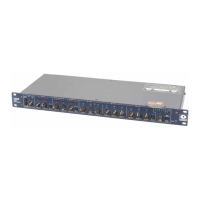
421m
12
Tape Duplication
Anytime you change recording media, especially between a professional format and a consumer
format (how about DAT to consumer cassette?), patch a 421m into the recording chain to perform a
gentle squeeze to match the signal level to the input of the next device and peak limiting. Try 2:1
RATIO; set the TARGET OUTPUT LEVEL control for the average level that you need and use the
limiter to control the peaks.
Many churches record the Pastor s message (sermon) and make it available on tape by the end of
the service. Considering the speed with which this must occur, a 421m might be just the thing to
keep the average levels hot, while still preventing overload.
Teleconferencing
Many teleconference users want to record the content of the conference. Of course, audio levels
are all over the map (one participant shouts, another is timid...). Try a 421m between the audio mixer
and one track of the tape machine, and another between the telephone interface and another track
of the tape machine. Using separate 421m’s and separate tape tracks will help if and when someone
tries to transcribe the conference. Keeping things separate also helps negate the 421m’s tendency
to bring the telephone interface s leakage (trans-hybrid loss) up to the same level as the caller,
which isn t a good idea. The 421m helps by keeping the signal levels more consistent from caller to
caller, which is a good idea.
Theatre and Auditorium Cue Systems
An auditorium cue system consists of a microphone(s) mounted in the audience area of a theatre or
auditorium that feeds an amplifier that drives speakers located in the backstage areas of the hall.
The potential dynamic range in this application is tremendous, ranging from an empty room to an
audience on their feet making a plea for an encore.
A 421m, in conjunction with close miking of the person calling the cues, can work wonders keeping
this sort of system under control; keeping the level high enough to be audible, and low enough to
not be annoying. The downward expander can reduce the level when the room is very quiet, to
eliminate electronic noise, yet open up if someone speaks.
Post Production
A 421m can be invaluable in post production. How about:
Use the 421m when transferring location sound tapes. If you keep the ratio low, you ll gain
consistency with a minimum loss of dynamic range.
Use multiple 421m’s to keep various mix elements audible...Try one on FX or Foley, and on dialog.
If you re creating something that will be heard in a specific environment, consider using a 421m to
preprocess your mix for that environment. For instance, suppose you re making a point-of-
purchase video that will heard in a noisy department store, over a semi-ordinary television set.
With your mixer or an outboard EQ, give the dialog a good dose of 2.5k to 5k presence boost to
make it cut through the noise. Then process the overall mix through the 421m with a 3:1 ratio. This
will keep the overall level hot but consistent, and the combination of presence boosting and overall
level control will make your product audible in spite of the adverse environment in which it is
represented.
Be sure to check the previous section entitled Mixdown for additional tips and hints.


 To Next Page