UK
7
SYMBOL DEFINITION
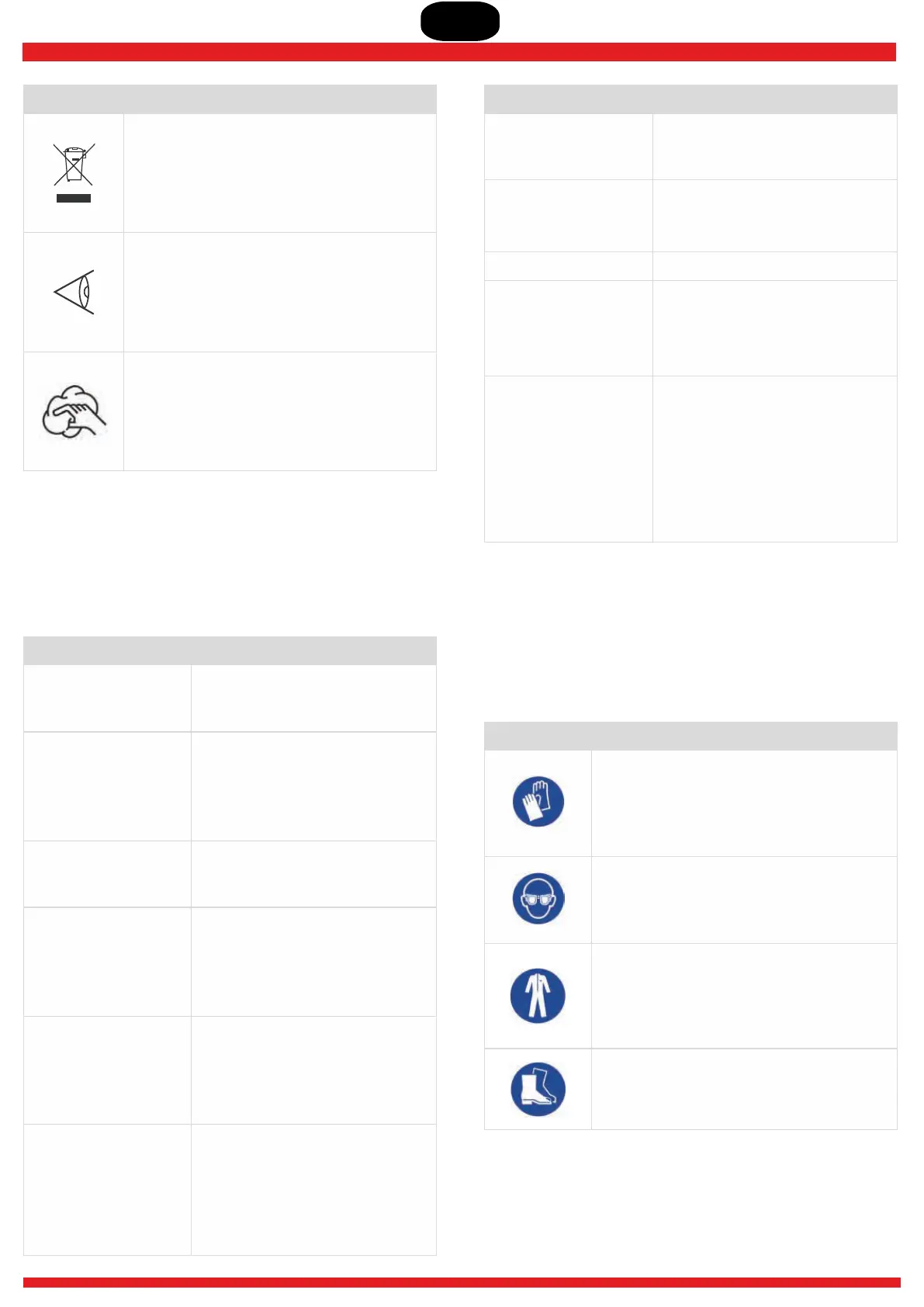
Indicates that this product must not be treat
ed as domestic waste but must be delivered
to the appropriate collection point for the re
cycling of electrical and electronic equipment
(DIRECTIVE 2012/19/EU).
Symbol that identifies visual inspection.
Symbol that identifies manual cleaning.
2.12 GLOSSARY OF TERMINOLOGY USED
The manual uses technical terminology. The terms and
abbreviations used are explained below:
TERM DEFINITION
MACHINE and/or
EQUIPMENT
Indicates the product described in
this instruction manual.
MANUFACTURER
Natural or legal person responsible
for the project, construction, pack -
aging or labelling and positioning
on the market.
OPERATOR
Person who intends to use the ma -
chine.
TECHNICAL
SUPPORT
Persons or entities responsible to
the responsible organisation, who
install, assemble, maintain or re -
pair the machine.
INTENDED USE
The use of a product in accordance
with the specifications, instructions
and information provided by the
manufacturer.
NORMAL USE
Operation including periodic in-
spections and operator adjust-
ments, and the standby condition
according to the instructions for
use.
TERM DEFINITION
PROCEDURE
Defined ways of performing a pro-
cedure.
DAMAGE
Physical injury or impairment to hu
man or animal health, or damage
to property and/or the environment.
HAZARD A potential source of harm.
ROUTINE
MAINTENANCE
Periodic procedures to verify cor
rect operation (e.g. cleaning) for
the operator or the organisation in
charge.
NON-ROUTINE
MAINTENANCE
Procedures necessary to prevent
or remove faults that may affect the
operation of the machine. These
procedures are addressed to the
manufacturer’s technical support
personnel or to the organisation in
charge after training.
2.13 PERSONAL PROTECTIVE EQUIPMENT
Operator or maintenance personnel clothing must comply with
the essential safety requirements defined by the laws in force
in the country in which it is installed.
SYMBOL
DEFINITION
Protective or insulated gloves must be
worn
Use appropriate clothing to protect upper
limbs.
Eye protection must be worn.
Use appropriate eye protection clothing.
Protective clothing must be worn with no
loose parts.
Use clothing without fluttering parts to avoid
the risk of them clinging to machine parts.
Safety footwear must be worn
Use suitable shoes to protect lower limbs.


 To Next Page