- 4 -
When choosing the sensor's installation location, unfavourable circumstances such as aisles, shady areas,
warm air outlets in underground parking lots etc. need to be avoided. The sensor should be installed in a place
where the critical criteria "moisture and low temperature” causing the formation of ice are most likely to occur
first.
To make sure that the ice and snow detection system works properly, take care that the minimum
heating time is long enough so that melt water can moisten the sensor.
The sensor location must be chosen in such a way that the draining melt water runs onto the sensor's
measuring surface. This ensures that moisture is detected as long as there is any.
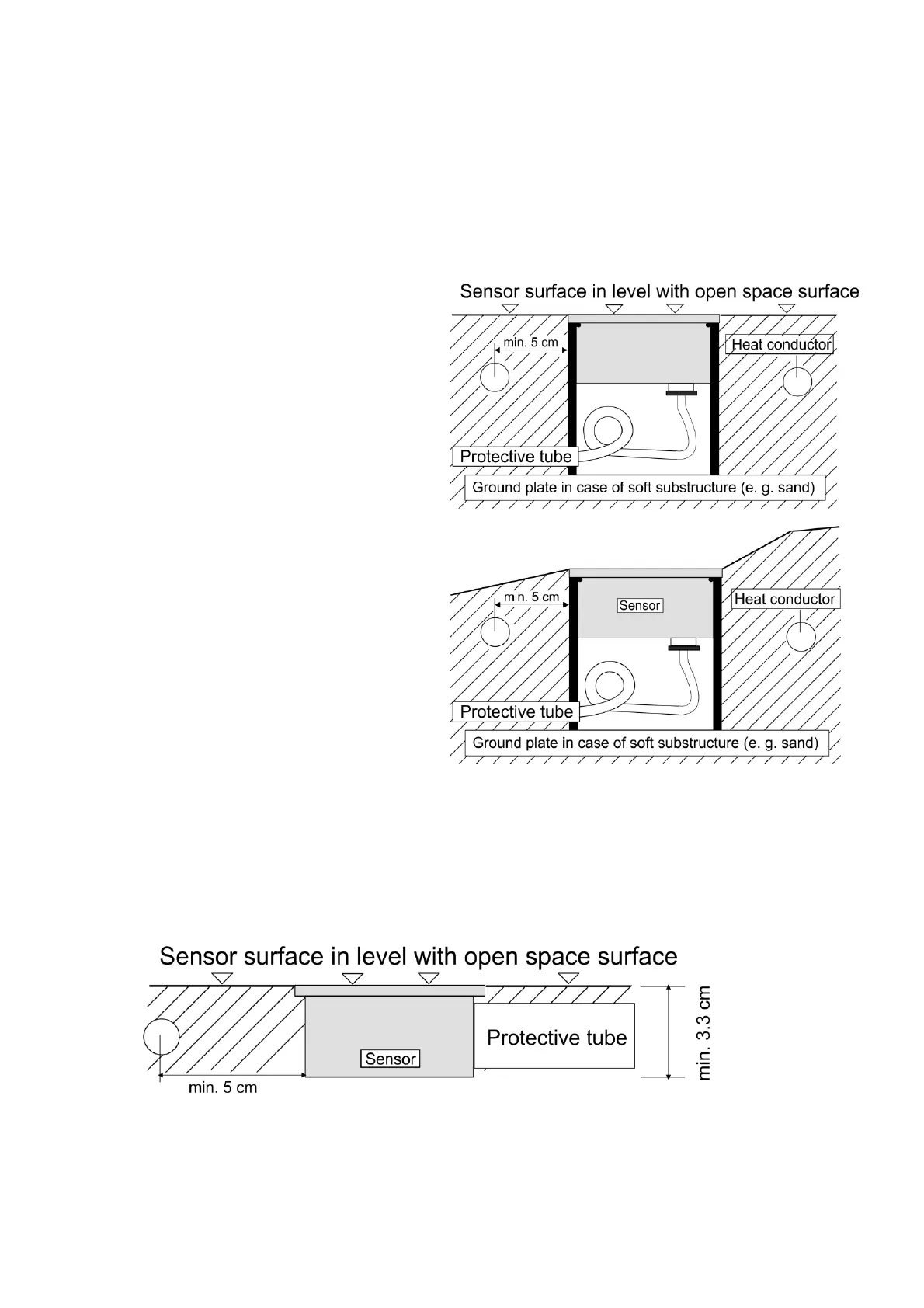
Installation in flat open areas
The sensor needs to be installed inside the area
to be monitored and heated in such a way that
the sensor surface is in level with the surrounding
surface material and the sensor surface remains
free. The sensor must not stick out of the open
area but can rather be a few mm lower so that
draining water is collected.
Installation in open areas with a slope
In case of slopes it needs to be made sure that
the sensor surface lies horizontally in order to
be able to collect snow or melt water.
Installation in open areas with minimum construction height
The type 3353 sensor, which has a supply line at the side of the sensor case, or the type 3355 and 3356
sensors with a variable supply line location are particularly suited to open areas with a low construction height.
Take care not to damage the sensor when constructing the surface, e. g. by an excessive processing
temperature (>75 °C) or by mechanical load due to the use of compactors. Use a suitable protective tube (DN20
in plastic or armoured steel) to ease installation and protect the supply line.



 To Next Page