13 of 24 © 2005 D 420 - 06/05
Terminal Unit
There is a terminal unit setting for each tN4 bus. The
Terminal Unit setting is found in the Adjust menu.
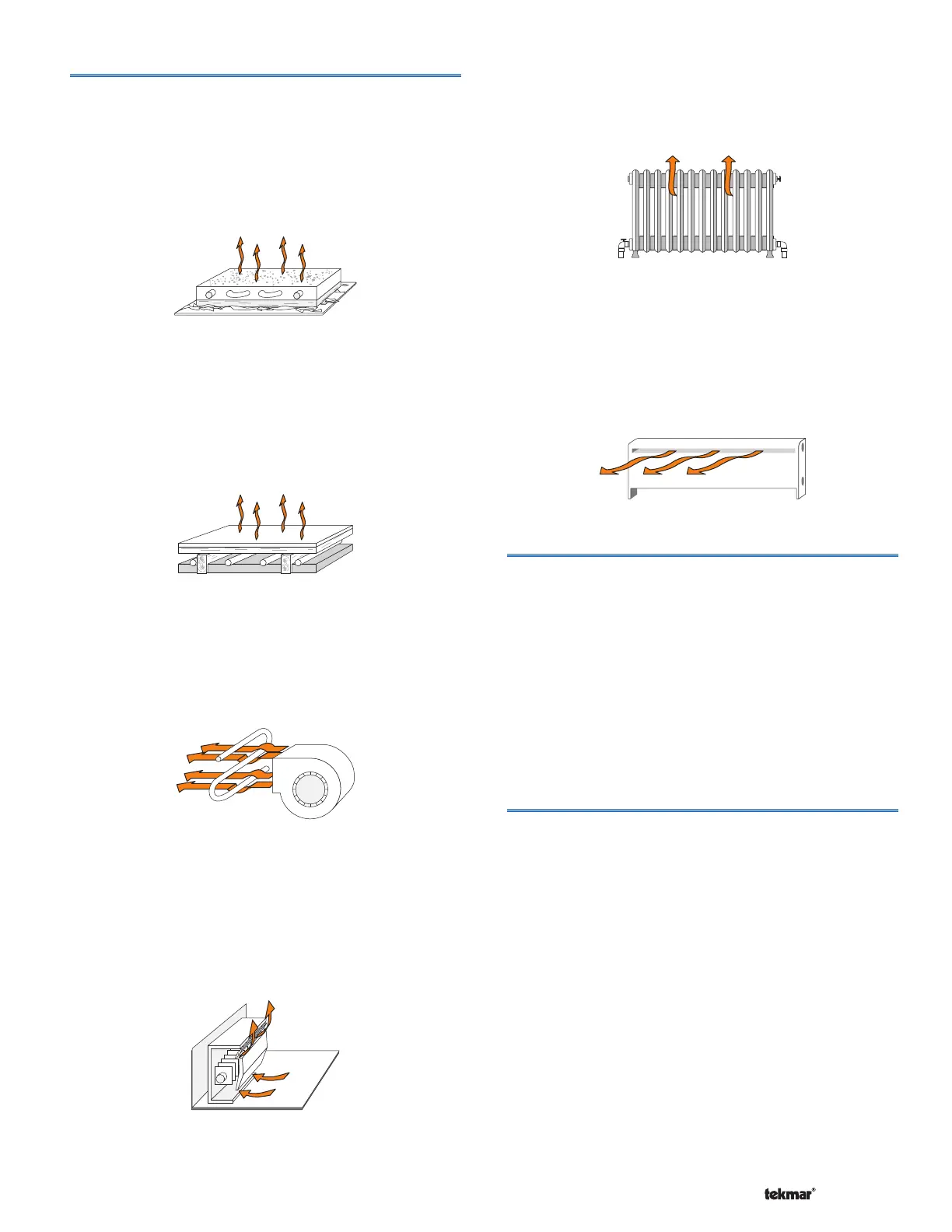
Hydronic Radiant Floor (1)
Terminal type 1 is a heavy, or high mass, hydronic radiant floor
system. This type of a hydronic radiant floor is embedded in
either a thick concrete or gypsum pour. This heating system
has a large thermal mass and is slow acting.
Hydronic Radiant Floor (2)
Terminal type 2 is a light, or low mass, hydronic radiant
floor system. Most commonly, this type of radiant heating
system is either attached to the bottom of a wood sub floor,
suspended in the joist space, or sandwiched between the
subfloor and the surface. This type of radiant system has
a relatively low thermal mass and responds faster than a
high mass system.
Fancoil (3)
Terminal type 3 is a fancoil terminal unit or air handling
unit (AHU) consisting of a hydronic heating coil and either
a fan or blower. Air is forced across the coil at a constant
velocity by the fan or blower and is then delivered into the
building space.
Fin–tube Convector (4)
Terminal type 4 is a convector terminal unit is made up of a
heating element with fins on it. This type of terminal unit relies
on the natural convection of air across the heating element
to deliver heated air into the space. The amount of natural
convection is dependant on the supply water temperature to
the heating element and the room air temperature.
Radiator (5)
Terminal type 5 is a radiator terminal unit has a large heated
surface that is exposed to the room. A radiator provides
heat to the room through radiant heat transfer and natural
convection.
Baseboard (6)
Terminal type 6 is a baseboard terminal unit is similar to a
radiator, but has a low profile and is installed at the base of
the wall. The proportion of heat transferred by radiation from
a baseboard is greater than that from a fin-tube convector.
Outdoor Design Temperature
The outdoor design temperature is typically the coldest
outdoor air temperature of the year. This temperature is
used when doing the heat loss calculations for the building
and is used to size the heating system equipment. If a cold
outdoor design temperature is selected, the supply water
temperature rises gradually as the outdoor temperature
drops. If a warm outdoor design temperature is selected,
the supply water temperature rises rapidly as the outdoor
temperature drops.
The outdoor design setting is found in the Adjust menu.
Warm Weather Shut Down (WWSD)
The Warm Weather Shut Down is the outdoor temperature
at which hydronic heating is no longer required. The boiler
operates only when a Domestic Hot Water (DHW) Demand
or a Setpoint Demand is present.
The WWSD setting is found in the Adjust menu.



 To Next Page