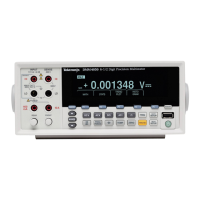
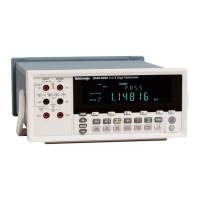
The Tektronix DMM155 and DMM157 are rugged, handheld digital multimeters designed for accurate and easy measurements, suitable for both professionals and hobbyists.
Function Description:
These multimeters measure DC and AC voltages, DC and AC current, resistance, diode voltage, and continuity. The DMM157 model additionally measures capacitance. Key features include auto-ranging for volts and ohms, manual range selection, measurement hold, and offset capabilities. They are equipped with overvoltage and overload protection, a low-power ohms setting, and a diode and continuity tester with an audible signal. An alarm warns of improper connections to the current inputs, enhancing safety. The instruments also feature automatic power-off after 30 minutes to prolong battery life and a low-battery indicator.
Important Technical Specifications:
General Characteristics:
- Display: 3½ digit Liquid Crystal Display (LCD) with a maximum reading of 1999. Extended resolution of 2999 counts is possible in manual range mode. In this mode, readings above 1999 display a blinking "1" as the most significant digit, which should be interpreted as "2," while the three least significant digits display normally.
- Polarity Indication: Automatic; positive implied, negative indicated.
- Overrange Indication: "1" or "-1" blinks.
- Low Battery Indication: The "BAT" symbol is displayed when the battery voltage drops below the operating voltage level.
- Sampling Rate: 2 times/second.
- Operating Temperature: 0°C to +35°C, 0-80% R.H.; 35°C to +50°C, 0-60% R.H.
- Storage Temperature: -20°C to +60°C, 0-80% R.H. (with battery removed from the multimeter).
- Power Supply: Single standard 9V battery (NEDA 1604, JIS006P, or IEC6F22).
- Battery Life: Alkaline 400 hours.
- Dimensions (HxWxD): 165 mm x 85 mm x 38 mm (6.5 in x 3.3 in x 1.5 in) with holster.
- Weight (including battery & holster): DMM155: 380 g (13.4 oz); DMM157: 390 g (13.8 oz).
- Accessories: Test leads (pair), protective holster, battery, and instructions.
Measurement Ranges and Accuracies:
Accuracies are ± (% reading + number of digits) at 23°C ±5°C, at less than 75% R.H. (relative humidity).
DC Volts:
- Ranges: 200 mV, 2 V, 20 V, 200 V, 600 V.
- Accuracy (DMM155):
- 200 mV range: ± (1.0% reading + 2 digits).
- 2 V, 20 V, 200 V, 600 V ranges: ± (0.7% reading + 2 digits).
- Accuracy (DMM157):
- 200 mV range: ± (0.8% reading + 2 digits).
- 2 V, 20 V, 200 V, 600 V ranges: ± (0.5% reading + 2 digits).
- Input Impedance: 10 MΩ paralleled by less than 100 pF.
- Overload Protection: 600 VDC/VACRMS all ranges.
- Resolution (by range): 200 mV (100 µV), 2 V (1 mV), 20 V (10 mV), 200 V (100 mV), 600 V (1 V).
AC Volts:
- Ranges: 2 V, 20 V, 200 V, 600 V.
- Accuracy (DMM155): ± (1.7% reading + 4 digits) 50 Hz to 400 Hz.
- Accuracy (DMM157): ± (1.5% reading + 4 digits) 50 Hz to 400 Hz.
- Input Impedance: 10 MΩ paralleled by less than 100 pF.
- Overload Protection: 600 VDC/VACRMS all ranges.
DC Current:
- Ranges: 2 mA, 200 mA, 10 A (10 A range: 30 seconds maximum above 10 A input up to 13 A).
- Accuracy (DMM155):
- 2 mA, 200 mA ranges: ± (1.2% reading + 2 digits).
- 10 A range: ± (2.5% reading + 5 digits).
- Accuracy (DMM157):
- 2 mA, 200 mA ranges: ± (1.0% reading + 2 digits).
- 10 A range: ± (2.5% reading + 3 digits).
- Overload Protection: mA input: 1 A (240 V) fast-blow fuse; 10 A input: 13 A (240 V) fast-blow fuse.
- Resolution (by range): 2 mA (1 µA), 200 mA (100 µA), 10 A (10 mA).
AC Current:
- Ranges: 2 mA, 200 mA, 10 A (10 A range: 30 seconds maximum above 10 A input up to 13 A).
- Accuracy (DMM155):
- 2 mA, 200 mA ranges: ± (1.7% reading + 4 digits) 50 Hz to 400 Hz.
- 10 A range: ± (2.9% reading + 7 digits) 50 Hz to 400 Hz.
- Accuracy (DMM157):
- 2 mA, 200 mA ranges: ± (1.5% reading + 4 digits) 50 Hz to 400 Hz.
- 10 A range: ± (2.9% reading + 5 digits) 50 Hz to 400 Hz.
- Overload Protection: mA input: 1 A (240 V) fast-blow fuse; 10 A input: 13 A (240 V) fast-blow fuse.
- Resolution (by range): 2 mA (1 µA), 200 mA (100 µA), 10 A (10 mA).
Resistance:
- Ranges: 200 Ω, 2 kΩ, 20 kΩ, 200 kΩ, 2 MΩ, 20 MΩ (20 MΩ range measures approximately 2 MΩ to 20 MΩ only).
- Accuracy (DMM155):
- 20 MΩ Range: ± (2.5% reading + 4 digits).
- 200 Ω Range: ± (1.2% reading + 2 digits).
- Other Ranges: ± (1.0% reading + 2 digits).
- Accuracy (DMM157):
- 20 MΩ Range: ± (1.9% reading + 4 digits).
- 200 Ω Range: ± (1.0% reading + 2 digits).
- Other Ranges: ± (0.8% reading + 2 digits).
- Overload Protection: 600 VDC/VACRMS all ranges.
- Test Voltage:
- Low-Power Ohms Open-Circuit Voltage: Approximately 450 mV.
- High-Power Ohms Open-Circuit Voltage: Approximately 900 mV.
- Resolution (by range): 200 Ω (0.1 Ω), 2 kΩ (1 Ω), 20 kΩ (10 Ω), 200 kΩ (100 Ω), 2 MΩ (1 kΩ), 20 MΩ (10 kΩ).
Continuity Check:
- Threshold: The beeper sounds if the resistance of the circuit measured is < 25 Ω and turns off at > 200 Ω.
- Beeper Frequency: 2 kHz.
- Overload Protection: 600 VDC/VACRMS.
Diode Test:
- Test Current: 1.6 mA maximum.
- Test Voltage: 3.3 V maximum open circuit.
- Overload Protection: 600 VDC/VACRMS.
Capacitance (DMM157 only):
- Ranges: 2 µF, 20 µF, 200 µF.
- Accuracy: ± (1.9% reading + 5 digits).
- Resolution (by range): 2 µF (1 nF), 20 µF (10 nF), 200 µF (100 nF).
- Overload Protection: 600 VDC/VACRMS all ranges.
Usage Features:
- Shock-absorbing cover: Provides durability and protection.
- Tilt stand: Allows for easier meter reading by propping up the device.
- Holster hook: Enables hanging the multimeter over a door or mounting it to a vertical surface with a screw.
- Probe holders: Integrated into the design for convenient storage of test probes.
- Recessed input jacks: Designed for enhanced safety.
- HOLD button: Freezes the measurement display, indicated by an "H" on the LCD. Pressing it again resumes normal operation.
- OFFSET button: Subtracts the two least significant digits from subsequent measurements in manual range mode. Useful for subtracting lead resistance or detecting small variations.
- RANGE/RESET button: Selects measurement ranges in manual mode. Holding it for 2 seconds returns to auto-range. Also restores the display after automatic power-off.
- AC/DC, Ω/LPΩ button: Selects AC or DC voltage/current, or high-power/low-power ohms.
- Rotary Switch: Selects the multimeter function (volts, ohms, diodes, continuity, amperes, and capacitance for DMM157).
- Preparing for Measurement: Always disconnect test leads from the circuit and turn off the meter before connecting probes or selecting a new function. Disconnect power to the equipment under test when measuring resistance, capacitance, testing continuity, or checking diodes. Avoid applying voltage to a connector outside its specified range.
- Measuring Voltage: Connect the black test lead to COM (-) and the red test lead to VΩ (+). Set the rotary switch to the V function and use the AC/DC button to select AC or DC. The multimeter automatically selects the range and displays polarity and voltage.
- Measuring Resistance: Connect the black test lead to COM and the red test lead to VΩ. Set the rotary switch to the Ω position. For low resistance measurements, use the Ω/LPΩ switch for low-power resistance measurements and the OFFSET button to subtract lead resistance.
- Checking Continuity: Connect the black test lead to COM and the red test lead to VΩ. Set the rotary switch to the continuity position. The beeper sounds for resistance below 25 Ω and stops for resistance above 200 Ω.
- Testing Diodes: Connect the black test lead to COM (-) and the red test lead to VΩ (+). Set the rotary switch to the diode test position. Good silicon diodes typically show a forward voltage drop between 0.400 V and 0.900 V. "000" or approximately 2.6 V indicates a defective diode.
- Measuring Capacitance (DMM157): Connect the black test lead to COM and the red test lead to VΩ. Set the rotary switch to the desired capacitance range (2µF-200µF). Observe polarity markings on the capacitor.
- Measuring Current: Connect the black test lead to COM. For up to 200 mA, use the mA terminal; for up to 10 A, use the 10 A terminal. Set the rotary switch to the appropriate current range and select AC or DC current. Connect the test leads in series with the load. Start at the highest range if the current level is unknown.
Maintenance Features:
- Replacing the Battery: The meter uses a single 9V battery. To replace it, disconnect test leads, turn off the meter, remove the holster, unscrew the case bottom, gently lift the case bottom, disconnect the old battery, connect the new battery, replace the battery in the case top, ensure gaskets and snaps are seated, and reinstall the screw.
- Replacing the Fuses: The meter has two fuses: 1A, 600 VRMS (159-0337-00) and 13A, 600 VRMS (159-0357-00). The procedure involves steps similar to battery replacement: remove the holster, unscrew the case bottom, lift the circuit board, pry out the defective fuse, install a new fuse of the same size and rating, ensure the rotary switch and circuit board switch are both in the OFF position and 180° opposite each other, replace the case top, ensure gaskets and snaps are seated, and reinstall the screw.
- Automatic Power Off: The multimeter automatically shuts off after about 30 minutes of inactivity (no function or mode changes). Pressing any key switch or selecting another range will turn it back on.

 Need help?
 General

 To Next Page