
 Need help?
Do you have a question about the Tempest GBS-16 and is the answer not in the manual?
Information regarding model and serial numbers for identifying the specific fan unit.
Guidance on where to find warranty information or how to contact for warranty claims.
Detailed technical specifications for the confined space fan, including type, drive, engine, and blade details.
Additional technical data for the GBS-16 fan, including model numbers, dimensions, weight, and CFM.
Essential pre-operation steps including visual inspection, oil check, and fuel requirements.
Steps for setting up, starting, and stopping the fan for safe and efficient use.
Step-by-step guide for draining and refilling the engine oil for proper lubrication.
Procedures for cleaning the air filter and cooling system components to ensure optimal performance.
Guidelines for spark plug service, carburetor notes, and emission system information.
Detailed instructions for the safe removal and correct installation of the fan blade assembly.
A chronological checklist of required maintenance tasks for the fan.
Common causes and diagnostic steps when the fan does not start.
Troubleshooting solutions for issues related to reduced fan efficiency or output.
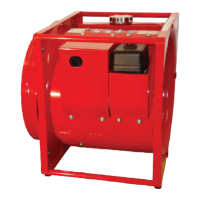
The Tempest GBS-16 is a confined space fan designed for environmental management in firefighting and industrial applications. This gasoline-powered blower is engineered to provide positive pressure ventilation (PPV) and positive pressure attack (PPA), effectively removing heat, gases, and smoke from enclosed areas. Beyond firefighting, it is also utilized by construction contractors to control dust, fumes, and unhealthy gases like carbon monoxide in confined spaces, thereby enhancing safety.
The fan's operation is straightforward, but adherence to pre-operation checks and safety guidelines is crucial. Before starting, a visual inspection for any shipping damage is recommended, and any damage should be reported immediately to Tempest Technology Corporation. The unit requires high-quality detergent oil, specifically SF or SG SAE 10W-30 for Honda engines, to keep the engine clean and prevent gum and varnish deposits. The crankcase must be filled slowly on a level surface, ensuring not to overfill, as excess oil vapor can be ejected when the engine runs in a tilted position.
Fueling the GBS-16 requires clean, fresh, lead-free gasoline with an octane rating of 86 or higher. Leaded gasolines are not to be used. Several precautions are emphasized during refueling: never fill the tank indoors, while the engine is running or hot, or while smoking. The fuel tank should not be completely filled; instead, it should be filled to the designated level to prevent clogging of the charcoal filter in the fuel cap, which can inhibit fuel flow. Any spilled fuel must be wiped from the engine and components before starting.
Operating the fan involves a sequence of steps. First, the stop switch/ignition switch and fuel valve/fuel shutoff switch must be set to the "ON" position. If equipped, the choke lever should be set to "CLOSED" or "STARTING." The throttle lever is then set to the 1/2 open position. To start, the starter handle is grasped, slack is taken up, and the rope is pulled briskly, allowing it to return slowly. This is repeated until the engine starts. If a choke is present, it is moved to the ½ position until the engine runs smoothly, then to the open or off position. Finally, the throttle is moved to the desired speed. To stop the fan, the throttle is moved to the "IDLE" position, and then to the "OFF" position, or the stop switch is turned to "OFF." It is critical not to move the blower while it is in operation to prevent severe personal injury and damage to the fan; the fan must always be shut down before moving.
Maintenance is essential for efficient and trouble-free operation. A key safety caution for maintenance on the blade side of the motor is to always remove the spark plug wire, as the engine can start simply by rotating the blades.
Oil changes are required after the first three operating hours and every 50 hours thereafter, or more frequently in dusty conditions. The process involves positioning the fan on a level surface, removing the GBS muffler cover, locating and removing the oil fill plug, and extracting the used oil with a hand-pump into an appropriate container for disposal. Clean oil is then added slowly through a funnel, ensuring the correct type and amount are used, before replacing the oil filler cap and muffler cover.
The air cleaner needs regular service, especially in dusty environments, to prevent carburetor malfunction. Running the engine without the air cleaner is strictly prohibited as it can lead to rapid engine wear from contaminants. Foam elements are washed with detergent and warm water, then thoroughly dried. Paper elements are cleaned by tapping off excess dirt or blowing compressed air from the inside out; brushing is avoided as it forces dirt into the fibers. Paper elements should be replaced if excessively dirty.
The cooling system also requires frequent attention, with dirt and debris needing removal from the cooling fins, air intake screen, levers, and linkage to ensure adequate cooling and correct engine speed.
Spark plug maintenance involves checking it yearly or every 100 hours. This includes cleaning the area around the plug, removing and inspecting it, and replacing it if electrodes are pitted, burned, or porcelain is cracked. The electrode gap must be checked and set to manufacturer specifications. The spark plug washer should be in good condition, and the plug threaded by hand to prevent cross-threading, then tightened with a spark plug wrench.
Carburetors are preset by the engine manufacturer to comply with regulations. If adjustments are needed due to altitude or climate, Tempest or a local engine dealer should be contacted. For emission control systems, the engine manufacturer's Owners Manual should be consulted for specific instructions.
Blade removal and installation procedures are detailed for 16" Tempest fans. To remove, the front grille bolts are removed, followed by the three bolts securing the blade assembly to the hub. The blade assembly is then set aside. The two bolts securing the bushing to the hub are removed, and then turned evenly in the threaded part of the bushing until it separates from the hub. For installation, the shaft and keyway must be clean and smooth. Thread locking agent is applied to the cap screws, which are then inserted loosely through the bushing into the hub. The cap screws are turned just enough to engage the threads, ensuring the bushing is loose in the hub. If removed, the key is reinserted into the keyway. Two bolts are tightened to draw the bushing and hub together. The blade is then slid onto the assembly, thread locking agent is applied to the three screws, and they are inserted and turned evenly but not tightened. The blade must be aligned with the hub, and the screws tightened. The blade and bushing are positioned to ensure blade tips do not hit the rear grille eyelets, potentially requiring the blade and bushing to be in or out up to ½" from the shaft end for proper clearance. Finally, the cap screws are progressively tightened with a wrench to 7.5 ft.-lbs. of torque to avoid breaking or cracking the blade. After installation, the blade is carefully turned to check for clearance, the front grille is reinstalled, and the blower is tested.
A comprehensive maintenance schedule is provided:
Troubleshooting covers common issues. If the fan fails to start, checks include fuel level, open fuel shut-off valve, fuel line to the carburetor, and whether the fuel tank was overfilled (which can clog the charcoal filter). Low oil in Honda engines, equipped with automatic oil alert systems, will also prevent starting. A spark plug check involves removing the wire, cleaning around the base, installing the plug into the cap, grounding it to the engine, and pulling the starter to check for a spark. If a spark is present, the plug and wire are replaced, and the engine is re-attempted. If the fan still doesn't start, Tempest or a local engine dealer should be contacted. Poor fan performance can be addressed by checking and cleaning the air filter, ensuring the blade is tight, and replacing fuel if it is more than two months old.
 General
| Model | GBS-16 |
|---|---|
| Speed Settings | 3 |
| Color | Black |
| Blade Size | 16 inches |
| Power Source | Electric |
| Material | Metal |
| Warranty | 1 year |

 To Next Page