Need help?
Do you have a question about the Tesmec AFS404 and is the answer not in the manual?
Details about the manufacturer and contact information.
Information on how to communicate with the manufacturer.
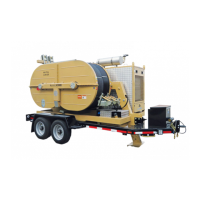
Description of the machine's type and intended applications.
Technical performance specifications for puller and tensioner modes.
Detailed specifications like dimensions, engine, and weight.
Sound pressure level at the operator's seat.
General guidance for operating the machine safely and effectively.
Rules for the operator during machine use and maintenance.
Rules for the operator during machine maintenance.
Importance of reading and following the instruction manual.
Environmental conditions for operation like temperature and humidity.
Temperature limits for hydraulic oil based on working conditions.
List of applications or situations where the machine must not be used.
Defines the manufacturer's responsibility and limitations.
Standards and regulations the machine complies with.
Procedures and safety for lifting the machine.
Methods of transport and packaging materials used.
Steps for safely unpacking the machine upon delivery.
Basic assembly steps, like mounting tires.
Guidelines for transporting the machine on a trailer or truck.
How to correctly position and anchor the machine on site.
Essential safety rules for the operator before starting work.
Description of the control panel elements and their functions.
Steps to perform before starting the machine, like loading cables.
Configuration steps for standalone operation mode.
Explanation of the various display pages and their readings.
Step-by-step guide on how to start the machine's engine.
Overview of the two pull control devices.
How to set the pull limiting device for safe operation.
How to set the pull programming device for automatic control.
Instructions for connecting hydraulic heads of reel elevators/winders.
Procedures for performing pulling operations with the machine.
How to safely release the rope or conductor.
Optional connection of a compressor to the machine.
Information on the optional preheating kit for cold conditions.
Programming the optional preheating system's timer.
How to use the optional rope locking clamp.
Important reminders and checks before and during operation.
Final steps to safely conclude operations and stop the machine.
Overview of using multiple machines connected electronically.
Steps to set up machines for networked operation.
Controls affecting all machines when operated from the master.
Setting pull limits and programming for multiple connected machines.
Setting the pull limiting device for connected machines.
Setting the pull programming device for connected machines.
Using the optional device for synchronized recovery speed.
Operating the rope locking clamp from the master machine.
How alarms are indicated and managed when machines are connected.
Description of the machine's built-in safety features.
How to use and reset the emergency stop button.
Daily checks of safety devices and warnings against modification.
Identification and mitigation of remaining risks during operation.
General rules and warnings for performing maintenance.
Checking and filling essential fluid levels.
Recommended tyre pressure for safe transport.
Recommended oils and lubricants for various machine parts.
Specific maintenance for the diesel engine.
Procedures for maintaining the hydraulic system, including oil and filter changes.
Procedures for maintaining the reduction gear, including oil changes.
Maintenance steps for the radiator system.
Schedule and type of grease for lubrication points.
Additional periodic maintenance tasks.
A consolidated table of maintenance tasks and intervals.
Procedures for preparing the machine for transport.
Steps for putting the machine into long-term storage.
Information on machine decommissioning and waste disposal.
List of supplementary tables included in the manual.
List of engineering drawings or system diagrams.
References to other related documentation.
 General
| Brand | Tesmec |
|---|---|
| Model | AFS404 |
| Category | Construction Equipment |
| Language | English |

 To Next Page