EasyManua.ls Logo

Thermal Arc ARCMASTER 300TS - User Manual

Thermal Arc ARCMASTER 300TS
120 pages
Print Icon
To Next Page IconTo Next Page
Loading...
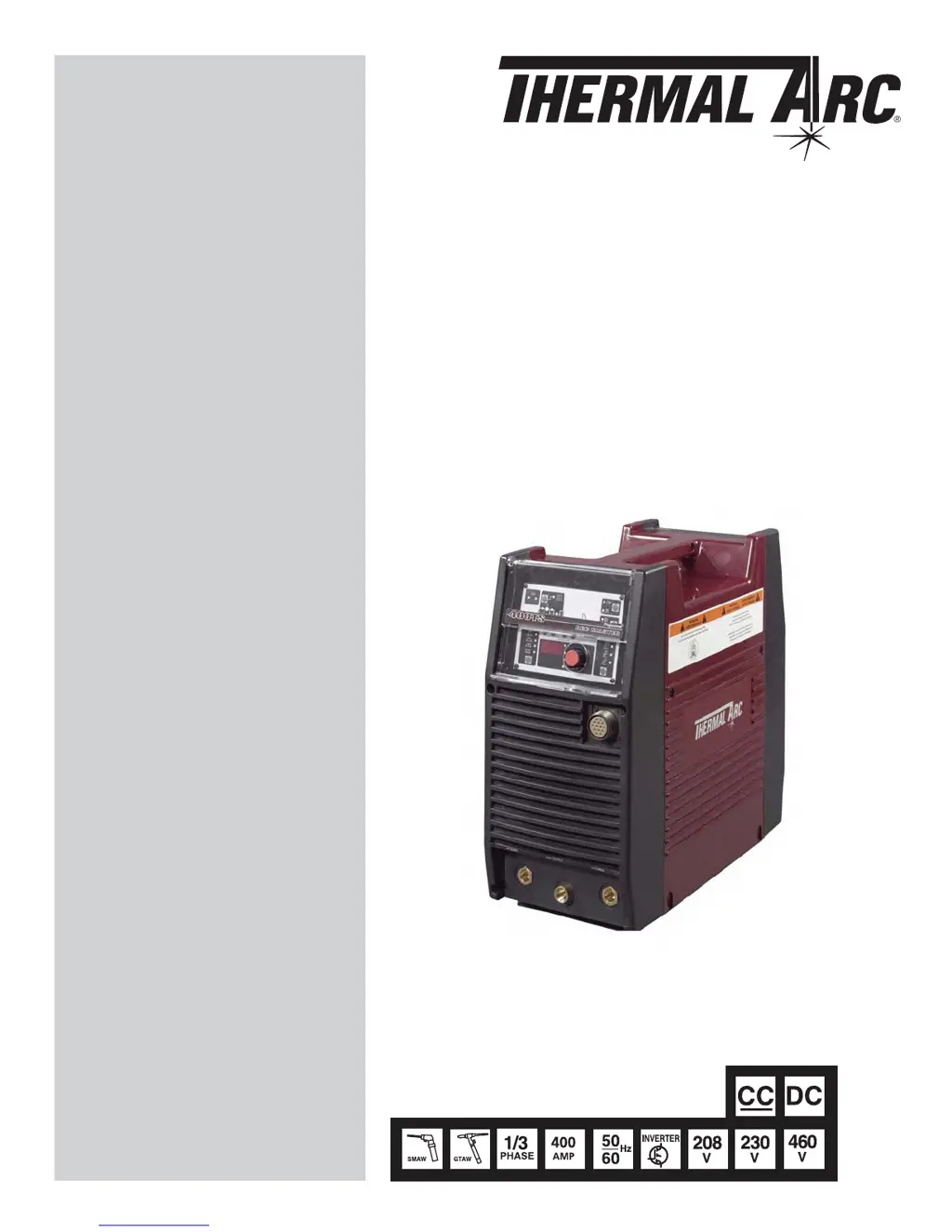
400TS
400S
ARCMASTER
®
INVERTER ARC WELDERS
Art # A-07263
Service
Manual
VV
VV
V
ersion No:ersion No:
ersion No: AA.03
Issue Date:Issue Date:
Issue Date: May 22, 2006
Manual NoManual No
Manual NoManual No
Manual No: 0-4895B
Operating FeaturesOperating Features
Operating Features:
300TS
300S

Table of Contents

Questions and Answers

  • E
    Elizabeth McintoshSep 8, 2025
    Why is my Thermal Arc Inverter weld bead too wide or excessive bead build up or excessive penetration in butt joint?
    • N
      nathan53Sep 8, 2025
      If the weld bead is too wide, there's excessive bead build-up, or excessive penetration in a butt joint when using your Thermal Arc Inverter, the travel speed is likely too slow. Increase the travel speed to resolve this.
  • A
    Andrew AdamsAug 23, 2025
    What to do if my Thermal Arc Inverter welding current reduces when welding?
    • J
      Jose RiveraAug 23, 2025
      If the welding current reduces during welding, first, check and tighten all welding cable connections. Ensure you are using the proper size and type of cable. Also, replace the electrode if it is in poor condition and verify the output torch connections to confirm correct welding polarity.
  • L
    Lucas BarrAug 25, 2025
    Why does my Thermal Arc Inverter have gas pockets or voids in weld metal (Porosity)?
    • T
      tracyritterAug 25, 2025
      Porosity, or gas pockets in the weld metal, can occur for a few reasons. The electrodes might be damp; dry them before use. The welding current could be too high; reduce it. Also, surface impurities like oil, grease, or paint can cause this; clean the joint before welding.
  • U
    uhebertAug 26, 2025
    What to do if my Thermal Arc Inverter electrode melts when arc is struck?
    • P
      Pamela HowardAug 26, 2025
      If the electrode melts when the arc is struck, it could be due to two main reasons. First, check if the electrode is connected to the '+' terminal and connect it to the '–' terminal instead. Second, if the WAVE BALANCE is greater than 50%, reduce it to below 50% or increase the electrode size.
  • E
    Elizabeth KnappAug 27, 2025
    What to do if my Thermal Arc Inverter welding arc can not be established?
    • H
      hfloydAug 27, 2025
      If a welding arc cannot be established, first ensure that the work clamp is properly connected to the workpiece, or that the work/torch leads are connected to the correct welding terminals. If using a torch lead, connect it to the '–' terminal. Finally, check the gas flow rate, ensure the cylinder isn't empty, and verify that the torch valve is on. Select the right flow rate, change cylinders or turn torch valve on.
  • P
    perrybryanAug 29, 2025
    Why is there no gas flow when the torch trigger switch is depressed on my Thermal Arc Inverter?
    • L
      Laura PageAug 29, 2025
      If there's no gas flow when the torch trigger is depressed, several issues could be the cause. Check if the gas hose is cut and replace it if necessary. Impurities in the gas passage can also be a problem; disconnect the gas hose from the rear of the Power Source, then raise the gas pressure and blow out any impurities. Ensure the gas regulator is turned on. Finally, the torch trigger switch lead might be disconnected, or the switch/cable could be faulty; reconnect the lead or repair the faulty switch/cable.
  • C
    Charles BradySep 16, 2025
    What causes crack occurring in weld metal soon after solidification commences with my Thermal Arc Inverter?
    • B
      blevinslindaSep 16, 2025
      If cracks occur in the weld metal soon after solidification, it could be due to a few reasons. The rigidity of the joint might be a factor; redesign the joint to relieve severe stresses or use crack-resistant electrodes. Insufficient throat thickness can also contribute; travel slightly slower to allow greater build-up in the throat. Finally, a cooling rate that is too high can cause cracking; preheat the plate and allow it to cool slowly.
  • T
    twallaceSep 22, 2025
    Why the welding arc cannot be established with my Thermal Arc Inverter?
    • W
      wesleybutlerSep 22, 2025
      If the welding arc cannot be established, first ensure that the primary supply voltage is switched ON. Next, check that the Welding Power Source switch is also switched ON.
  • H
    howellbrittanySep 7, 2025
    Why is my Thermal Arc Inverter weld bead too small or insufficient penetration or ripples in bead are widely spaced apart?
    • I
      ismithSep 7, 2025
      If the weld bead is too small, penetration is insufficient, or ripples in the bead are widely spaced when using your Thermal Arc Inverter, the travel speed is likely too fast. Reduce the travel speed to correct this.
  • J
    Jacqueline BakerSep 4, 2025
    What causes a dirty weld pool in my Thermal Arc Inverter?
    • S
      Susan MillerSep 4, 2025
      A dirty weld pool can result from a couple of issues. The electrode might be contaminated through contact with the workpiece or filler rod material; clean the electrode by grinding off the contaminants. Alternatively, the gas could be contaminated with air; check the gas lines for cuts and loose fittings or change the gas cylinder.

Summary

Safety Instructions and Warnings

Arc Welding Hazards

Covers electric shock, arc rays, noise, fumes, gases, fire, explosion, and flying objects.

General Safety Precautions

Covers hazards from arc rays, noise, fumes, gases, sparks, hot metal, cylinders, and coolant.

Principal Safety Standards

Lists relevant safety standards and codes for welding and cutting operations.

Introduction

How To Use This Manual

Explains how to use the service manual, including warnings, cautions, and notes.

Equipment Identification

Describes how to identify the unit using its specification, model, and serial number.

Description

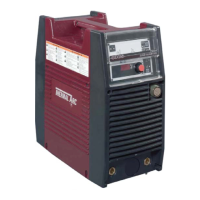
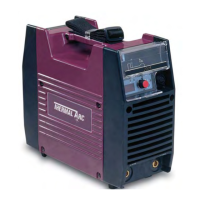
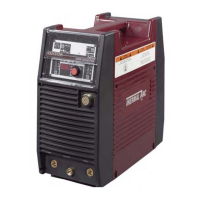
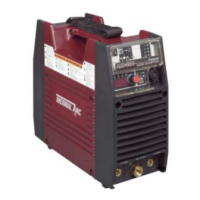
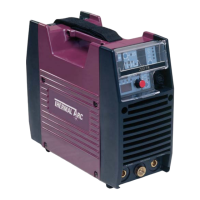
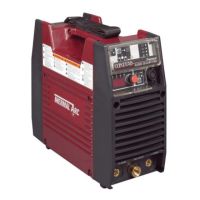
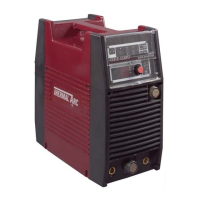
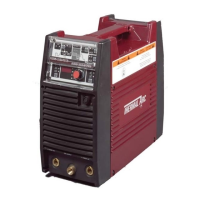
Details the features and characteristics of the ARC MASTER 300/400TS and 300/400S models.

Installation

Environment and Location

Guidelines for selecting a suitable operating environment and location for the welder.

Electrical Input Requirements

Details electrical input connections, requirements, and power specifications for the unit.

Operator Controls

Control Panel Overview

Details the control knob, remote control socket, and front panel controls of the unit.

Weld Process and Parameter Selection

Explains how to select weld processes and describes various weld parameters for optimal settings.

Sequence of Operation

Stick Welding

Step-by-step procedure for performing Stick welding operations with the unit.

HF TIG and Lift TIG Welding

Procedures for HF TIG and Lift TIG welding, including parameter setup and operation.

Advanced TIG Functions

Details Slope Mode, Repeat Sequence, and Pulse Controls for advanced TIG welding operations.

Routine Maintenance

Maintenance Schedule and Procedures

Outlines routine cleaning, inspection, and replacement tasks based on usage frequency.

Basic Troubleshooting

TIG Welding Problems

Common TIG welding issues, their causes, and remedies for quality improvement.

Stick Welding Problems

Identifies common Stick welding problems, their causes, and solutions.

Power Source Problems

Troubleshooting steps for issues related to the power source, arc establishment, and gas flow.

Voltage Reduction Device (VRD)

VRD Specifications and Maintenance

Details VRD specifications, periodic testing, and procedures for switching VRD ON/OFF.

Power Source Error Codes

Error Code Troubleshooting

Lists power source error codes, their causes, and recommended remedies for diagnosis.

Advanced Troubleshooting

System-Level Fault Isolation

Guidance on isolating faults within subsystems and performing system-level checks.

Verification and Remedy Procedures

Detailed steps for verifying and remedying specific error codes and operational failures.

Maintenance

Maintenance List and Service Tools

Lists components for maintenance, required tools, and notes on disassembly and assembly.

Replacement Procedures

Step-by-step instructions for replacing specific components like PCBs, diodes, and resistors.

Appendix 1: Parts List

Parts Identification and List

Comprehensive list of all parts with DWG No., Part No., description, and diagrams for identification.

Appendix 2: Connection Wiring Guide

Connection Wiring Guide

Details the wiring connections between various PCBs, components, and connectors.

Appendix 3: Interconnect Diagram

Interconnect Diagrams

Schematics showing the interconnection of major components and circuit boards for 300/400TS and 300/400S models.

Appendix 4: Diode Testing Basics

Diode Testing Procedures

Fundamental principles and procedures for testing diodes using a digital Volt/Ohmmeter.

Limited Warranty

Warranty Terms and Conditions

Details the warranty terms, limitations, and conditions for Thermal Arc products.

Warranty Schedule

Warranty Periods and Labor Coverage

Provides warranty periods and labor coverage for different types of Thermal Arc welding equipment.

Thermal Arc ARCMASTER 300TS Specifications

General IconGeneral
BrandThermal Arc
ModelARCMASTER 300TS
CategoryWelding System
LanguageEnglish

Related product manuals