Need help?
Do you have a question about the Thermo IEC Centra-GP8R and is the answer not in the manual?
Instructions for unpacking and handling the centrifuge upon arrival.
Guidance on selecting a suitable location and ensuring proper clearances for operation.
Details on setting up the correct voltage and power connections for the unit.
Procedures for safely relocating the centrifuge to a new position.
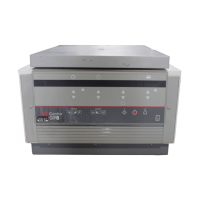
Overview and description of the centrifuge's front panel controls and displays.
Explains how to select and adjust acceleration and deceleration rates for sample processing.
Information on compatible rotors and accessories for the centrifuge.
Importance of balanced loads for centrifuge operation and preventing damage.
Detailed steps for initiating and terminating a centrifugation cycle.
Detailed steps for initiating a centrifugation cycle using the front panel controls.
How to safely terminate a centrifugation run using the stop button.
Explains the different operational modes available for the centrifuge.
Instructions for operating the centrifuge using manual settings for speed, time, etc.
How to use the Rapid Condition feature for quick chamber temperature adjustments.
Using Hold mode to maintain current settings for continuous operation.
How to save, recall, and manage run parameters for repeated use.
Procedure to lock or unlock stored programs to prevent accidental changes.
How to select and load previously saved run parameters.
Modifying existing stored programs or saving new ones.
Explanation of how the refrigeration system works and its limitations.
Information on safety features, error messages, and diagnostic codes.
Description of the lid interlock mechanism and its safety functions.
Explains warning messages and audible alerts for operational conditions.
List of error codes and the conditions they indicate for diagnosing issues.
Tables detailing rotor specifications, speeds, and relative centrifugal forces.
Table and explanation for adjusting speeds based on sample specific gravity.
Guide to material compatibility with various chemicals for maintenance and cleaning.
Instructions and a nomograph for calculating relative centrifugal force (RCF).
Detailed procedures for cleaning the centrifuge, rotor, and accessories.
Guidance on identifying, preventing, and removing corrosion from the centrifuge parts.
Recommendations for proper storage of rotors and centrifuge parts.
Procedures for decontaminating the unit after exposure to hazardous materials.
How to bypass the lid interlock in case of power failure for sample retrieval.
Information on the built-in tachometer calibration and verification process.
Step-by-step guide for replacing motor brushes in the centrifuge.
Requirements for returning equipment, including decontamination and authorization.
List of available spare parts with their corresponding part numbers.
Information regarding internal fuses and their replacement by qualified personnel.
Lists the maximum rotational speeds achievable by different rotors.
Indicates the maximum relative centrifugal force (RCF) the unit can generate.
Electrical specifications including voltage, frequency, and current draw.
 General
| Temperature Range | -10°C to +40°C |
|---|---|
| Type | Refrigerated Centrifuge |
| Refrigeration | Yes |
| Power Supply | 230V, 50/60Hz |
| Acceleration/Deceleration Rates | 9 steps |
| Rotor Compatibility | Swing-out and fixed-angle rotors |
| Timer | 0-99 minutes |


 To Next Page