COOKTOP COOKING
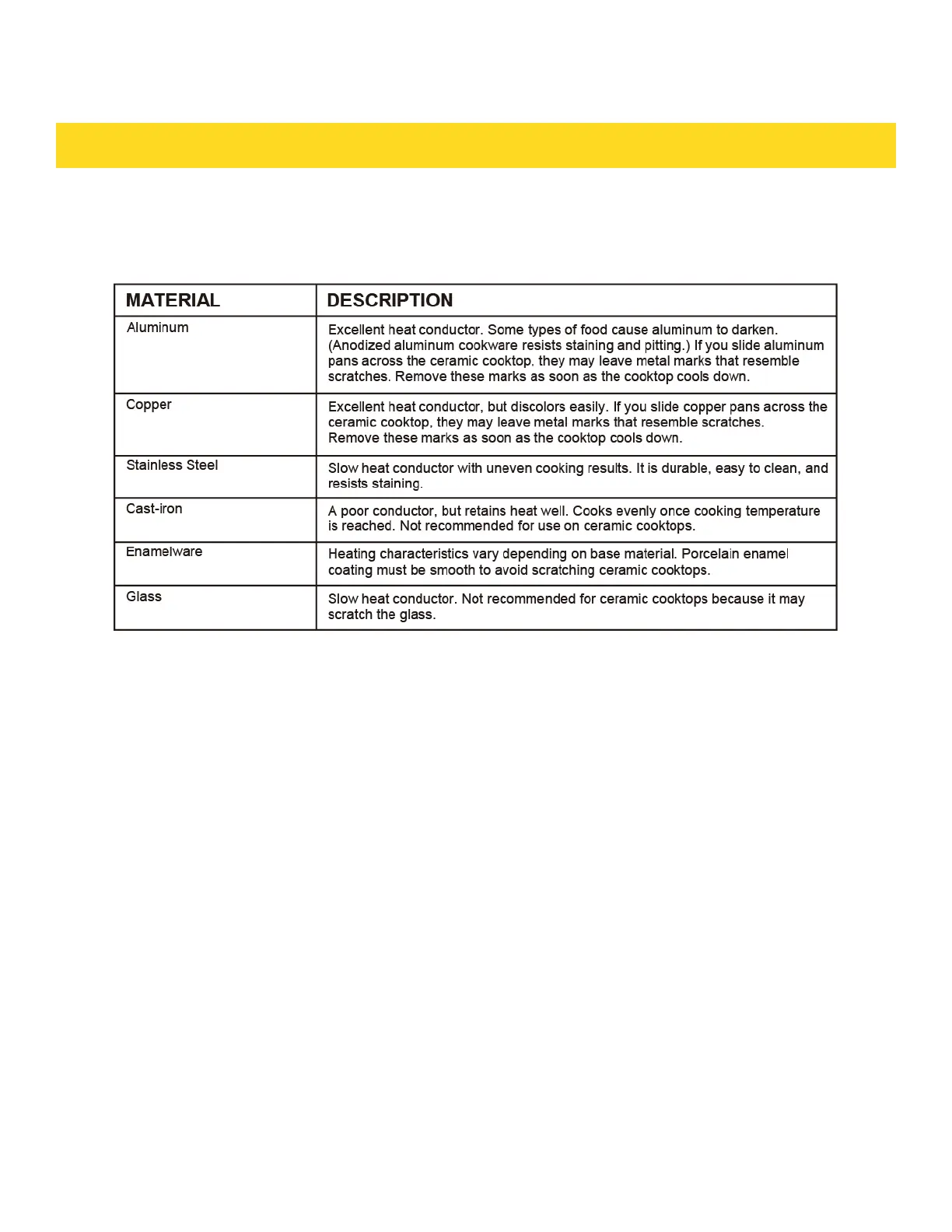
What your cookware is made of determines how evenly and quickly heat is
transferred from the surface burner to the pan bottom.
Protecting the ceramic cooktop
Cleaning
• Clean the cooktop before using it for the first time.
• Clean your cooktop daily or after each use. This helps keep your cooktop looking good and can prevent
damage.
• If a spillover occurs while you are cooking, immediately clean the spill from the cooking area while
it is hot to prevent a tough cleaning chore later. Using extreme care, wipe the spill with a clean dry towel.
• Do not let spills remain on the cooking area or the cooktop trim for a long period of time.
• Do not use abrasive cleansing powders or scouring pads because they can scratch the cooktop.
• Do not use chlorine bleach, ammonia, or other cleansers not specifically recommended for use on
a glass ceramic surface. Preventing marks and scratches
• Do not use glass cookware. It may scratch the cooktop.
• Do not place a trivet or wok ring between the cooktop and the pan. These items can mark or scratch
the cooktop.
• Make sure that the cooktop and the pan bottoms are clean.
• Do not slide metal pans across the cooktop. Preventing stains
• Do not use a soiled dish cloth or sponge to clean the cooktop surface. They may leave a film, which
may cause stains on the cooking surface after the area is heated.
• Continuously cooking on a soiled surface can result in a permanent stain. Preventing other damage
• Do not let plastic, sugar, or foods with high sugar content melt onto the hot cooktop. Should this
happen, clean immediately.
• Do not let a pan boil dry. This may damage the cooktop and the pan.
• Do not use the cooktop as a work surface or cutting board.
12



 To Next Page