SECTION : BOATING SAFETY
|
28
Recommended Safety Equipment
As a precaution, a good boater will avoid potential problems on an outing
by having additional equipment on board. Normally, this equipment is
dependent on the body of water and the length of the trip; your dealer can
assist you.
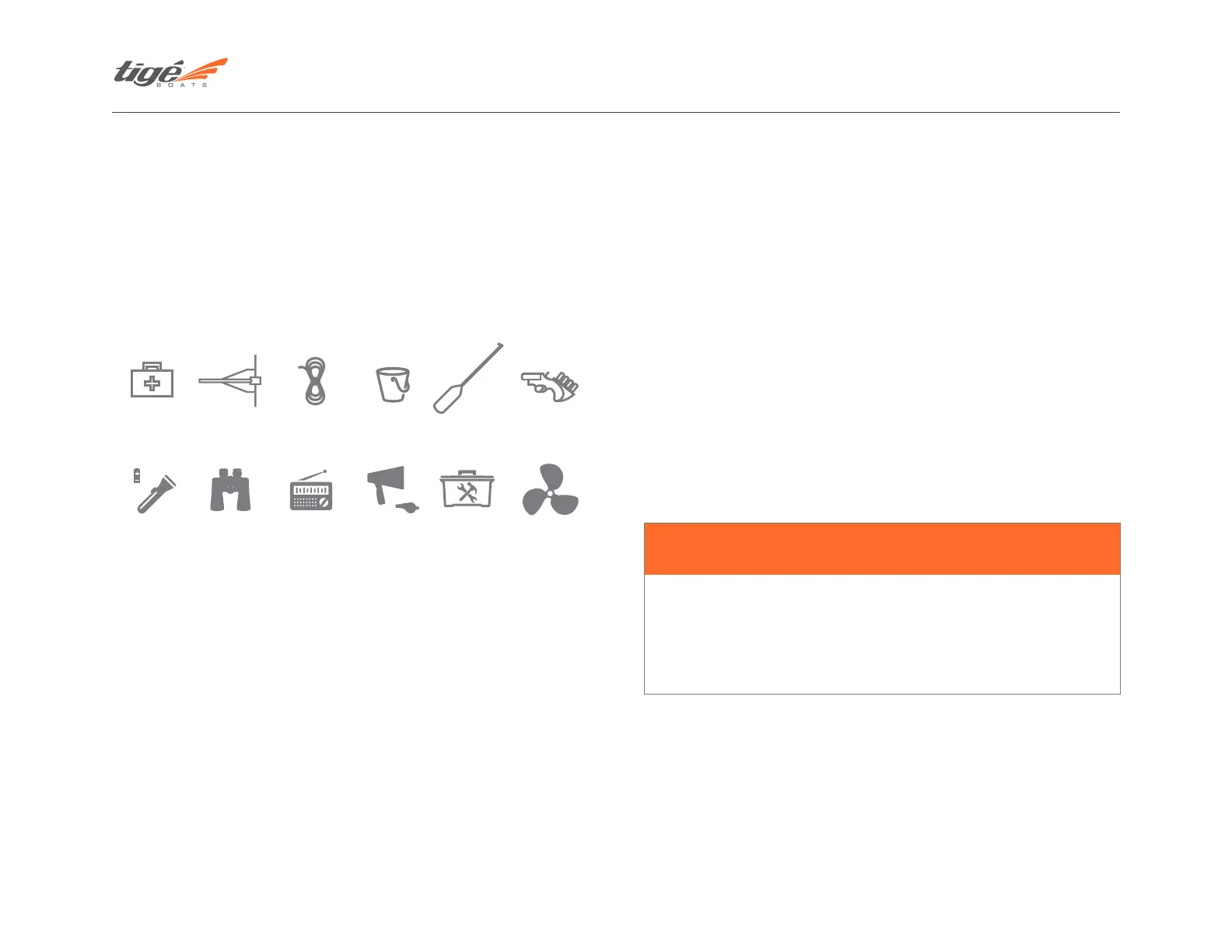
We recommend the following equipment:
• First aid kit and manual
• Anchor with at least 75 feet (23 meters) of line
• Mooring lines and fenders
• Bailing device (bucket, hand pump)
• Combination paddle/boat hook
• Local charts and compass
• Day/night distress signals
• Waterproof flashlight and spare batteries
• Cellular phone
• Binoculars
• Portable AM/FM radio with weather band
• A non-electric horn or whistle
• Extra engine oil
• Tool kit
• Spare propeller and mounting hardware
• Spare fuses
• Spare keys
• Sunglasses and sun block lotion
EMERGENCIES
Fire/Explosion
Many boat fires involve flammable liquids such as gas or oil. Many inboard
fires start in the bilge area which at times can be filled with gas vapors.
Since gas vapors cannot be seen, boat fires tend to travel very fast. If you
encounter a fire on board, turn off the engine immediately. If you have a fire
extinguisher on board and access to the fire, it may be controllable. Direct
the contents of the extinguisher at the base of the flames. Throw burning
materials overboard if possible. Put on PFDs, if not already on, signal for
help and prepare to abandon the boat if necessary.
WARNING
BURN HAZARD
Gasoline floating on water which is ignited can cause death or serious
injury. Gasoline will float on top of water and can burn. If the boat is
abandoned, swim upwind, far enough to avoid fuel that can spread over
the surface of the water.



 To Next Page