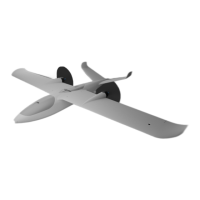
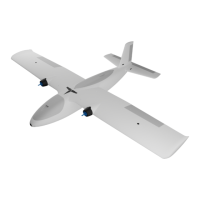
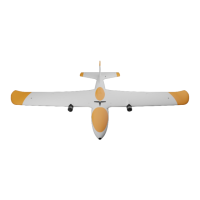
The Titan Viper is a 1.6m wingspan Tri-Tiltrotor VTOL (Vertical Take-Off and Landing) aircraft designed for carrying an underslung camera system. It is engineered to be lightweight yet structurally rigid, with particular attention paid to the landing legs for durability. The aircraft features fully removable wings and tail, which significantly aids in transportability.
Function Description:
The Titan Viper is primarily designed for aerial photography and videography, accommodating various camera systems. Its VTOL capability allows for flexible operation in diverse environments, enabling vertical take-off and landing without the need for a runway. The tri-tiltrotor configuration indicates that it uses three motors, with at least two capable of tilting, to achieve both vertical lift and forward flight. The design emphasizes efficiency, aiming for extended range and endurance, making it suitable for long-distance missions.
Important Technical Specifications:
- Wingspan: 1608mm
- Wing Area: 3757cm²
- Maximum Take-Off Weight (MTOW): 5.5kg
- Efficiency: 1.95 Wh/km @ 4.0kg (This indicates a very efficient design, allowing for long flight times and range.)
- Cruise Speed: 45-60 kph
- Maximum Rear Propeller Diameter: 15 inches
- Maximum Front Propeller Diameter: 15 inches
- Aerodynamic Properties:
- Root Airfoil: NACA 3412
- Tip Airfoil: NACA 3412
- Root Chord: 255mm
- Tip Chord: 162mm
- Average Chord: 212mm
- Root Incidence: 1°
- Tip Incidence: 0°
- Aspect Ratio: 6.88
- Max L/D: 14
- Dihedral: 0°
- Leading Edge Sweep: 0°
- Trailing Edge Sweep: -3°
- Range: Capable of 100+ km total range with considerable battery capacity remaining for landing transition, thanks to its sub 2Wh/km efficiency.
- Recommended Motor & Propeller: Brotherhobby Tornado T5 3115 640kv with APC 13x8E/APC 13x8EP propeller. The 13x8 prop is optimized for forward flight; a 12x6 prop is suggested for longer hover times.
- Tilt Servo: 20kg dual output servo with metal brackets.
- Recommended Electronics:
- Radio Systems: TBS Crossfire / ELRS / Dragonlink / SIYI HM30 or MK15
- Video Systems: 5.8GHz / 1.2GHz video / DJI / Walksnail / HDZero, or underslung gimbals like the SIYI A8.
- Flight Controller: Matek F405-VTOL (mounts directly)
- GPS/Compass: Matek M10-5883 or similar
- ESCs: Tmotor 55A 4in1 ESC or 3 Lumenier 51A BLHeli_32 ESCs
- Servos: (4) Emax ES08MAII servos (2 for ailerons, 2 for ruddervators)
- Batteries: Example for beginners: 5000mAh 6S LiPo; for max endurance: 13500mAh Molicel P45B 6S3P.
- Required Build Materials (Spars):
- (2) 16x230mm Front motor arms
- (1) 16x600mm Tail boom
- (2) 10x1000mm Main wing
- (2) 8x500mm Wing support
- (2) 4x400mm Aileron hinge
- (2) 4x100mm Landing leg spar
- (4) 3x280mm Tail surface spars
- 3D Printing Filament:
- Polymaker Polylite prefoamed LWPLA (1+ 750g rolls recommended for fuselage, tail, and wing parts).
- Polycarbonate, PETG, or other high-temp filament for motor nacelle caps and wing bay covers.
- Minimum Print Bed Size: 220x220x250 (e.g., Ender 3)
- Other Misc. Materials: Medium CA glue, control horns, M3 threaded inserts (max 6mm height), M3 bolts of various sizes and locknuts, (4) 6x3mm magnets.
Usage Features:
- Camera System Integration: Designed to carry an underslung camera system, with multiple mounts included for popular systems like SIYI A8, analog, analog pan, analog pan/tilt, and DJI, plus a blank mount for community modifications.
- Antenna Separation: Features large wing bays for VTX/RX mounting, ensuring maximum antenna separation, and dedicated SIYI antenna mounting points.
- Control Surfaces: All control surfaces have nearly zero gap with rounded leading edges, sunk into the wings/stabs for aerodynamic efficiency.
- Concealed Servos: All servos are concealed yet serviceable, contributing to a clean aerodynamic profile and ease of maintenance.
- Ease of Transport: Removable wings and tail facilitate convenient transport.
- Ardupilot Compatibility: Strongly recommends Arduplane for flight control, with specific setup tips provided for tri-tiltrotor VTOL configurations (Q_FRAME_CLASS = 7, Q_TILT_MASK = 3, Q_TILT_TYPE = 0).
- Airspeed Sensor: Use of an airspeed sensor is highly recommended for optimal flight performance.
- Center of Gravity (CG): Marked under the wing for easy setup.
- Control Surface Throw: Recommends +- 35 degrees or more throw for all control surfaces.
Maintenance Features:
- 3D Printed Construction: The majority of the aircraft is designed to be 3D printed, allowing for easy replacement of damaged parts.
- Print Settings Guidance: Detailed instructions are provided for 3D printing, including recommended filament types (LWPLA for main parts, high-temp for motor mounts/covers), infill settings for different strength/efficiency trade-offs (3% cubic subdivision for max efficiency, 5% for balanced, 8% for max strength), and part orientation to avoid supports.
- Calibration and Tuning: Emphasizes the importance of a well-maintained and calibrated printer. Guidance on tuning "hole horizontal expansion" is given to ensure proper fitment of carbon rods, a critical aspect of assembly.
- Bed Adhesion Tips: Suggestions for improving bed adhesion and preventing warping during printing, including using a glue stick and the Cura TabAntiWarping plugin.
- Assembly Guidance: Exploded views and detailed instructions for assembling 3D printed parts, including tips for gluing (medium CA glue, wiping excess glue, optional kicker) and aligning parts.
- Threaded Inserts: Instructions for properly installing threaded inserts using a soldering iron at low heat.
- Modular Spar Design: Spars are retained by printed parts and do not need to be glued, allowing for easy disassembly and replacement. The main wing spars are removable, acting as joiners for the wings and fuselage, further aiding transport and maintenance.
- Hover PID Tuning: Recommends significantly increasing yaw PIDs for a more stable hover.

 Need help?
 General

 To Next Page