This document is the Operator's Manual for the Toro TimeCutter® 60in Riding Mower, covering models 75762, 75762W, and 75763.
Function Description
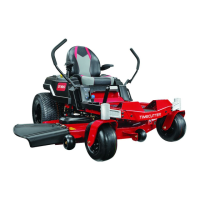
The Toro TimeCutter® 60in Riding Mower is a zero-turn riding mower designed for cutting grass on well-maintained lawns. It is equipped with a powerful engine and a 60-inch cutting deck, making it suitable for efficiently mowing large areas. The zero-turn capability allows for precise maneuvering around obstacles, reducing the need for trimming. This product is designed for residential use and is intended for cutting grass on lawns.
Important Technical Specifications
The manual provides specifications for the mower, including:
Cutting Width:
- Model 75762 and 75762W: 152 cm (60 inches)
- Model 75763: 152 cm (60 inches)
Width with Deflector Down:
- Model 75762 and 75762W: 183 cm (72 inches)
- Model 75763: 183 cm (72 inches)
Width with Deflector Raised:
- Model 75762 and 75762W: 155 cm (61 inches)
- Model 75763: 155 cm (61 inches)
Length:
- Model 75762 and 75762W: 191 cm (75 inches)
- Model 75763: 191 cm (75 inches)
Height:
- Model 75762 and 75762W: 119 cm (47 inches)
- Model 75763: 119 cm (47 inches)
Weight:
- Model 75762 and 75762W: 400 kg (881 lb)
- Model 75763: 427 kg (941 lb)
Engine Oil Specifications:
- Type: Detergent oil (including synthetic) of API service SJ or higher.
- Crankcase Capacity: 1.9 L (64 fl oz) with oil filter.
- Viscosity: Refer to the provided table for recommended SAE viscosity based on temperature (e.g., 10W-30, SAE 30, 5W-30).
Fuel Specifications:
- Type: Unleaded gasoline.
- Minimum Octane Rating: 87 (US) or 91 (research octane, outside the US).
- Ethanol: No more than 10% by volume.
- Methanol: None.
- MTBE (methyl tertiary butyl ether): Less than 15% by volume.
- Oil: Do not add to the fuel.
Tire Pressure:
- Front caster wheels: 206 kPa (30 psi).
- Rear drive wheels: 90 kPa (13 psi).
Spark Plug:
- Type: Champion® XC12YC.
- Air Gap: 0.76 mm (0.03 inch).
Usage Features
The TimeCutter® 60in Riding Mower offers several features designed for ease of use, safety, and performance:
Controls:
- Hour Meter: Tracks engine operating hours for scheduling regular maintenance.
- Throttle Control: Variable-speed control from SLOW to FAST.
- Choke Control: Used to start a cold engine.
- Blade-Control Switch (Power Takeoff - PTO): Engages and disengages the mower blades.
- Key Switch: Three positions: OFF, RUN, and START.
- Motion-Control Levers: Used to drive the machine forward, reverse, and turn.
- Park Position: Engages the electric brake to prevent the machine from moving unintentionally.
- MyRide™ Adjustment Lever: Adjusts the seat suspension for comfort (machines with MyRide only).
- Smart Speed™ Control System Lever: Allows selection of 3 speed ranges—trim, tow, and mow—to optimize performance for different tasks.
- Fuel-Presence Window: Allows visual inspection of the fuel level.
Operation:
- Before Operation Safety: Emphasizes reading the Operator's Manual, keeping bystanders away, not allowing untrained personnel to operate, inspecting the area for debris, wearing appropriate clothing, and not operating near drop-offs or on slopes greater than 15 degrees.
- Adding Fuel: Instructions for safely adding fuel, including recommended fuel types and the use of fuel stabilizer/conditioner.
- Understanding the Safety-Interlock System: Describes how the system prevents the engine from starting unless the blade-control switch (PTO) is disengaged and the motion-control levers are in the PARK position. It also shuts off the engine if the operator leaves the seat when the PTO is engaged or the motion-control levers are out of the PARK position.
- Positioning the Seat: Adjusting the seat for comfort and proper control.
- Adjusting the MyRide® Suspension System: For models with MyRide, this system allows adjustment of the seat suspension for a smoother ride.
- Adjusting the Motion-Control Levers: Adjusting the height and tilt of the levers for operator comfort.
- During Operation Safety: Guidelines for safe operation, including checking for good visibility, keeping hands and feet away from cutting units, avoiding excessive use of water, operating in reverse carefully, avoiding obstacles, stopping blades when not mowing, and parking on a level surface with the brake engaged.
- Slope Safety: Detailed instructions and warnings regarding operating on slopes, including maximum slope angles (15 degrees) and precautions to prevent rollovers.
- Operating the Mower Blade-Control Switch (PTO): How to engage and disengage the blades.
- Operating the Throttle: How to control engine speed.
- Starting the Engine: Step-by-step instructions for starting the engine, including choking procedures.
- Driving the Machine: Instructions for using the motion-control levers to drive forward and backward, and how to adjust speed.
- Using the Smart Speed™ Control System: Selecting appropriate speed ranges (trim, tow, mow) for different conditions.
- Using the Side Discharge: How to operate the mower with the side discharge chute.
- Adjusting the Height of Cut: Step-by-step process for adjusting the cutting height from 38 to 114 mm (1-1/2 to 4-1/2 inches).
- Adjusting the Anti-Scalp Rollers: How to adjust the anti-scalp rollers to prevent scalping on uneven terrain.
- Operating Tips: Advice for maximizing air circulation, cutting a lawn for the first time, cutting a third of the grass blade, alternating mowing direction, mowing at correct intervals, mowing at slower speeds, and avoiding cutting too low.
- Stopping the Machine: How to safely stop the mower.
- Pushing the Machine by Hand: Instructions for manually moving the mower, including engaging the electric brake and using bypass levers.
- Transporting the Machine: Guidelines for safely loading and unloading the mower onto a trailer, including ramp angle requirements and tie-down procedures.
Maintenance Features
The manual outlines a comprehensive maintenance schedule and procedures to ensure the longevity and optimal performance of the mower:
Maintenance Safety:
- Emphasizes safety precautions before performing maintenance, such as removing the key, disconnecting the battery, and allowing the engine to cool.
- Advises against tampering with safety devices and using only genuine Toro replacement parts.
Recommended Maintenance Schedule(s):
A detailed table provides maintenance tasks and their intervals:
- Before each use or daily: Check safety-interlock system, engine oil level, inspect belts, and inspect the grass deflector.
- After each use: Clean grass and debris from the cutting unit, muffler, drives, grass catcher, and engine; clean the mower-deck housing.
- Every 25 hours: Clean the air-cleaner foam element, check tire pressure, and check the belts for wear or cracks.
- Every 100 hours: Replace the air-cleaner foam element, clean the blower housing and other cooling shrouds, and replace the in-line fuel filter.
- Every 100 hours or yearly (whichever comes first): Replace the paper air-cleaner element, change engine oil and oil filter, and check the spark plug(s).
- Every 200 hours: Replace the spark plug(s).
- Before storage: Charge the battery and disconnect it; perform all maintenance procedures listed above; paint any chipped surfaces.
Pre-Maintenance Procedures:
- Raising the Machine: Using jackstands to support the machine for underside access.
Engine Maintenance:
- Servicing the Air Cleaner: Instructions for cleaning and installing the foam and paper air-cleaner elements.
- Servicing the Engine Oil: Checking the engine-oil level, changing the engine oil and oil filter.
- Checking the Spark Plug: Inspecting and cleaning the spark plug, and replacing if necessary.
- Installing the Spark Plug: Proper installation of the spark plug.
- Cleaning the Blower Housing: Ensuring proper cooling by cleaning grass screen, cooling fins, and external surfaces.
Fuel System Maintenance:
- Replacing the In-Line Fuel Filter: Instructions for replacing the fuel filter.
Electrical System Maintenance:
- Servicing the Battery: Removing, charging, and installing the battery, with warnings about potential hazards.
- Servicing the Fuses: Checking and replacing fuses.
Drive System Maintenance:
- Checking the Tire Pressure: Maintaining correct tire pressure for front and rear wheels.
- Releasing the Electric Brake: Procedure for manually releasing the electric brake.
- Adjusting the Tracking: Adjusting the machine's tracking for straight movement.
Belt Maintenance:
- Inspecting the Belts: Checking belts for wear or cracks.
- Replacing the Mower Belt: Instructions for replacing the mower belt.
Mower Maintenance:
- Blade Safety: General safety precautions for handling blades.
- Servicing the Cutting Blades: Checking for bent blades, inspecting, sharpening, and removing/installing blades.
- Leveling the Mower Deck: Procedures for checking and adjusting the front-to-rear slope and side-to-side level of the mower deck.
- Removing the Mower Deck: Step-by-step instructions for detaching the mower deck.
- Installing the Mower Deck: Step-by-step instructions for reattaching the mower deck.
- Replacing the Grass Deflector: Instructions for removing and installing the grass deflector.
- Washing the Underside of the Mower Deck: Cleaning the underside of the deck to prevent grass buildup.
Storage:
- Storage Safety: Safety precautions for storing the machine, including shutting off the engine, removing the key, and ensuring the fuel tank is not near open flames.
- Storing the Battery: Instructions for fully charging, resting, disconnecting, and checking battery voltage during storage.
Troubleshooting:
A comprehensive table listing common problems, possible causes, and corrective actions for issues related to the fuel tank, engine overheating, starting, engine running, cutting height, and blade rotation.
Schematics:
Includes an electrical diagram for the mower.

 Need help?
 General

 To Next Page