EasyManua.ls Logo

Toshiba RAV-SM307MUT-E - User Manual

Toshiba RAV-SM307MUT-E
103 pages
Print Icon
To Next Page IconTo Next Page
Loading...
R410A
FILE NO. A10-1616
SERVICE MANUAL
AIR-CONDITIONER (SPLIT TYPE)
INDOOR UNIT
PRINTED IN JAPAN, Mar., 2017 ToMo
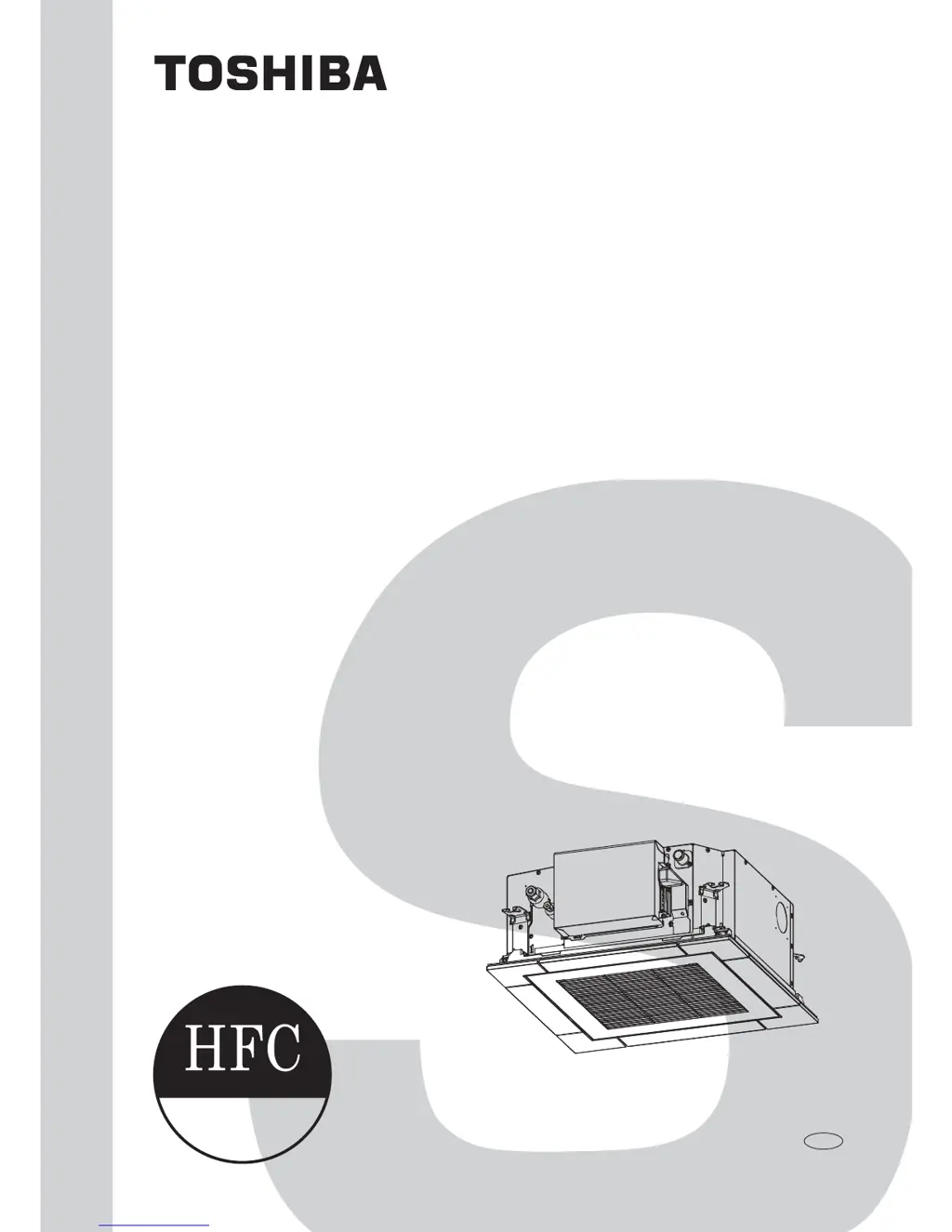
<Compact 4-way Cassette type>
RAV-SM307MUT-E (TR)
RAV-SM407MUT-E (TR)
RAV-SM457MUT-E (TR)
RAV-SM567MUT-E (TR)

Table of Contents

Questions and Answers

  • R
    Robert PowersAug 3, 2025
    Why won't my Toshiba RAV-SM307MUT-E turn on/off with the remote?
    • H
      hmasseyAug 3, 2025
      The inability to perform ON/OFF operations from the remote controller of your Toshiba Air Conditioner might be due to a few reasons. Control operations might be performed from an external or remote location. If the unit is powered on for the first time, or the indoor unit address setting is changed, operation might be disabled for approximately 5 minutes while the automatic address is set up. A test run might be in progress via the outdoor controller.
  • E
    ellisstephanieAug 9, 2025
    What to do if my Toshiba RAV-SM307MUT-E compressor won't start?
    • E
      Elizabeth JohnsonAug 10, 2025
      If the compressor of your Toshiba Air Conditioner isn't operating, consider the following: Ensure that the 3-minute delay (after the compressor was last OFF) has passed. Check if the outdoor unit is in standby even though the remote controller has reached the set temperature. Verify that the timer isn't operating during fan operation. Check for an overflow issue detected on the indoor unit. Also, outside high-temperature operation might be controlled during heating operation.
  • C
    Christopher LoganAug 14, 2025
    Why is my Toshiba Air Conditioner outdoor fan not working properly?
    • J
      johnsonmelanieAug 15, 2025
      The outdoor fan of your Toshiba Air Conditioner might not rotate or the air volume might change due to several reasons. High-temperature release operation control might be active during heating operation. Outside low-temperature operation control might be active during cooling operation. The unit might be performing a defrost operation.
  • S
    Susan FergusonAug 21, 2025
    Why is my Toshiba Air Conditioner indoor fan not spinning?
    • M
      megan15Aug 22, 2025
      The indoor fan of your Toshiba Air Conditioner might not be rotating because cool air discharge preventive control could be active during heating operation.
  • B
    Barbara AllenAug 27, 2025
    What to do if I have Toshiba Air Conditioner cabling issues?
    • C
      Charlene SpencerAug 27, 2025
      Ensure that the cabling has been returned to its original positions. Verify that the connecting cables of the indoor unit and the remote controller are correctly connected.

Summary

Qualified Installer and Service Person Definitions

Protective Gear and Safety Indicators

Protective Gear Requirements

Outlines necessary protective gear for various work tasks.

Safety Indication Explanations

Explains DANGER, WARNING, CAUTION symbols and prohibited/mandatory items.

Air Conditioner Unit Warning Labels

PRECAUTIONS FOR SAFETY

General Safety Precautions

Covers essential safety measures before, during, and after installation/maintenance.

Electrical Safety and Hazard Mitigation

Emphasizes circuit breaker use, avoiding live parts, and protective gear for electrical work.

Refrigerant Handling and Product Safety

Advises against modification, using specified parts, and safe refrigerant handling (R410A).

Declaration of Conformity

1. SPECIFICATIONS

Product Specifications Overview

Lists cooling/heating capacity, electrical characteristics, and dimensions for various models.

Specifications by Model Type

Provides ErP Lot-10 specifications for compact 4-way cassettes.

2. CONSTRUCTION VIEWS (EXTERNAL VIEWS)

3. WIRING DIAGRAMS

4. PARTS RATING

5. SYSTEMATIC REFRIGERATING CYCLE DIAGRAM

Refrigerating Cycle Diagrams by System Type

Shows cycle diagrams for single, twin, triple, and double-twin indoor unit combinations.

6. INDOOR CONTROL CIRCUIT

Indoor Control Circuit Block Diagrams

Shows block diagrams for wired and wireless remote controller connections.

Remote Controller Connection Types

Details connections for wireless remote controllers and optional kits.

6-2. Control Specifications

Indoor Unit Control Functions

Explains operation mode selection, temperature control, and automatic capacity control.

Air Speed and Special Operation Modes

Details air speed selection based on temperature and special operation controls.

Advanced Control Features Overview

Explains high-temp release, drain pump, after-heat elimination, and louver controls.

6-3. Indoor Print Circuit Board

Indoor Unit P.C. Board Layout and Connectors

Shows the layout and connectors of the indoor unit's main P.C. board.

Optional Connector Specifications

Details specifications for optional connectors like ventilation and occupancy sensors.

7. TROUBLESHOOTING

Troubleshooting Overview and Procedures

Provides a summary of troubleshooting steps, required tools, and general checks.

Troubleshooting by Check Code and Indications

Lists check codes for indoor unit troubles, their causes, and lamp indications.

Diagnostic Procedures for Specific Check Codes

Step-by-step diagnostic flows for specific error codes like E01, E09, E04.

Specific Component Troubleshooting

Troubleshooting for P12 (Fan motor) and F10 (TA sensor) issues.

8. REPLACEMENT OF SERVICE P.C. BOARD

Service P.C. Board Replacement Guide

Guides on replacing the indoor unit's service P.C. board, including data backup.

EEPROM Data Handling and Writing

Details reading and writing EEPROM data and board replacement steps.

9. SETUP AT LOCAL SITE AND OTHERS

Test Run Setup Procedures

Instructions for performing test runs using wired and wireless remote controllers.

Function Selection and Controller Operations

Procedures for forced defrost, LED indicators, function selection, and controller settings.

Remote Controller Monitor and Troubleshooting History

How to use the monitor function and recall past trouble history.

9-2. Setup at Local Site; Others

1:1 Model Connection Interface and Wiring

Details the function, wiring, and setup for the 1:1 model connection interface.

Central Control Address Setup

Guides on setting up central control address numbers via remote or unit side.

10. ADDRESS SETUP

Address Setup Overview and Procedures

Explains automatic and manual address setup for indoor/outdoor units and group control.

System Configurations and Group Control

Describes system configurations (single, twin, triple) and group control terminology.

Manual Address Setting from Remote Controller

Step-by-step guide for manual address setting using the remote controller.

Maintenance and Check List

11. DETACHMENTS

Component Detachment and Attachment Procedures

Procedures for removing and attaching major indoor unit components like grilles and covers.

Internal Component Replacement Guide

Steps for replacing the control P.C. board, fan motor, drain pump, and sensors.

12. EXPLODED VIEWS AND PARTS LIST

Indoor Unit Exploded Views

Exploded diagrams of the indoor unit for various models.

Comprehensive Parts Lists

Parts lists with location numbers and part numbers for all unit types and components.

Toshiba RAV-SM307MUT-E Specifications

General IconGeneral
BrandToshiba
ModelRAV-SM307MUT-E
CategoryAir Conditioner
LanguageEnglish

Related product manuals