Townsend Labs Sphere L22 Precision Microphone System Guide Off-Axis Correction
34
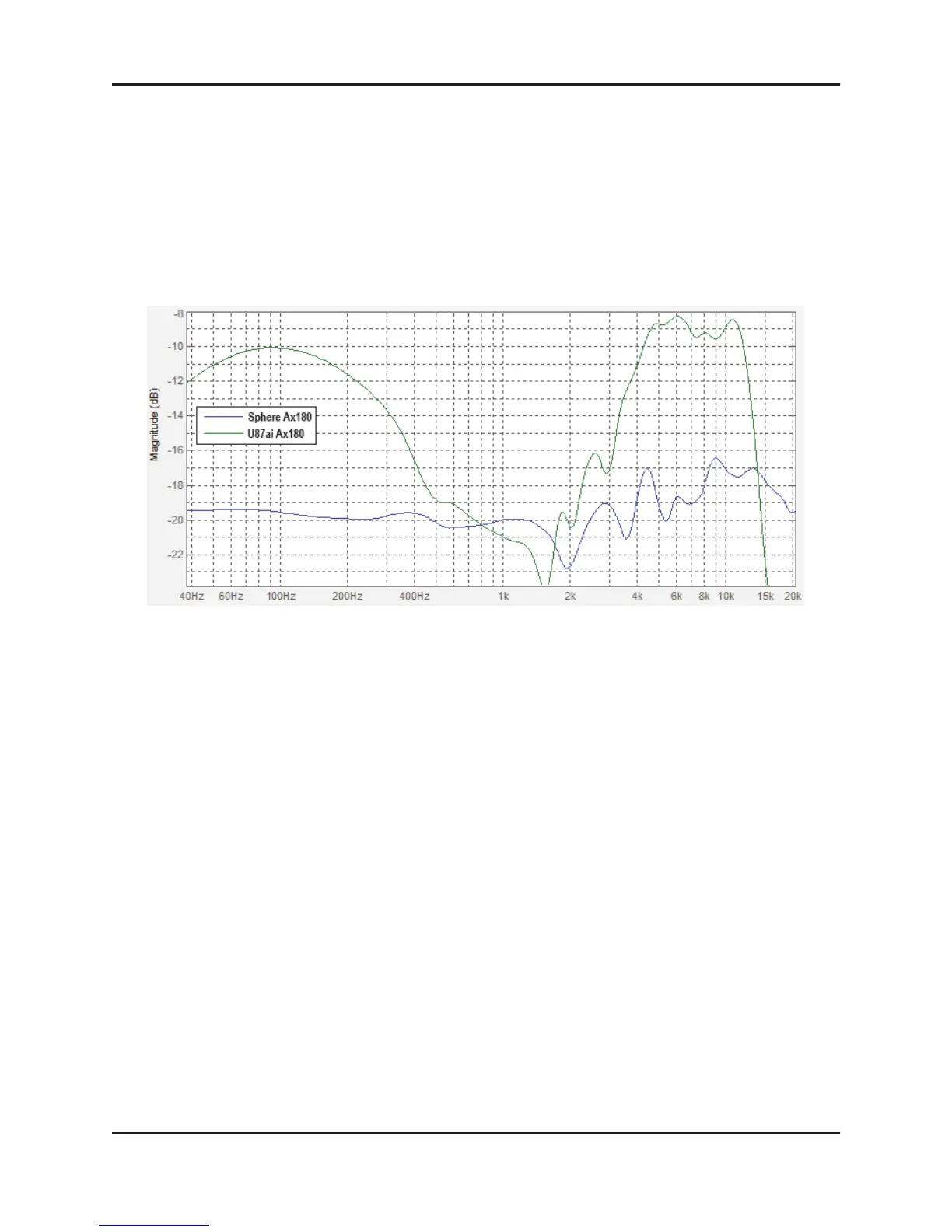
Figure 5-2 compares the frequency response from directly behind a U87ai mic (180° off-axis, 1 m
from the source, with
1
/
6
-octave smoothing) with a Sphere mic (same position) with Off-Axis
Correction enabled. The green line shows the frequency response of a Neumann U87ai; the blue line
shows the response of the Sphere mic. The Sphere polar response is much flatter: The U87 response
varies by as much 16 dB, whereas the Sphere mic varies by about 6 dB with smoother overall
fluctuations. Not surprisingly, the U87ai’s audio from 180° off-axis sounds very colored, while the
Sphere produces a smoother sound comprised mostly of natural room ambience.
Figure 5-2 U87ai Cardioid 180° off-axis vs. Sphere Off-Axis Correction
Another potential issue is that the on-axis frequency response of virtually all multi-pattern mics also
changes dramatically when adjusting the polar pattern. This can be a problem when you have the
sound dialed in, but then later decide to change the pattern to reduce bleed or feedback. With Off-
Axis Correction, it is now possible to adjust the polar pattern without changing on-axis frequency
response.
Figure 5-3 shows the on-axis frequency response of a U87ai at its three pattern settings. At low and
high frequencies, omni and figure-8 differ in response by up to 8 dB.


 To Next Page