
 Need help?
Do you have a question about the Trannergy PVI4000TL and is the answer not in the manual?
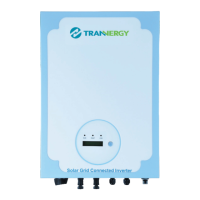
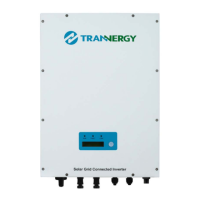
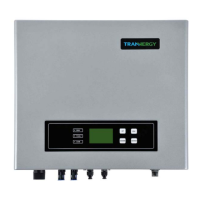
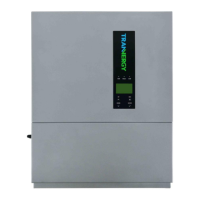
Overview of Trannergy solar inverters PVI1300TL to PVI5400TL.
Guidance on how to effectively use the user manual.
Explanation of symbols used for safety and information.
Crucial safety instructions for installation, operation, and maintenance.
Fundamental safety guidelines for handling electrical equipment.
Guidelines for dimensioning a photovoltaic system with the inverter.
Instructions and safety precautions for using the DC switch.
Outline dimensions and physical characteristics of the inverters.
Wiring diagram and electrical system overview.
Description of the inverter's waiting operational state.
Description of the inverter's connecting operational state.
Description of the inverter's normal operational state.
Explanation of the inverter's fault operational state and troubleshooting.
Safety precautions and guidelines for servicing and repairing the inverter.
Steps to diagnose and resolve common system problems.
Important safety warnings and precautions before installing the inverter.
Step-by-step procedure for physically mounting the inverter.
Instructions for AC and DC electrical connections.
Procedure for connecting AC wires to Product A.
Procedure for connecting AC wires to Product B.
Procedure for connecting DC wires from PV generator.
Steps to start the inverter after installation and connection.
Overview of the inverter's control panel indicators and keys.
Explanation of the various functions displayed on the LCD screen.
Instructions for changing the display language.
Procedure for performing the auto test function, especially for Italian Standard.
How to adjust Power Factor settings for VDE-AR-N 4105 standard.
How to adjust Power Limit settings for VDE-AR-N 4105 standard.
Overview of available communication interfaces (RS-232, RS-485, Wireless).
Methods for communicating with the inverter.
Using RS-232 for communication with a single inverter.
Using RS-485 for communication with multiple inverters.
Wireless communication options for the inverter.
System monitoring using PVCS software and RS-485 interface.
Detailed electrical specifications for the inverters.
Technical specifications related to the inverter's DC input.
Technical specifications related to the inverter's AC output.
General technical data and performance characteristics.
Troubleshooting steps for resumable faults like Isolation, Ground, Grid, Utility Loss, Over Temp.
 General
| Model | PVI4000TL |
|---|---|
| Rated Power | 4000 W |
| Max. DC Power | 4400 W |
| Nominal AC Power | 4000 W |
| Max. AC Current | 17.4 A |
| Maximum Input Current | 11 A |
| Power Factor | >0.99 |
| THD | <3% |
| Max. Efficiency | 97.5% |
| Cooling | Natural convection |
| Nominal AC Voltage | 230 V |
| Output Frequency Range | 50/60Hz |
| Operating Temperature | -25°C ~ +60°C |
| Humidity | 0-100% |
| Max. AC Power | 4000W |


 To Next Page