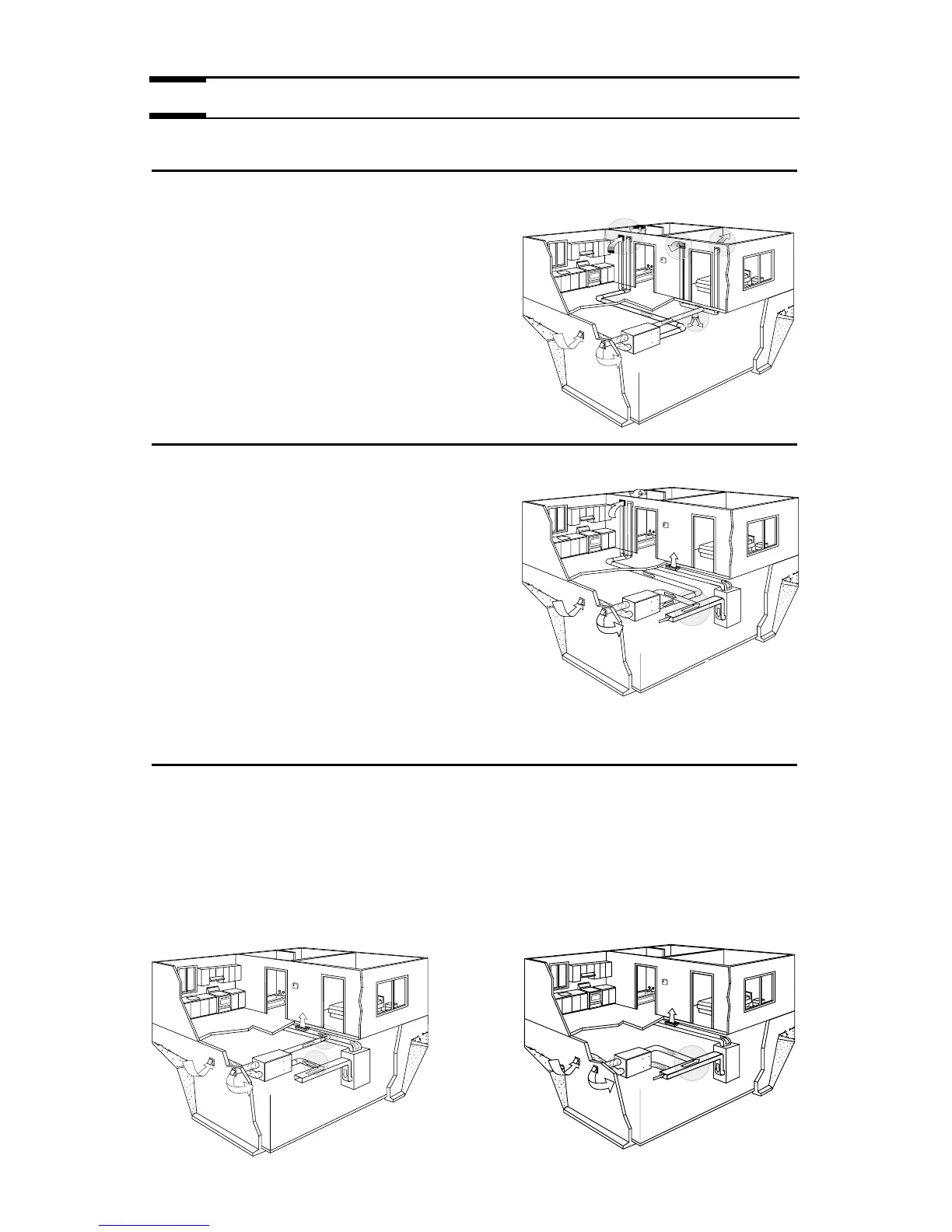
See 3.4.1
for details
See 3.4.2
for details
figure 1
figure 2
OR
figure 4
(Primarily for homes with radiant hot water or
electric baseboard heating. See figure 1.)
Moist, stale air is exhausted from the high
humidity areas in the home, such as
bathrooms, kitchens and laundry rooms.
Fresh air is supplied to bedrooms and principal
living areas. The use of bathroom fans and
range hood is suggested to exhaust stale air.
Homes with more than one level require at least
one exhaust register at the highest level.
2.1 Fully Ducted System
There are three (3) common installation methods.
2.2 Exhaust Ducted System
(Source Point Ventilation)
(For homes with forced air heating. See
figure 2.)
Moist, stale air is exhausted from the high
humidity areas in the home, such as
bathrooms, kitchen and laundry room.
Fresh air is supplied to the cold air return or
the supply duct of the furnace.The use of
bathroom fans and a range hood is
suggested to exhaust stale air.
Homes with more than one level require at least
one exhaust register at the highest level.
2.3 Simplified
(Volume Ventilation)
NOTE: For this type of installation, it is not essential that the furnace blower
runs when the unit is in operation, but we recommend it.
(For homes with forced air heating. See figure 3 or 4.)
Fresh air and exhaust air flow through the furnace ducts which simplifies the
installation.The use of bathroom fans and a range hood is suggested to
exhaust stale air.
NOTE: For this installation type shown in figure 4, furnace blower must be
running when the unit is in operation.
See 3.4.3
for details
VH0032
figure 3
See 3.4.3
for details


 To Next Page