7
3.0
INSTALLATION (CONT’D)
3.4 Installing Ductwork and Registers
3.4.1 Fully ducted system
(as illustrated in Section 2.1)
Stale air exhaust ductwork:
• Install registers in areas where contaminants are produced:
kitchen, bathrooms, laundry rooms, etc.
• Install registers 6 to 12 inches (152 to 305 mm) from the ceiling
on an interior wall OR install them in the ceiling.
• Install the kitchen register at least 4 feet (1.2 m) from the
range top.
• If possible, measure the velocity of the air flowing through the
registers. If the velocity is higher than 400 ft/min (122 m/min),
then the register type is too small. Replace it with a larger one.
WARNING
Never install a stale air exhaust register in a room where a
combustion device is, such as a gas furnace, a gas water
heater or a fireplace.
Fresh air distribution ductwork:
• Install registers in bedrooms, dining room, living room and basement.
• Install registers either in the ceiling or high on the walls with air flow
directed towards the ceiling. (The cooler air will then cross the
upper part of the room, and mix with room air before
descending to occupant level.)
• If a register must be floor installed, direct the air flow up the wall.
3.4.2 Exhaust ducted system
(Source Point Ventilation)
(as illustrated in Section 2.2)
Stale air exhaust ductwork (same as for Fully Ducted System,
described on point 3.4.1)
Fresh air distribution:
There are two methods for connecting the unit to the furnace:
Method 1
: supply side connection
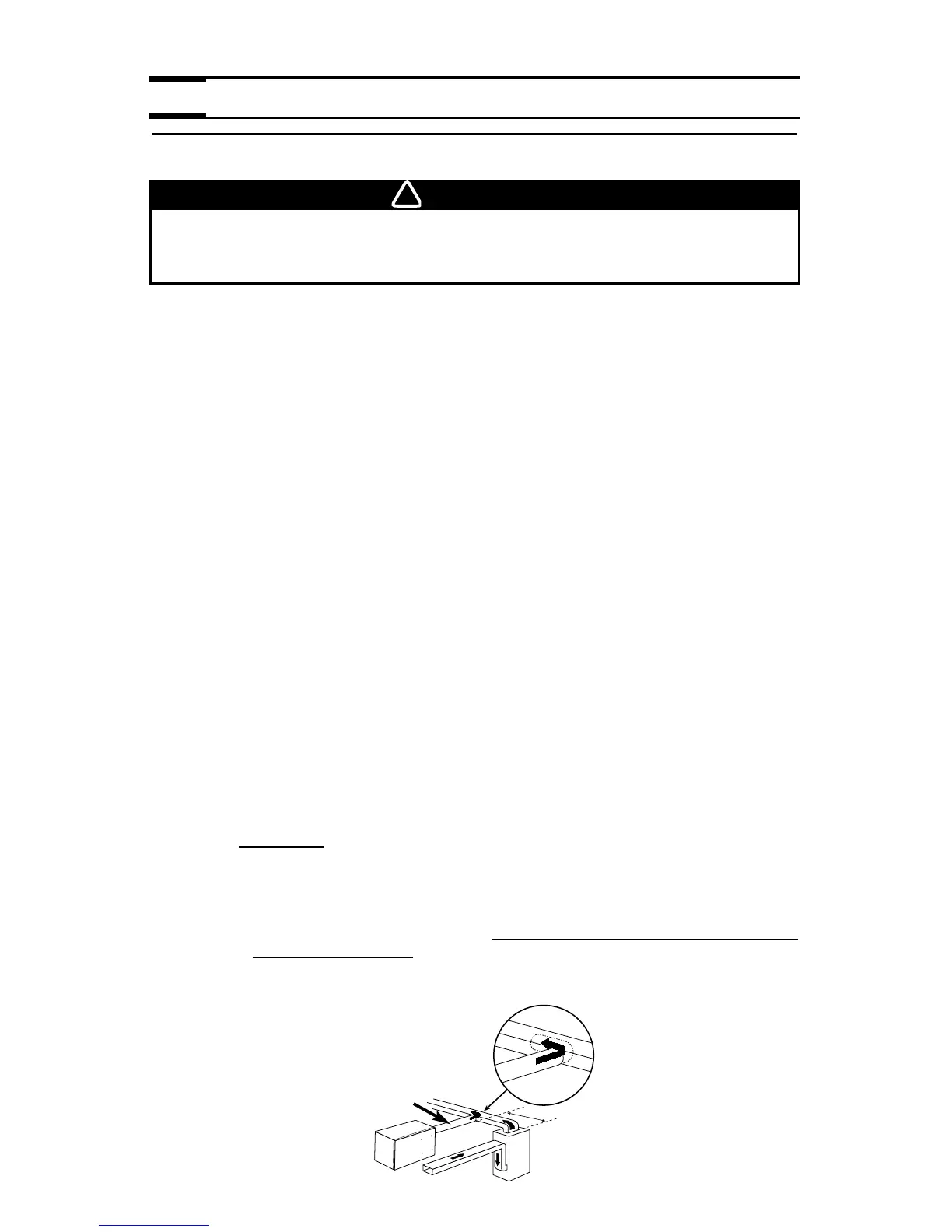
•Cut an opening into the furnace supply duct at least 18 inches
(0.5 m) from the furnace.
•Connect this opening to the fresh air distribution port of the
unit as shown (use steel duct, see figure 9).
•Make sure that the unit duct for
ms an elbow inside the
furnace ductwork.
• If desired, interlock (synchronize) the furnace blower operation
with the unit operation (see section 4.3).
VD0109
figure 9
Steel duct
minimum 18’’
(0.5 m)


 To Next Page