• During an electrical fire, water can spread and cause electrocution hazards.
• NEVER use water to put out a grease fire.
• No matter how small the fire is, ALWAYS call the Fire Department.
More information on firefighting can be found at the National Fire Protection Association website (www.nfpa.org).
FIRE EXTINGUISHER
Fire can spread very quickly, so the escape pan is highly important. EVERY person should evacuate the coach in case
of an emergency.
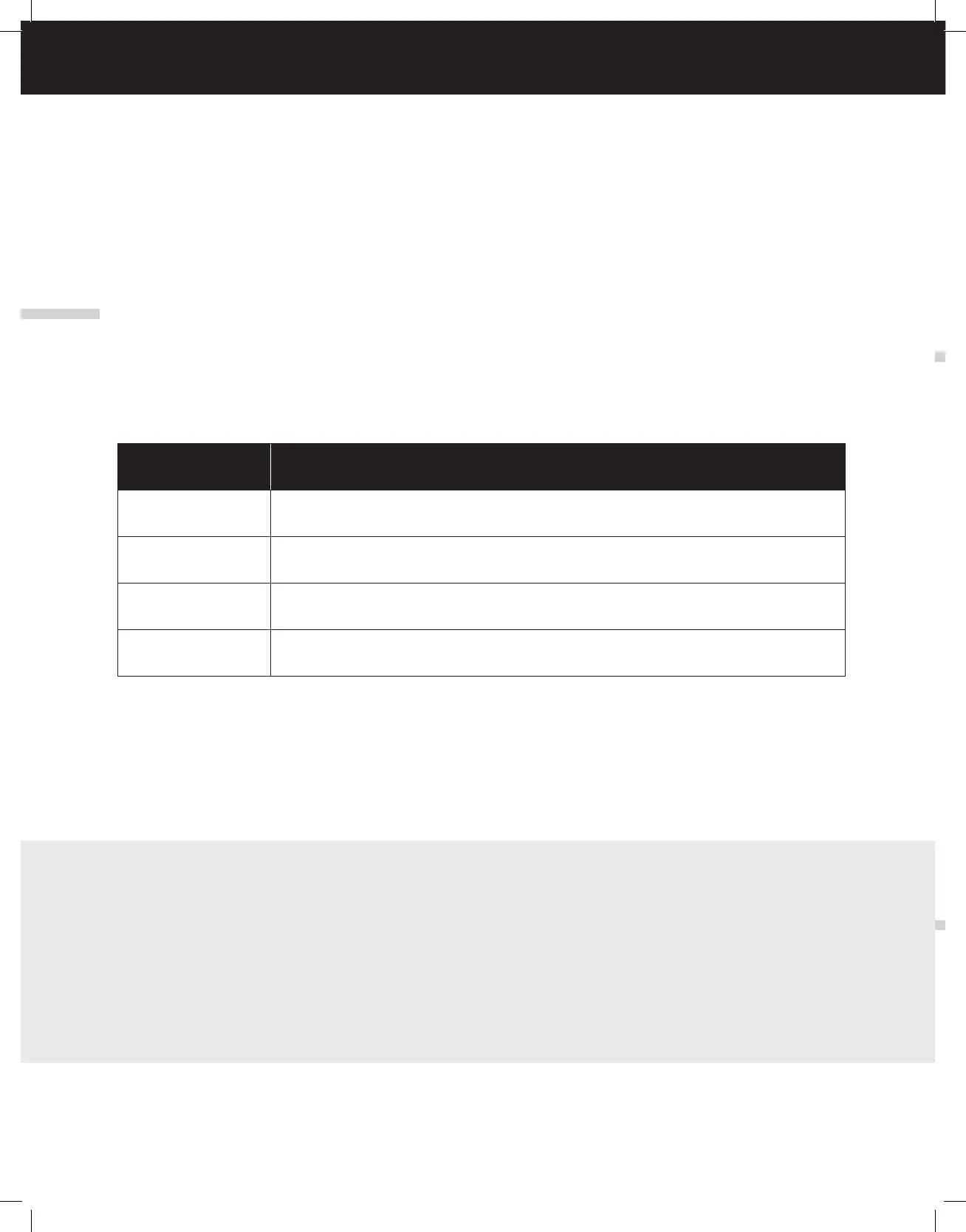
Rating Intended Use
Type A For use on fires involving combustible materials such as wood, cloth and paper.
Type B
For use on fammable liquid fires, including kitchen grease.
NEVER use water on this type of fire.
Type C For use on fires involving energized electrical equipment.
Type ABC Works on all three types of fires listed above.
A small portable extinguisher will be able to maintain a fire until the fire department arrives, but they do have
limitations. Near the entry door of your coach, there is a Cass B/Cass C fire extinguisher that can be used in case
of an emergency.
To operate a fire extinguisher, remember the word: P.A.S.S.
Pull the pin. Hold the extinguisher with the nozzle pointing away from you, and
release the locking mechanism.
Aim low. Point the extinguisher at the base of the fire.
Squeeze the lever slowly and evenly.
Sweep the nozzle from side-to-side until the fire is out.
OCCUPANT SAFETY
Household fire extinguishers are cassified into four types by Underwriters Laboratories (UL):
Operation



 To Next Page