5
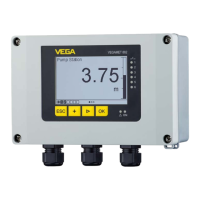
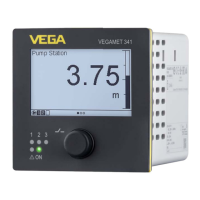
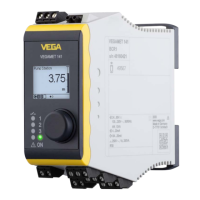
VEGAMET 841, 842, 861, 862
61274-EN-200723
•
Use only approved spare parts
•
Components for installation and connection not included in the approval documents are only
permitted if these correspond technically to the latest standard mentioned on the cover sheet.
They must be suitable for the application conditions and have a separate certicate. The special
conditions of the components must be noted and if necessary, the components must be inte-
grated in the type test. This applies also to the components already mentioned in the technical
description.
Mounting
Keep in mind for instrument mounting
•
Mechanical damage on the instrument must be avoided
•
Mechanical friction must be avoided
Maintenance
To ensure the functionality of the device, periodic visual inspection is recommended for:
•
Secure mounting
•
No mechanical damages or corrosion
•
Worn or otherwise damaged cables
•
No loose connections of the line connections, equipotential bonding connections
•
Correct and clearly marked cable connections
Intrinsic safety "i"
•
Observe the valid regulations for connection of intrinsically safe circuits, e.g. proof of intrinsic
safety in accordance with ANSI/ISA RP12.06.01 „Installation of Intrinsically Safe Systems for
Hazardous (Classies) Locations“ and the National Electrical Code
®
(ANSI/NFPA 70) or Cana-
dian Electrical Code.
•
The instrument is only suitable for connection to certied, intrinsically safe instruments
•
If the intrinsically safe circuit is led into dust-explosive areas of zone 20, 21 or Div 1, Div 2,
please make sure that the instruments connected to these circuits meet the requirements of the
device protection level (EPL) Da, Db or Div 1, Div 2 and are certied respectively
8 Electrostaticcharging(ESD)
In case of instrument versions with electrostatically chargeable plastic parts, the danger of electro-
static charging and discharging must be taken into account!
The following parts can charge and discharge:
•
Lacquered housing version or alternative special lacquering
•
Plastic housing, plastic housing parts
•
Metal housing with inspection window
•
Plastic process ttings
•
Plastic-coated process ttings and/or plastic-coated sensors
•
Connection cable for separate versions
•
Type label
•
Isolated metallic labels (measuring point identication plate)
Take note in case of danger of electrostatic charges:
•
Avoid friction on the surfaces
•
Do not dry clean the surfaces
The instruments must be mounted/installed in such a way that the following can be ruled out:
•
electrostatic charges during operation, maintenance and cleaning.
•
process-related electrostatic charges, e.g. by measuring media owing past


 To Next Page
 Loading...