EasyManua.ls Logo

Venmar 1.3 HE - User Manual

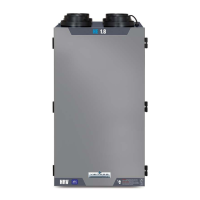
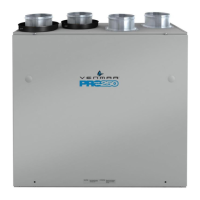
Venmar 1.3 HE
26 pages
Print Icon
To Next Page IconTo Next Page
Loading...
Installation Manual
FOR MODELS:
VENMAR 1.3, 1.8 & 2.6 HE
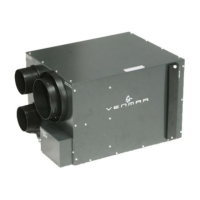
VENMAR 3055 & 5585 COMPACT
vänEE 1000, 2000 & 3000 HE
10/2004 04435
VB0021
Question and Answer IconNeed help?

Do you have a question about the Venmar 1.3 HE and is the answer not in the manual?

Summary

1.0 Sizing

2.0 Service

2.1 3 D Drawing for Venmar 1.3 HE, Venmar 3055 Compact, Venmar 5585 Compact & vänEE 1000 HE

Detailed illustration of internal components for specific Venmar and vänEE models.

2.2 Part Ordering Chart for Venmar 1.3 HE, Venmar 3055 Compact, Venmar 5585 Compact and vänEE 1000 HE

List of parts and their corresponding order numbers for specific models.

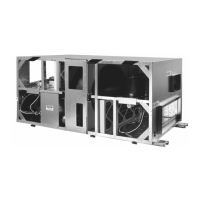
2.3 3 D Drawing for Venmar 1.8 HE, Venmar 2.6 HE, vänEE 2000 HE & vänEE 3000 HE

Detailed illustration of internal components for specific Venmar and vänEE models.

2.4 Part Ordering Chart for Venmar 1.8 HE, Venmar 2.6 НЕ, vänEE 2000 HE & vänEE 3000 HE

List of parts and their corresponding order numbers for specific models.

3.0 Technical Data

3.1 Diagrams of Air Flows

Visual representation of air circulation patterns during operation and defrost cycles.

3.2 Performance Charts

Tables and graphs detailing ventilation and energy performance for specific models.

3.3 Dimensions

Diagrams and measurements of the unit's physical size and port locations.

3.4 Specifications

Summary of key technical specifications like weight, drain, electrical, and motor speeds.

4.0 Typical Installations

4.1 Fully Ducted System

Describes installing the unit in a fully ducted system, primarily for non-forced air heating homes.

4.2 Exhaust Ducted System (Source Point Ventilation)

Describes installing the unit for source point ventilation, primarily for forced air heating homes.

4.3 Simplified (Volume Ventilation)

Describes simplified installation using furnace ducts for fresh and exhaust air flow.

5.0 Installation

5.1 Locating and Mounting the Unit

Guidelines for choosing an appropriate location and securely mounting the unit.

5.2 Planning of the Ductwork

Instructions for planning ductwork, emphasizing simplicity and minimizing bends.

5.3 Calculating Duct Size

Guidance and tables for determining appropriate duct diameters based on airflow.

5.4 Installing Ductwork and Registers

Instructions for installing ductwork and registers, including warnings and system types.

5.5 Connecting Flexible Duct to the Unit

Procedure for connecting flexible ductwork to the unit's intake and exhaust ports.

5.6 Installing Exterior Hoods

Guidelines for choosing appropriate locations for exterior intake and exhaust hoods.

5.7 Connecting the Drain

Instructions on how to properly connect the unit's drain system and create a water trap.

6.0 Installation of the Main Control

6.1 Installation

Steps for installing the main control unit on the wall and connecting it.

6.2 Electrical Connection to the Furnace

Detailed wiring instructions for connecting the unit to the furnace, including alternative methods.

6.3 Wiring Diagram

Schematic diagram illustrating the electrical connections of the unit and its components.

7.0 Air Flow Balancing

8.0 Maintenance

8.1 Regular Maintenance

Routine maintenance tasks for the motor, heat recovery core, air filters, and exterior vents.

8.2 Prolonged Maintenance

Annual service recommendations including cleaning components and checking system operation.

9.0 Troubleshooting

10.0 References

Summary

1.0 Sizing

2.0 Service

2.1 3 D Drawing for Venmar 1.3 HE, Venmar 3055 Compact, Venmar 5585 Compact & vänEE 1000 HE

Detailed illustration of internal components for specific Venmar and vänEE models.

2.2 Part Ordering Chart for Venmar 1.3 HE, Venmar 3055 Compact, Venmar 5585 Compact and vänEE 1000 HE

List of parts and their corresponding order numbers for specific models.

2.3 3 D Drawing for Venmar 1.8 HE, Venmar 2.6 HE, vänEE 2000 HE & vänEE 3000 HE

Detailed illustration of internal components for specific Venmar and vänEE models.

2.4 Part Ordering Chart for Venmar 1.8 HE, Venmar 2.6 НЕ, vänEE 2000 HE & vänEE 3000 HE

List of parts and their corresponding order numbers for specific models.

3.0 Technical Data

3.1 Diagrams of Air Flows

Visual representation of air circulation patterns during operation and defrost cycles.

3.2 Performance Charts

Tables and graphs detailing ventilation and energy performance for specific models.

3.3 Dimensions

Diagrams and measurements of the unit's physical size and port locations.

3.4 Specifications

Summary of key technical specifications like weight, drain, electrical, and motor speeds.

4.0 Typical Installations

4.1 Fully Ducted System

Describes installing the unit in a fully ducted system, primarily for non-forced air heating homes.

4.2 Exhaust Ducted System (Source Point Ventilation)

Describes installing the unit for source point ventilation, primarily for forced air heating homes.

4.3 Simplified (Volume Ventilation)

Describes simplified installation using furnace ducts for fresh and exhaust air flow.

5.0 Installation

5.1 Locating and Mounting the Unit

Guidelines for choosing an appropriate location and securely mounting the unit.

5.2 Planning of the Ductwork

Instructions for planning ductwork, emphasizing simplicity and minimizing bends.

5.3 Calculating Duct Size

Guidance and tables for determining appropriate duct diameters based on airflow.

5.4 Installing Ductwork and Registers

Instructions for installing ductwork and registers, including warnings and system types.

5.5 Connecting Flexible Duct to the Unit

Procedure for connecting flexible ductwork to the unit's intake and exhaust ports.

5.6 Installing Exterior Hoods

Guidelines for choosing appropriate locations for exterior intake and exhaust hoods.

5.7 Connecting the Drain

Instructions on how to properly connect the unit's drain system and create a water trap.

6.0 Installation of the Main Control

6.1 Installation

Steps for installing the main control unit on the wall and connecting it.

6.2 Electrical Connection to the Furnace

Detailed wiring instructions for connecting the unit to the furnace, including alternative methods.

6.3 Wiring Diagram

Schematic diagram illustrating the electrical connections of the unit and its components.

7.0 Air Flow Balancing

8.0 Maintenance

8.1 Regular Maintenance

Routine maintenance tasks for the motor, heat recovery core, air filters, and exterior vents.

8.2 Prolonged Maintenance

Annual service recommendations including cleaning components and checking system operation.

9.0 Troubleshooting

10.0 References

Overview

This document is an installation manual for Venmar and vänEE heat recovery ventilators (HRVs). It covers several models, including Venmar 1.3, 1.8 & 2.6 HE, Venmar 3055 & 5585 Compact, and vänEE 1000, 2000 & 3000 HE. The manual provides comprehensive information on sizing, service, technical data, installation, air flow balancing, maintenance, and troubleshooting.

Function Description:

The devices described are Heat Recovery Ventilators (HRVs) designed to provide fresh air to a building while exhausting stale air, and recovering heat from the outgoing air to pre-condition the incoming fresh air. This process helps maintain indoor air quality and reduce energy consumption by minimizing heat loss during ventilation. The system ensures that stale air never mixes with fresh air. The units can operate in different modes, including air exchange (normal operation) and defrost mode, to prevent ice buildup in colder climates.

Important Technical Specifications:

Electrical Requirements:

  • Venmar 1.3 HE and vänEE 1000 HE: 120 volts, 1.2 Amps
  • Venmar 1.8 HE and vänEE 2000 HE: 120 volts, 2.5 Amps
  • Venmar 5585 Compact and Venmar 3055 Compact: 120 volts, 1.75 Amps (5585 Compact), 120 volts, 1.2 Amps (3055 Compact)
  • Venmar 2.6 HE and vänEE 3000 HE: 120 volts, 5.4 Amps

Exhaust Air Transfer Ratio:

  • Venmar 1.3 HE and vänEE 1000 HE: 0.02
  • Venmar 1.8 HE and vänEE 2000 HE: 0.06
  • Venmar 5585 Compact and Venmar 3055 Compact: 0.01
  • Venmar 2.6 HE and vänEE 3000 HE: 0.02

Dimensions:

  • Venmar 1.8 & 2.6 HE, vänEE 2000 & 3000 HE: 108.5 cm (42-3/4") H x 58 cm (23") W x 58 cm (23") D. Duct collars are 8"Ø.
  • Venmar 3055 Compact: 68.6 cm (27") H x 53.3 cm (21") W x 47 cm (18-1/2") D. Duct collars are 6"Ø.
  • Venmar 1.3 HE, Venmar 5585 Compact, vänEE 1000 HE: 68.6 cm (27") H x 53.3 cm (21") W x 53.3 cm (21") D. Duct collars are 6"Ø, 7"Ø, and 8"Ø depending on the port.

Weight:

  • Venmar 3055 Compact: 70 lb (32 kg)
  • Venmar 1.3 HE, Venmar 5585 Compact, vänEE 1000 HE: 80 lb (36.3 kg)
  • Venmar 1.8 & 2.6 HE, vänEE 2000 & 3000 HE: 140 lb (63.5 kg)

Drain Diameter: 1/2 inch (12 mm) for all models.

Installation: Suspension by chains and springs for all models.

Motor Speeds: High and low speeds, factory set (optional increased low speed via red wire).

Performance Charts (examples for high speed, 0.4 in. w.g. external static pressure):

  • Venmar 1.3 HE / vänEE 1000 HE: Net Supply Airflow ~133 cfm, Gross Airflow Supply ~136 cfm, Exhaust ~127 cfm. Sensible Recovery Efficiency ~72-81%, Apparent Sensible Effectiveness ~80-92%.
  • Venmar 1.8 HE / vänEE 2000 HE: Net Supply Airflow ~197 cfm, Gross Airflow Supply ~210 cfm, Exhaust ~197 cfm. Sensible Recovery Efficiency ~79-84%, Apparent Sensible Effectiveness ~89-95%.
  • Venmar 5585 Compact: Net Supply Airflow ~196 cfm, Gross Airflow Supply ~196 cfm, Exhaust ~213 cfm. Sensible Recovery Efficiency ~71-77%, Apparent Sensible Effectiveness ~76-83%.
  • Venmar 3055 Compact: Net Supply Airflow ~127 cfm, Gross Airflow Supply ~128 cfm, Exhaust ~138 cfm. Sensible Recovery Efficiency ~61-69%, Apparent Sensible Effectiveness ~66-76%.
  • Venmar 2.6 HE / vänEE 3000 HE: Net Supply Airflow ~321 cfm, Gross Airflow Supply ~328 cfm, Exhaust ~266 cfm. Sensible Recovery Efficiency ~70-80%, Apparent Sensible Effectiveness ~83-94%.

Usage Features:

  • Sizing: The manual provides two common methods for evaluating ventilation needs: CSA F326 (based on cfm per room) and ASHRAE Standard 62-2001 (based on air changes per hour). Users are advised to refer to their local ventilation code.
  • Installation Locations: Units should be installed in heated areas (10°C / 50°F or more), away from living areas, close to an exterior wall (to limit insulated duct length), and near a drain.
  • Ductwork Planning: Emphasizes simplicity, minimum bends and joints, and appropriate duct diameters based on airflow requirements. Avoids wall cavities as ducts and small branch lines (less than 4"Ø).
  • Typical Installations:
    • Fully Ducted System: Primarily for homes with radiant hot water or electric baseboard heating. Exhausts from high humidity areas, supplies to bedrooms and main living areas. Requires bathroom fans and range hoods.
    • Exhaust Ducted System (Source Point Ventilation): For homes with forced air heating. Exhausts from high humidity areas, supplies to cold air return or furnace supply duct. Furnace blower operation is recommended but not essential.
    • Simplified (Volume Ventilation): For homes with forced air heating. Fresh and exhaust air flow through furnace ducts. Furnace blower operation is recommended when the unit is in operation for one method, and required for another.
  • Main Control: The wall control should be installed in a central location on the main floor, approximately 60 inches (1.5m) from the ground. It allows for different operating modes (Intermittent, Exchange Low, Exchange High, Defrost Cycle, Off).
  • Air Flow Balancing: Requires a magnehelic gauge and flow collars to ensure balanced airflow between exhaust and fresh air streams. This process involves setting the unit to high speed, taking readings, and adjusting balancing dampers.

Maintenance Features:

  • Regular Maintenance:
    • Motor: Factory lubricated for life; no additional lubrication recommended.
    • Heat Recovery Core: Recommended to be washed once a year, especially after seasons of intense use. Soaking in warm water and mild soap for 3 hours, then rinsing under a heavy stream of water. Caution: Hot water and strong detergents can damage the core.
    • Air Filters: Washable, recommended every 3 months. Use a vacuum cleaner first, then wash in lukewarm water.
    • Exterior Intake Hood Screen: Regularly check and clean, especially in cold weather to prevent ice buildup. Caution: Partial blocking of the air vent can cause malfunction.
  • Prolonged Maintenance (Annual Service):
    • Cleaning filters, heat recovery core, and exterior air intake/exhaust hood.
    • Cleaning wheels and blower blades.
    • Cleaning the condensation tray with soapy water and checking for clogs.
    • Running the system and checking different operating modes.
    • Measuring and calibrating rates of flow (air flow balancing).

Troubleshooting:

The manual includes a troubleshooting guide for common issues such as the unit not working, damper actuator malfunction, wall control issues, and defrost cycle problems. It provides possible causes and recommended solutions, often involving checking electrical connections, replacing components, or verifying sensor functionality.
Venmar 1.3 HE Specifications

General IconGeneral
BrandVenmar
Model1.3 HE
CategoryFan
LanguageEnglish

Related product manuals