21
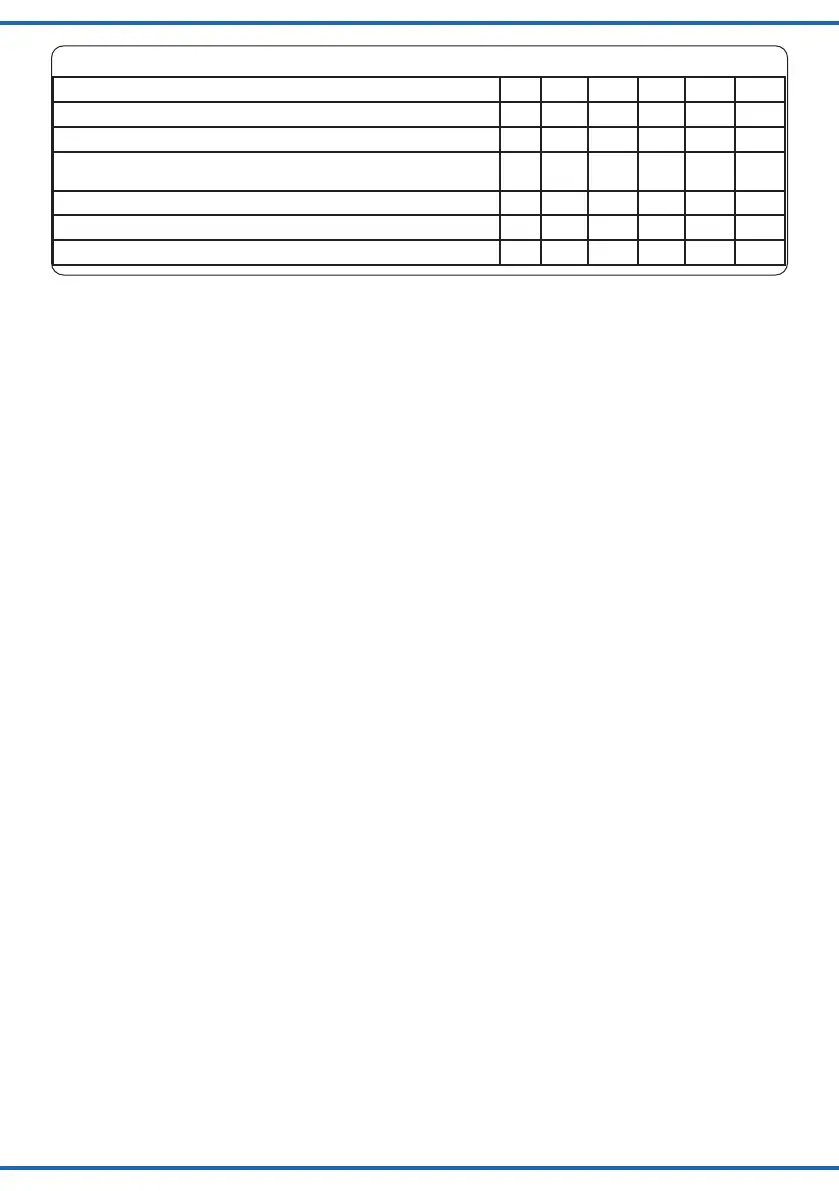
CV2 CV51 CV52 CV53 CV54 CV55
N-Lok ohne Schwungmasse / N-loco without flywheel 2 10 10 0..5 25 5..6
N-Lok mit Schwungmasse / N-loco with flywheel 1 150 75 25 15 4..6
H0-Triebwagen mit kleinem Motor und Schwungmasse /
H0-railcar with small motor and flywheel
2 20 25 20 10 10
H0-Lok mit N-Motor (z. B. KOF) / H0-loco with N-motor (e. g. KOF) 1 100 50 50 30 5..6
H0-Lok Glockenanker- (Faulhaber) Motor / H0-loco coreless motor 1 30 20 10 12 5
N-Lok mit Glockenanker- (Faulhaber) Motor / N-loco with coreless motor 1 25 10 2 20 6
Fig. 6
Abb. 6
Erprobte Werte / Tested values
6.2 Betrieb mit RailCom
FürdasAuslesenderDatenüberRailComsindspe-
zielleDetektorenundRailCom-fähigeBoosterbzw.
Zentralen erforderlich, die die benötigte Austastlü-
ckeimDCC-Signalerzeugen.Eskönnennurdann
DatenüberRailComausgelesenwerden,wennin
CV29(DCC)desLokdecodersRailComeinge-
schaltetist(sieheauchSeite6).
7. Fehlersuche und Abhilfe
JedesViessmann-ProduktwirdunterhohenQuali-
tätsstandardsgefertigtundvorseinerAuslieferung
geprüft. Sollte es dennoch zu einer Störung kom-
men, können Sie anhand der folgenden Punkte eine
ersteÜberprüfungvornehmen.
Ggf.findenSieeinenFehlercodeinCV30.
Decoder wird sehr heiß und schaltet ab
- TrennenSiesofortdieVerbindungzurVersor-
gungsspannung!
Mögliche Ursache: Motorseitige Überlastung. Über-
prüfen Sie die Motorstromaufnahme.
Lok fährt nicht. Stirnbeleuchtungen blinken ab-
wechselnd
Mögliche Ursache: Ein Motoranschluss ist mit der
Lokmasseverbunden.TrennenSiedenAnschluss
vonderLokmasseundsetzenSieCV30wieder
auf“0”.
Lok fährt nach Programmieren schlecht oder
gar nicht.
Mögliche Ursache: Die eingegebenen Werte für die
CVssindunstimmig.FührenSieeinenDecoder-Re-
set aus und programmieren Sie den Decoder neu.
Lok fährt im Digitalbetrieb plötzlich sehr schnell.
Mögliche Ursache: Störsignale aus der Anlage ha-
ben den Decoder auf Analogbetrieb umgeschaltet.
Da oft nicht festzustellen ist, welche Ursache die
Störsignale haben, ist es ratsam, die automatische
Analogerkennung während des Digitalbetriebs aus-
zuschalten.
6.2 Operation with RailCom
For reading data via RailCom special detectors and
RailCom capable boosters respectively command
stations are required generating the necessary gap
in the DCC signal. RailCom data can only be read if
RailCom has been activated in CV 29 (DCC) of the
locomotive decoder (also refer to page 6).
7. Trouble-shooting
Every Viessmann product is manufactured un-
der high standards and checked before delivery.
Should despite this a fault occur please undertake
an initial check as per the following steps:
You can find an error information in CV 30.
Decoder gets very hot and switches off.
- Disconnect power immediately!
Possible cause: Overload of the motor circuit check
the current draw of the motor.
Locomotive does not move. Headlights blink
alternately.
Possible cause: One motor lead is connected to
the chassis. Separate this connection, and set CV
30 back to “0”
After programming the locomotive does not
run or runs poorly.
Possible cause: The CV values do not comply with
the permitted ranges. Execute a decoder reset and
re-program the decoder.
In digital mode the locomotive suddenly runs
very fast.
Possible cause: Interfering signals from the layout
have switched the decoder to analogue mode. As
the origin of the interfering signals cannot be found
in many instances, it is advisable to switch off the
automatic detection of the analogue mode during
digital operation.


 To Next Page