4
CONVECTION DEHYDRATE
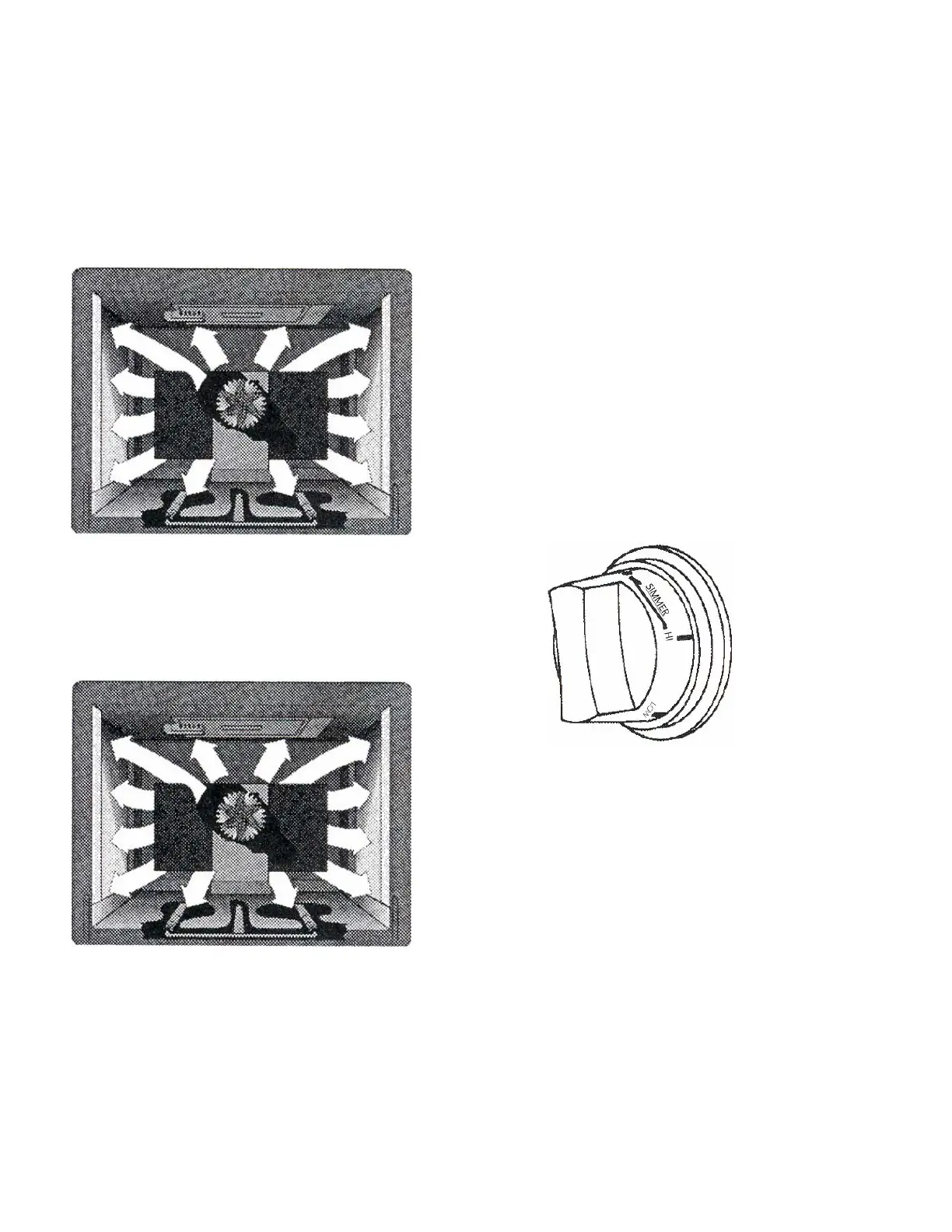
With the temperature control on 175º F, warm air
is radiated from the U-shaped bake burner in the
bottom of the oven cavity and is circulated by a
motorized fan in the rear4 of the oven. Over a
period of time, the water is removed from the
food by evaporation. Removal of water inhibits
growth of microorganisms and retards the activity
of enzymes. It is important to remember that
dehydration does not improve the quality, so only
fresh, top-quality foods should be used.
CONVECTION DEFROST
With temperature control off, air is circulated by a
motorized fan in the rear of the oven. The fan
accelerates natural defrosting of the food without
heat. To avoid sickness and food waste, do not
allow defrosted food to remain in the oven for
more than two hours.
SELF-CLEAN
This range features an automatic pyrolytic self-
cleaning cycle. During this cycle, the oven
reaches elevated temperatures in order to burn
off soils and deposits. A powder ash residue is
left in the bottom of the oven after completion of
the self-clean cycle. When oven has cooled,
remove ash with a damp sponge or cloth.
Using Your Range
LIGHTING THE BURNERS
Surface Burners-Automatic Reignition
To light the surface burners, turn the appropriate
control knob counter clockwise to any position.
This control is both a gas valve and an electric
switch. Burners will ignite at any “on” position
with the automatic reignition system. If the flame
goes out for any reason, the burners will
automatically reignite if the gas is still flowing.
When gas is permitted to flow to the burners, the
electric igniters start sparking. On all surface
igniters you should hear a “clicking \” sound. If
you do not, turn off the control and check that the
unit is plugged in and that the fuse or circuit
breaker is not blown or tripped.
Within a few moments, enough gas will have
traveled to the burner to light. When the burner
lights, turn the burner control to any position to
adjust the flame size. Setting the proper height
for the desired cooking process and selected
utensil will result in superior cooking
performance, while also saving time and energy.
SURFACE COOKING TIPS
• Use low or medium flame heights when cooking
in utensils that are poor conductors of heat,
such as glass, ceramic, and cast-iron. Reduce
the flame height until it covers approximately 1/3
of the utensil diameter. This will ensure more
even heating within the utensil and reduce the
likelihood of burning or scorching the food.
• Reduce flame if it is extending beyond the
bottom of the utensil. A flame that extends
along the sides of the utensil is potentially
dangerous, heats the utensil handle and kitchen
instead of the food, and wastes energy.
• Reduce the flame height to minimum level
necessary to perform the desired cooking
process. Remember that food cooks just as
quickly at a gentle boil as it does at a rolling boil.
Maintaining a higher boil than is necessary
wastes energy, cooks away moisture, and
causes a lo9ss in food flavor and nutrient level.



 To Next Page