50
Stopping the engine
Stop
1. Disengage the reversing gear by putting the con-
trol lever in neutral.
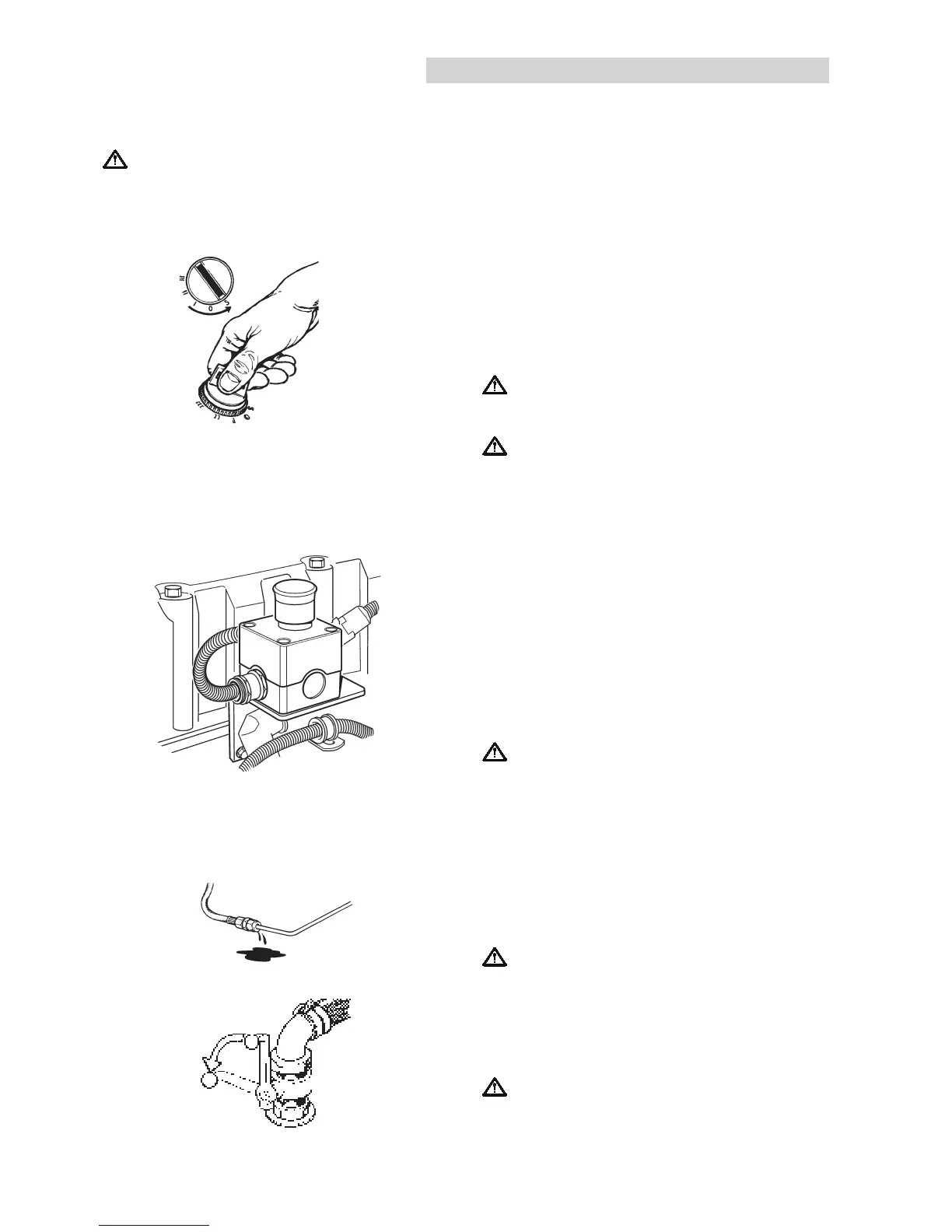
2. Turn the key to stop position “S”. Keep the key
turned until the engine stops. The key will auto-
matically return to the “0” position when it is re-
leased and can then be removed.
IMPORTANT! Never switch off the main swit-
ches while the engine is running. This could da-
mage the alternator.
IMPORTANT! Never switch off the main swit-
ches before the starter key is turned off (is in
“0” position or removed). This could damage the
electrical system.
After stopping
● Check the engine and engine bay for leakage.
● Shut off the fuel taps and sea cocks.
IMPORTANT! Do not forget to open the taps
next time the engine is started.
● Read off the hours counter and do preventive
maintenance as in the maintenance schedule.
● Turn off the main switches before any long stopp-
age.
IMPORTANT! Never switch off the main swit-
ches before the starter key is turned off (is in
“0” position or removed). This could damage the
electrical system.
Allow the engine to idle (in neutral) for at least three minutes after the end of your journey. This evens out the
temperatures inside the engine, and stops after-boiling.
IMPORTANT! The above is particularly important if the engine has been driven at high speed and/or hea-
vily loaded.
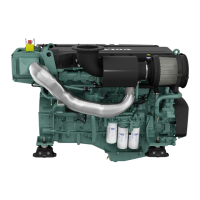
Auxiliary stop
If a fault occurs that prevents you stopping the engine in
the normal way, you can stop it by pressing the emer-
gency button.
If the engine has been stopped using the emergency
stop button, the button locks in the down position. In
order to be able to restart the engine, the button must
be reset to its original position. To do this, pull the
button upwards until you hear a click.
WARNING! Working with, or going close to a
running engine is a safety risk. Watch out for ro-
tating components and hot surfaces.



 To Next Page