5
Safety information
Carbon monoxide poisoning
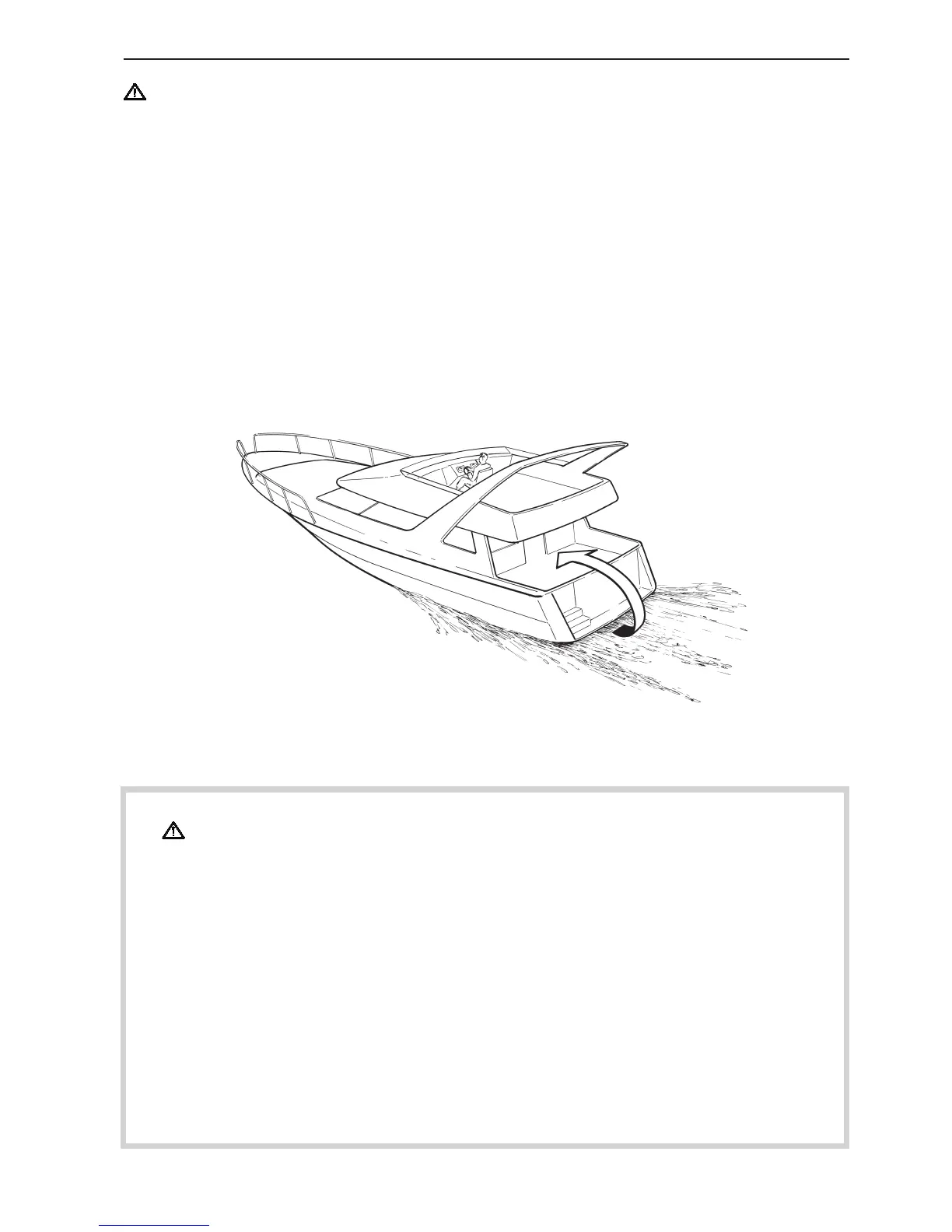
When a boat moves forwards, an area of low pres-
sure air forms behind the boat. In adverse conditions,
this low pressure can be so strong that the boat’s
own exhaust fumes are sucked into the cockpit or
cabin, which entails a risk of carbon monoxide poiso-
ning for all aboard.
The problem of low-pressure suction is worst in high,
wide boats with a square transom. But even in other
types of boats, low-pressure suction can be a pro-
blem in some conditions, such as if you drive with the
hood up. Other factors which increase the low-pres-
sure effect are wind conditions, load distribution, pit-
ching, trimming, open windows and ventilators etc.
Most modern boats are designed so that the problem
of low-pressure suction is very rare, however. If low-
pressure suction does occur anyway, do not open
hatches or ventilators in the forward part of the boat.
Strangely enough, this makes the problem worse. Try
changing speed, trimming or load distribution instead.
Also try taking down/opening the hood or modifying
it in some other manner. Ask your boat dealer for ad-
vice about the best solution for your particular boat.
Remember
● Safety equipment: Life jackets for everybody aboard, communication equipment, emergency
rockets, approved fire extinguisher, first aid kit, life buoy, anchor, paddle, torches etc.
● Spare parts and tools: Impeller, fuel filters, fuses, tape, hose clamps, engine oil, propeller and
tools for the jobs you could be expected to have to do.
● Take your chart out and study your planned route. Calculate distance and fuel consumption.
Listen to weather reports.
● Tell your friends/relatives about route plans if you undertake a long journey. Remember to notify
changed plans or delays.
● Inform everybody aboard about where the safety equipment is located, and how it works. Make
sure that there is more than one person aboard who can start and operate the boat safely.
This list can be extended, since the need for safety equipment varies with the type of boat, and
where or how it is used etc. We recommend that you ask a regional boat or sea safety organisation
for more detailed maritime safety information.



 To Next Page