78
Maintenance. Electrical system
Batteries. Charging
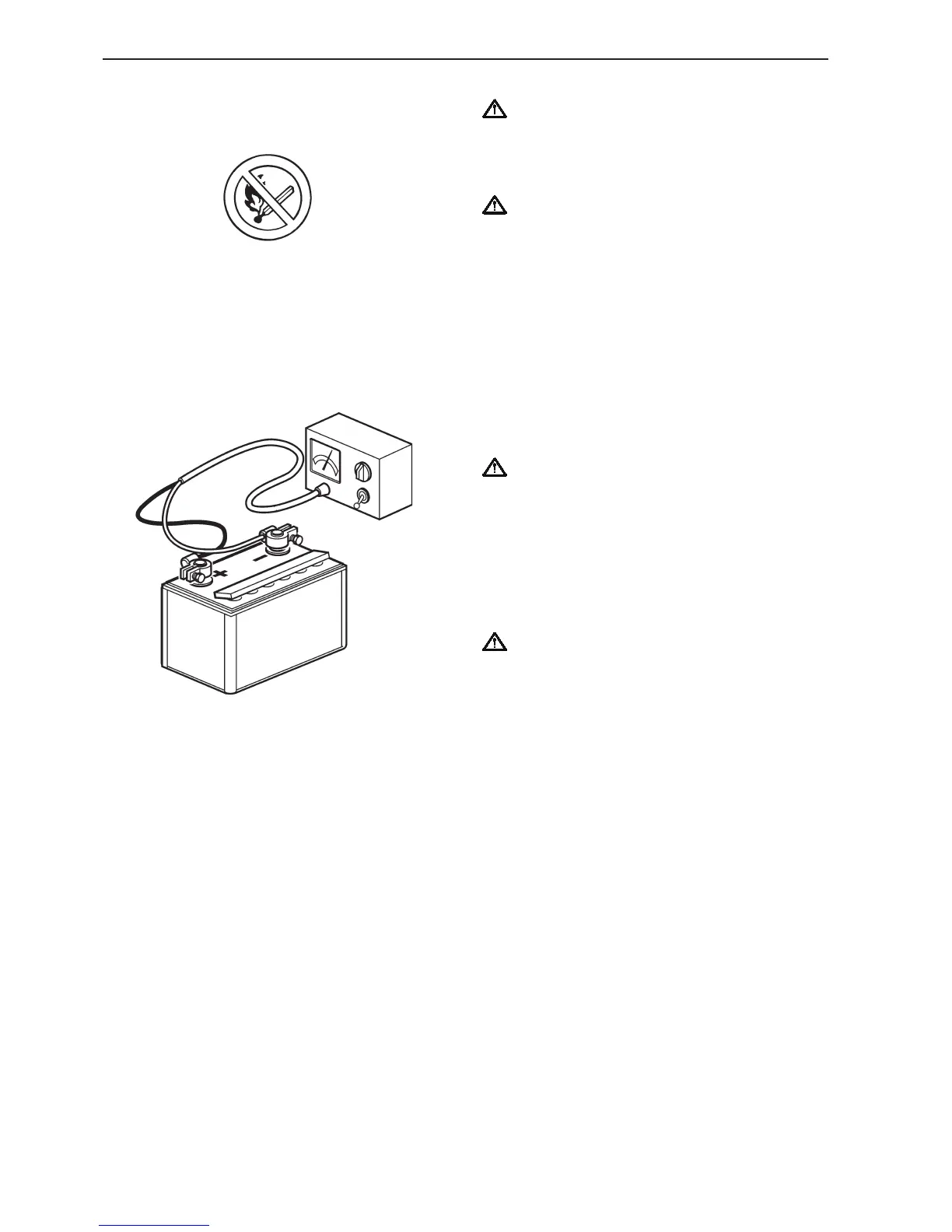
WARNING! Explosion risk! Hydrogen is given
off when batteries are charged. This forms an
explosive mixture with air. A short circuit, open
flame or spark could cause a violent explosion.
Ventilate well.
WARNING! Battery electrolyte is highly corro-
sive. Protect your eyes, skin and clothes. Always
use protective goggles and gloves. If acid comes
into contact with your skin, wash at once with
soap and a lot of water. If you get battery acid in
your eyes, flush at once with a lot of water, and
get medical assistance at once.
Charge batteries if they have become discharged.
If the boat is not used for a longer period of time,
the batteries should be fully charged, then trickle
charged (please refer to the battery manufacturer’s
recommendations). Batteries are damaged by being left
discharged, and can also freeze and burst easier in cold
weather.
IMPORTANT! Observe the instruction manual
for the battery charger carefully. To avoid the risk
of electrochemical corrosion when an external
charger is connected, the battery cables in the
boat should be removed from the batteries be-
fore the charger is connected.
During charging, unscrew the cell plugs but leave
them in the plug holes. Ventilate well, especially if the
batteries are charged in an enclosed space.
WARNING! Always switch off the charge cur-
rent before undoing the charging clamps. Never
confuse the positive and negative poles on the
batteries. Risk of arcing and explosion.
Special instructions apply to so-called quick char-
gers. Quick charging can shorten battery life, and
should therefore be avoided.



 To Next Page