Page 12 ;&(%$*4.8"4,7%<'*#$"&8#=%/7*,#*%4,77%>?@@@?@AA?BCDC1 Item 57342
EF;6GH IJ6KFGLIM NFLMG6MFMO6E6GPJ
6##*8$",7%E$(,"3.$%J'#.?#$"4X%;*,$'(*#%,89%;'84$"&8#
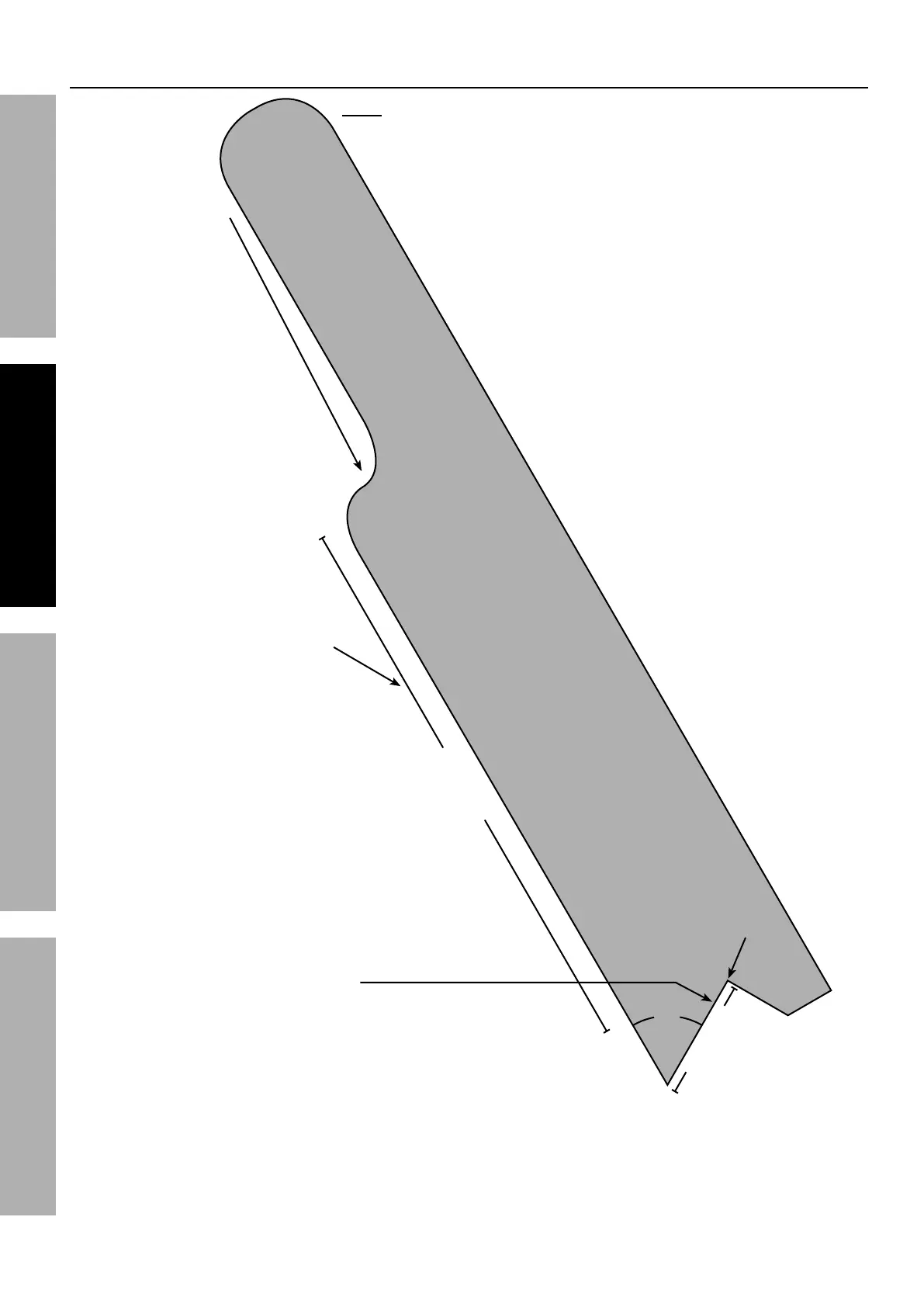
M&$*- Straight style (traditional) stick shown. A different stick design
may be used if it properly protects against all hazards.
U",3(,5%8&$%$&%#4,7*1
• Push sticks must be made from sturdy, defect-free, plywood or
normal wood to prevent unexpected breakage. Material must
be at least 1/4″ thick, but no thicker than the finished wood.
• Inspect push stick before use and do not use
a damaged or deteriorated push stick.
• Push stick dimensions will vary depending
on the application and user.
_,897*%M&$4.
• Must be far
enough down
the stick to allow
a comfortable
and firm grip.
• Must be deep
enough to prevent
hand from slipping
down the stick.
• Do not cut more than
halfway into the stick
to prevent weakening.
• Corners may
be rounded to
increase comfort.
E$"4X%T*83$.
• Must be long enough
to keep hand
clear of blade.
• At least 6″ from end
of handle to closest
part of notch.
M&$4.
• Must be right (90°) angle, cut at 30°-40° from the angle
of the stick to keep hands out of the line of the blade.
• The lower lip of the notch must be no
longer than the workpiece is thick.
At Least 6″
T*##%$.,8%
)&(X/"*4*%
$."4X8*##
MIG%GI%EOFT61MIG%GI%EOFT61
Dfm
nfm?gfmnfm?gfm


 To Next Page