6
Installation
-Softener Location / Other Requirements-
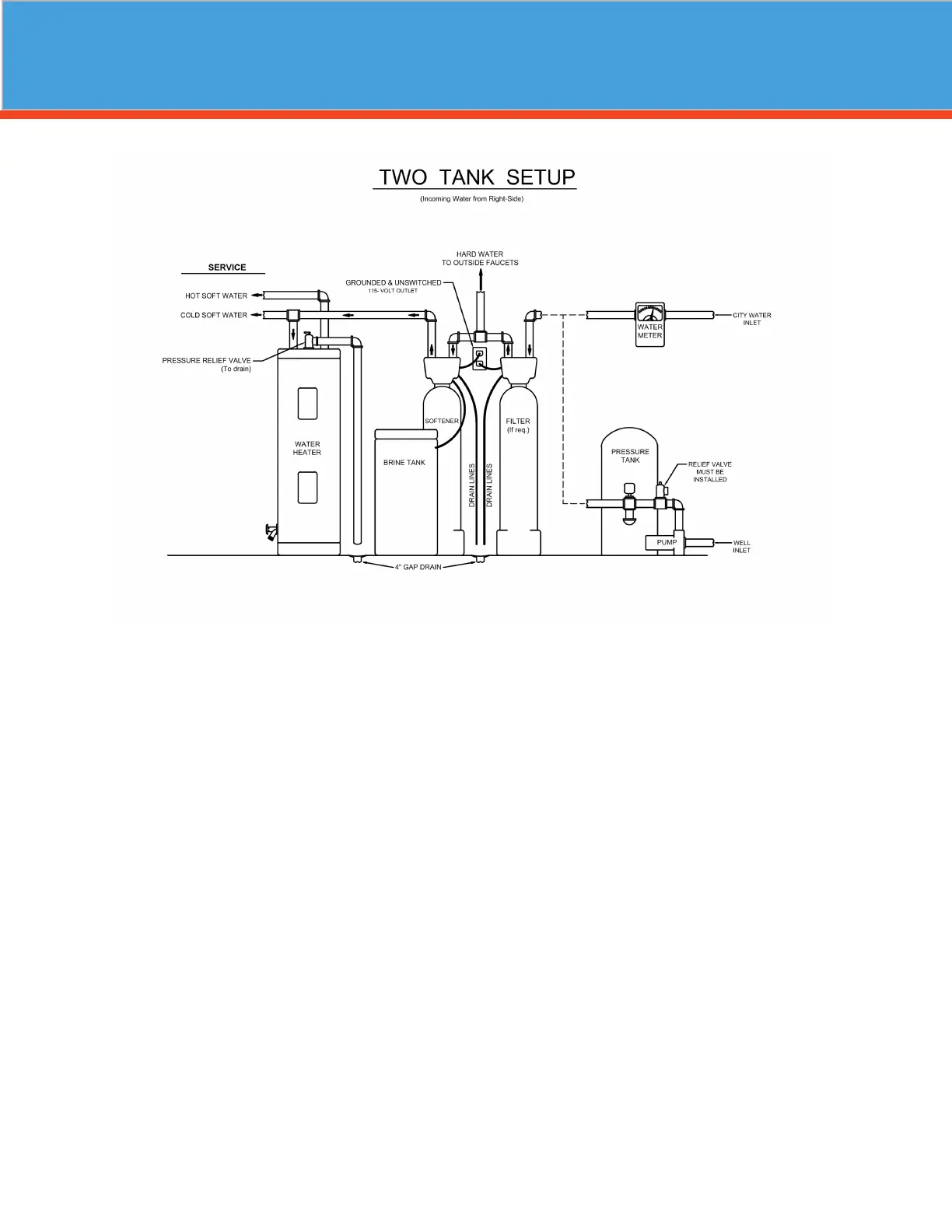
• Locate the unit near an unswitched, 120 volt / 60 Hz grounded electrical outlet.
• Check for distance and proper drain installation (e.g. oor drain, washing machine standpipe).
• Determine type and size of piping required for softener connection (e.g. copper, galvanized, PVC plastic).
Note
• If household plumbing is galvanized and you intend to make the installation with copper (or vise versa),
obtain di-electric unions to prevent dissimilar metal corrosion.
• Where the drain line is elevated above the control valve or exceeds 20 feet in length to reach the drain,
use 3/4" I.D. drain line tubing instead of 1/2" I.D. Drain line tubing is not included.
• All plumbing lines not requiring “soft” water should be connected “upstream” of the softener.
• The brine tank drain line is gravity ow and must discharge below the overow tting.
• The brine overow is provided as a back-up in the event the safety oat shut-o should fail, allowing the
brine tank to overll. This drain connection would then carry the excess water to the drain and prevent
ooding of the oor. Therefore, no liability will or can be assumed by the manufacturer of the softener
should this occur.
Caution
• If sweat soldering copper pipe (remember to always use lead free solder and ux), cover yoke and bypass
valve with wet rags to prevent heat damage to connections and control valve! If using PVC or plastic pipe
primers and solvent cements specically recommended for use with potable water are required.
• Do not “TEE” to the main drain line from control valve.


 To Next Page