Need help?
Do you have a question about the Wavetek 180 and is the answer not in the manual?
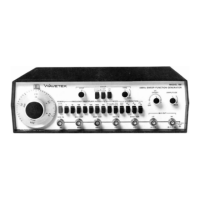
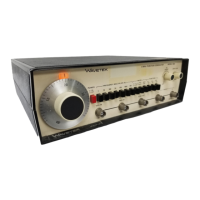
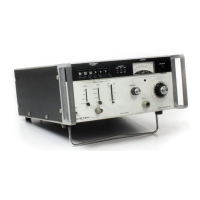
The Wavetek Models 180 and 180LF are sweep/function generators designed to produce a variety of waveforms for testing and measurement applications. These instruments are precision sources of sine, triangle, and square waveforms, with the capability to generate DC outputs and TTL pulses. They can operate in both continuous and sweep modes, offering flexibility for various signal generation needs.
The core function of these generators is to produce stable and accurate waveforms. The frequency of the output waveforms can be manually adjusted using a frequency dial and multiplier ranges, or it can be controlled externally via a Voltage Controlled Generator (VCG) input. This VCG input allows for DC programming or AC modulation of the frequency, enabling dynamic frequency control.
In continuous mode, the generator outputs a waveform at a constant frequency determined by the dial and VCG input. In sweep mode, the main generator's frequency is modulated by an internal sweep generator. This allows the output frequency to repetitively rise from a start frequency (set by the dial and range) to a higher stop frequency (set by the sweep width control). The rate at which the frequency sweeps can also be adjusted.
The amplitude of the output waveforms is variable, ranging from a maximum of 10V peak-to-peak into a 50Ω load down to 30 mV peak-to-peak. Additionally, a DC offset feature allows the user to shift the DC reference of the waveforms positively or negatively. When the DC offset is off, the waveform is balanced around signal ground.
Several outputs are provided on the front panel:
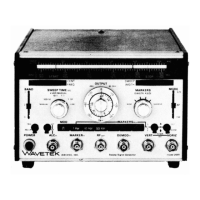
The front panel features intuitive controls for easy operation. The "FREQ MULT/PWR OFF" control acts as both a power switch and a frequency range selector. The "Frequency Dial" precisely sets the base frequency within the selected range. Waveform selection (sine, triangle, square, DC) is done via concentric controls. The "AMPLITUDE" control adjusts the output signal strength, while "DC OFFSET" allows for shifting the waveform's DC reference.
For sweep operations, "SWEEP WIDTH/OFF" activates the sweep and sets the upper frequency limit, and "SWEEP RATE" controls the duration of the sweep. The VCG IN connector allows for external voltage control of frequency, while GCV OUT and SWEEP OUT provide monitoring signals proportional to frequency and sweep rate, respectively.
Proper signal termination is crucial for specified operation. The manual details how to correctly load the main output with a 50Ω terminator to minimize signal reflection and power loss. Instructions are also provided for changing the output impedance if simultaneous 600Ω and 50Ω outputs are desired, or for other impedance values.
The manual includes a "WARRANTY" section outlining Wavetek's commitment to repair or replace defective components for one year after manufacture, provided the instrument is used normally and returned prepaid to an authorized service center. Repairs resulting from misuse or unauthorized alterations are billed at cost.
For troubleshooting, a "Troubleshooting Chart" is provided to aid in systematically isolating faulty components. This chart guides users through a series of checks based on observed malfunctions, such as "50Ω OUT BAD" or "FREQUENCY WILL NOT SWEEP." Additionally, a section on "Troubleshooting Individual Components" offers guidance on identifying defective transistors, diodes, operational amplifiers, and capacitors based on voltage measurements and operational characteristics.
The "Calibration" section details the required test equipment (voltmeter, distortion analyzer, oscilloscope, 50Ω load, counter) and a step-by-step procedure for calibrating the generator. This includes setting front panel controls to specific positions and adjusting internal components (e.g., R9, R78, R103) to achieve desired results for power supply regulation, distortion, VCG null, horizontal symmetry, and frequency accuracy. Instructions for removing the generator cover are also provided to facilitate internal adjustments. For complex repairs or calibration beyond user capabilities, Wavetek maintains a factory repair department.
 General
| Brand | Wavetek |
|---|---|
| Model | 180 |
| Category | Portable Generator |
| Language | English |

 To Next Page