Lift to unlock upper hancle
ii.
The rotor and flails are clean and not in need or replacement. Consult the "Maintenance and Service"
section of this manual for guidelines and instructions on when and how to change the flails.
iii.
The drive belt is in good condition and set to the appropriate tension. Consult the "Maintenance
and Service" section of this manual for guidelines and instructions on taking care of the belt.
2. Before operating the scarifier, perform the following environmental checks:
a. Is the ground where the scarifier will be operating level and solid? If it is a slope of more than
35% grade, please refer to "Dethatching on Inclined Surfaces" under the "Operation
Procedures" section of this manual.
b. Has the lawn been cleared of debris such as string, wire, rocks, metal and other materials? Such
items could cause malfunction or damage to the scarifier that could also be potentially hazardous
to the machine and operator.
c. Are all obstructions such as sprinkler lines, electrical boxes, fences etc. clearly marked?
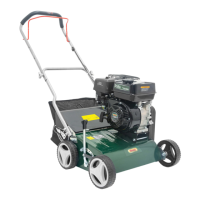
ADJUSTING THE RAKING DEPTH (See Fig. 8)
Never adjust the dethatching depth with the motor still
running.
The rake is adjusted to one dethatching depth upon
delivery.
You can set the dethatching height to the desired depth
to fit different lawns. Turn the knob to rear position to
increase the dethatching depth or to front position to
decrease the raking depth.
A. Transporting the SCARIFIER
1. Loosen bolt on handle until handle folds over the engine and rests against the machine.
2. Work with a partner, lift the unit to the transportation vehicle.
a. ALWAYS use safe lifting techniques to avoid back or muscle injury! Consult your local health and
safety organisation for tips and best practices for moving heavy machinery.
b. The SCARIFIER is a HEAVY machine. The net weight is 46kgs.
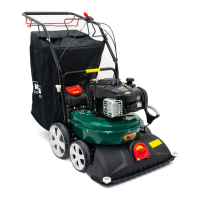
TO ATTACH THE GRASS CATCHER
Lift the rear door of the scarifier and place the grass
catcher frame side hooks onto the axle of the rear door.
The grass catcher is secured to the scarifier housing
when the rear door is lowered onto the grass catcher frame.
B. Preparing to dethatch
1. For optimum results, make sure that the ground is dry. Dethatching a wet lawn can damage grass
roots, thus adversely affect lawn growth and health
2. Mow the lawn to its normal cut height. Check for depth of thatch by removing several sample plugs
from the work area. If thatch is deeper than .3/4"(1.9 cm), two separate rakings are recommended
(once in the spring and again in the fall) so as not to traumatize established lawn growth.
3. Check for the slope of any inclined area. This machine is not recommended on use on slopes with
more than 35% grade.
4. Before operating the Scarifier, check that the engine is in good order in accordance with the engine
manufacturer's handbook.
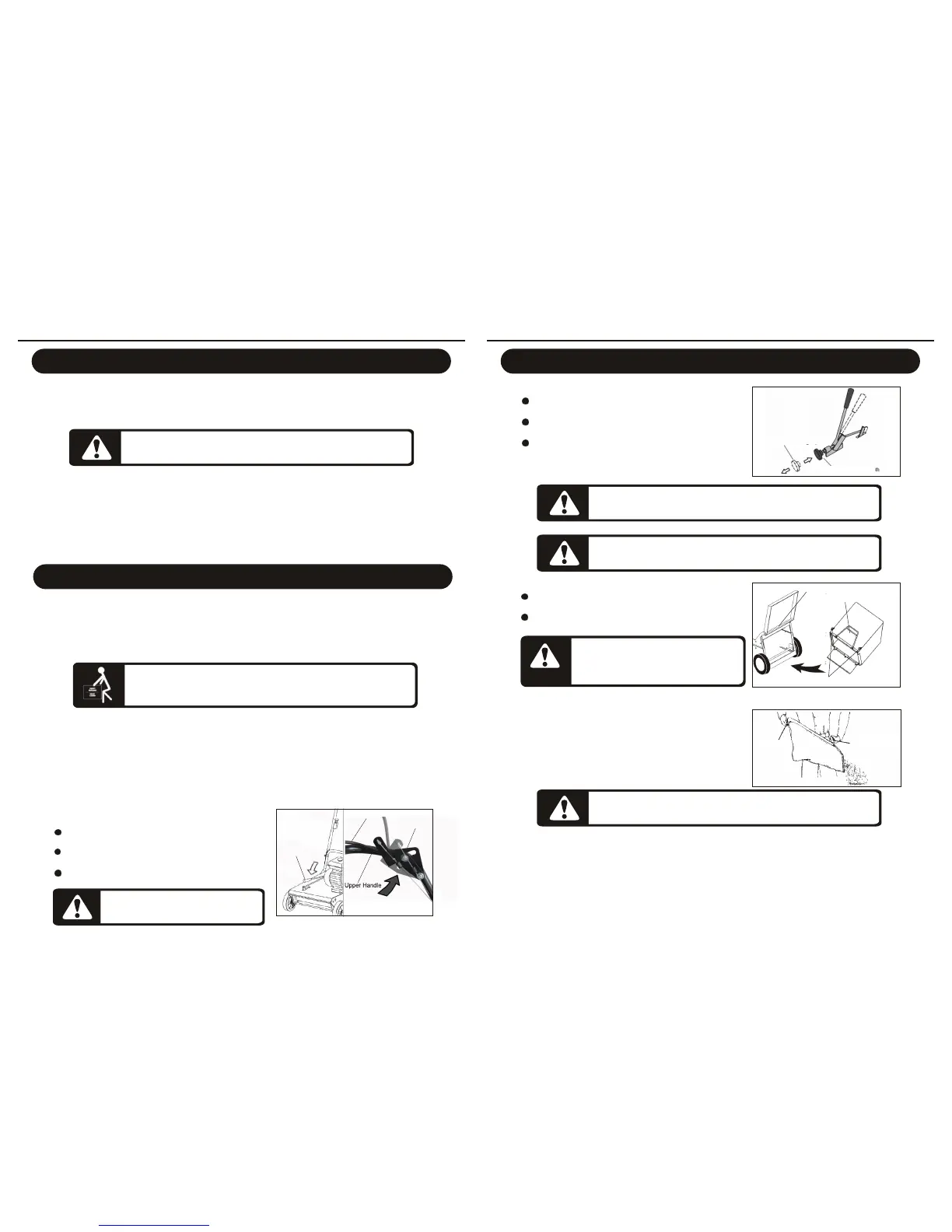
TO OPERATE DRIVE SYSTEM (See Fig.6)
This scarifier is a self-propelled machine
To start forward motion, hold the dethatching control
bar (A) to the chassis,
Lift safety lever (B) on left side and then press the
dethatching clutch lever (C) down to the upper handle.
To stop forward motion, release dethatching clutch
lever.
TO EMPTY GRASS CATCHER
1.
Lift up on grass catcher using the frame handle.
2.
Remove grass catcher with clippings from under rake handle.
3.Empty clippings from bag using frame handle and bag handle.
NOTE: Do not drag the bag when emptying; it will cause
unnecessary wear.
BEFORE STARTING ENGINE
ADD OIL
Your scarifier is shipped without oil in the engine. The engine holds approximately 0.6L (refer to engine
manufacturers specifications in engine hand book). For type and grade of oil to use, see "ENGINE" in
Customer Responsibilities section of this manual.
1. Be sure the scarifier is level and area around oil filler is clean.
2. Remove engine oil cap and fill to the full line on the dipstick. Pour oil slowly. Do not over fill.
NOTE: Allow oil to settle down into engine for accurate reading. To read correct level, tighten engine
oil cap, then remove it to read the dipstick.


 To Next Page
 Loading...