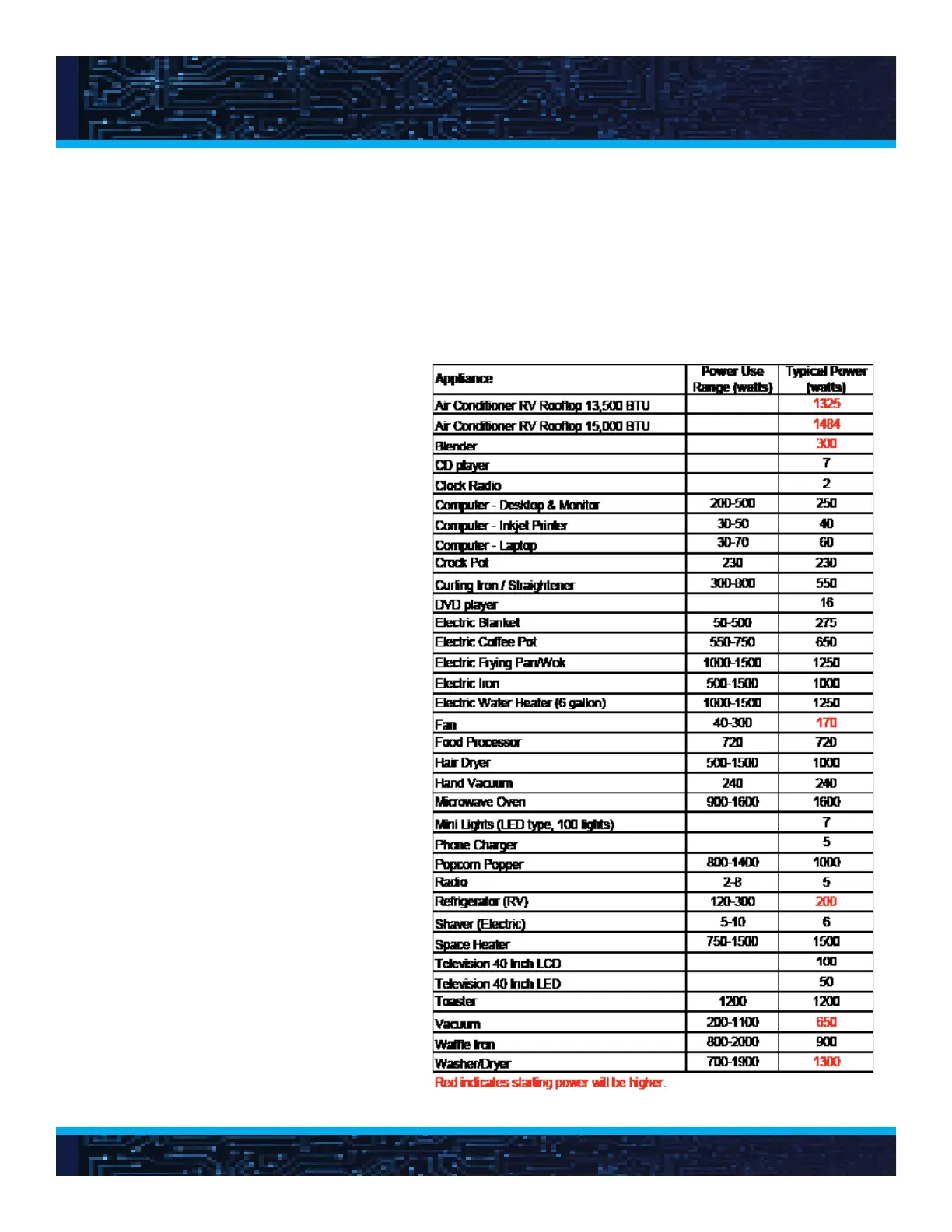
Figure 3 shows a list of common appli-
ances and how much power they typically
use. This is a generic estimate; for a more
exact rating, look for the label on the
appliance, it should indicate the specic
input power rating.
Many loads, especially motor loads, will
have some inrush current – they will take
more than their rated current or power for
a moment when initially started.
Therefore, it is best to turn these high-
er-power devices on rst, and one at a
time, rather than having everything start at
once (which would happen if their power
switches were already on when starting
the
inverter).
This will help prevent an overload condi-
tion when the inverter starts operating.
LOAD CONSIDERATIONS
When starting the inverter, it’s important to consider how it will be loaded, partly because it has
a certain power limit, and partly because the load directly aects how long it can operate from a
given battery source. Electric heating appliances and air conditioners use a lot of power and
probably can operate only one at a time, but smaller devices, such as phone chargers and small
electronic devices typically use very little power and can be easily operated alongside other
devices.
Figure 3. Typical Device Power
4



 To Next Page